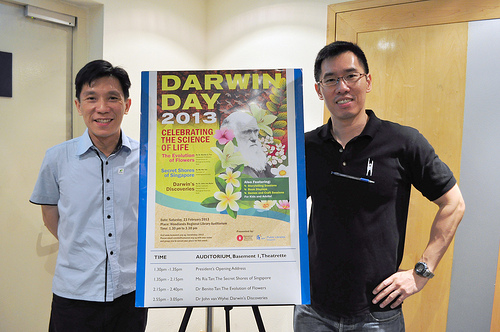
A Commentary by the Humanist Society (Singapore)
***
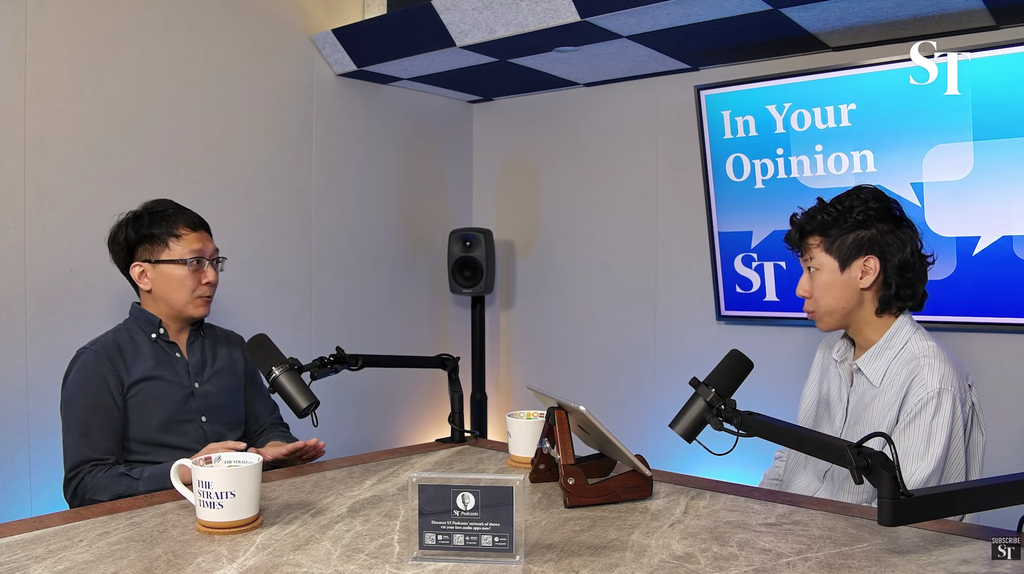
The Humanist Society (Singapore) welcomes The Straits Times’ in-depth interview with Dr Melvin Tay on Singapore’s changing religious landscape (Are Singaporeans losing faith in organised religion? 04 November 2026).
We are heartened that the Straits Times devoted around 50 minutes to this topic. Such discussions are good for Singapore, a country with one of the highest non-religious percentages in Southeast Asia (behind Vietnam), currently at 23.9% of Singapore’s resident population in 2025.
The Humanist Society (Singapore) has spent the past 16 years engaging with non-religious individuals across Singapore. Over this period, we have held 400+ events and documented numerous personal stories, giving us valuable insights into the diverse journeys of the non-religious community in Singapore.
Based on our experience, we feel that more attention should be paid to Singaporeans who are “done” with religion, or were “never” religious. The Straits Times interview, overall, gave too much focus to the angle that the non-religious people are “still religious”.
Looking at the numbers
Dr Tay cited findings from the Institute of Policy Studies (IPS) that less than half, around 40%, of non-religious respondents still believe in a higher being (at 3:00). He observed, “Even though people are more likely to be less religiously affiliated, it doesn’t mean that they are less religious.” (at 17:30)
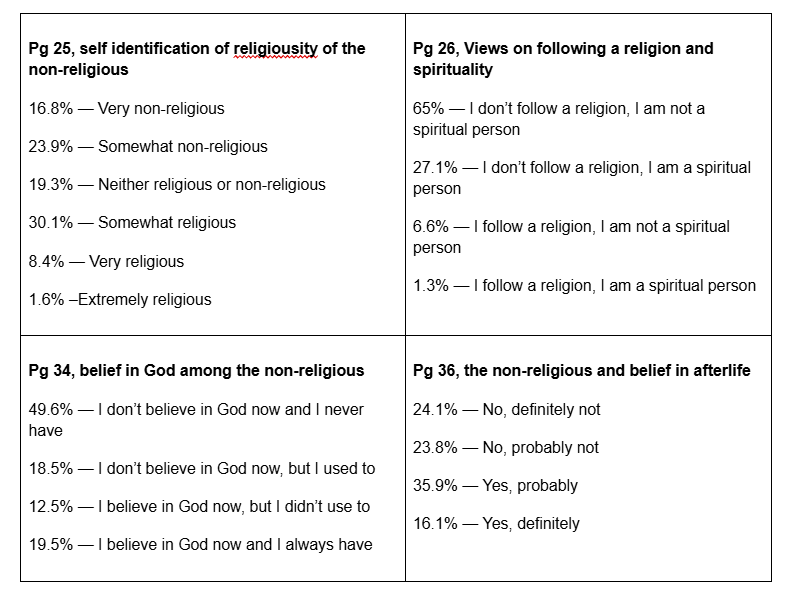
We believe one of these findings comes from the IPS working paper, Religion in Singapore: The Private and Public Spheres in 2019 (sample of 1,800 Singapore residents). An extract of figures from the non-religious reveal “half to less than half” of the non-religious still believe in religion or the supernatural (see Annex below for exact figures).
We also note 2023 findings from the Pew Research Center that indicate that 87% of Singaporean adults surveyed believe in God or unseen beings (sample size 2,036). This reinforces the earlier finding that slightly less than half (~45%) of the 23.9% non-religious Singaporeans still believe in the supernatural.
The other half matters too
Dr Tay is right that nuances matter when studying non-religiousity among Singaporeans, but we feel that the interview also sidesteps the other half who do not believe in a higher being. There needs to be a recognition that among the religiously unaffiliated (“nones”), many are firm about leaving (“dones”) or never joining religion (“nevers”). They are essentially “done” with religion or “never” wanted to join religion.
For many of the “dones” / “nevers”, not having a religion is not simply about a lack of time, dissatisfaction with religious institutions, or fear of commitment. They have rejected not just religious beliefs but also religious epistemology (how we know things). Key epistemologies among many religious traditions include revelation and divine authority.
In the events we held, we spoke to many “dones” – Few want to return to the faith they left because their disagreement with religious teachings is at a much deeper and personal level. As they no longer wish to see the world through the lens of a religion, having greater convenience, changing methods of worship, or additional benefits will not restore religiosity. .
We observe that most people who are done with or were never religious generally lead busy and productive lives similar to most Singaporeans today. They are focused on growing their careers, caring for their families, pursuing their hobbies. They follow the news keenly, discuss often with their friends, and are capable of concern for the marginalised, expressing sadness over wars and natural disasters abroad. When asked, many express hope for a better world.
They just don’t need religion anymore.
Leaving Religion Does Not Mean Abandoning Commitment or Identities
Dr Tay suggested that Singapore’s fast-paced lifestyle makes sustained religious participation more difficult (at 16:10). We argue that this cannot fully account for religious disaffiliation across the globe. While there is no objective measurement for “pace of life”, countries widely regarded as having a slower pace of life than Singapore, such as Australia, Sweden, Czechia, also experienced dropping religious affiliation over the past few decades.
On the growing reluctance of committing to religious institutions, Dr Tay also said, “We are nowadays less willing to commit to anything in general,” citing falling marriages, lesser kids etc. (43:50)
Declining religious affiliation does not necessarily reflect a weakening commitment to meaningful pursuits. People continue to invest considerable effort in families, careers, friendships, volunteering and personal development. Among the youth and younger adults, there is rising awareness of the need for sustainability, mental health and lifelong learning.
Dr Tay also highlighted this trend: “Among those who still ascribe to a religion they have gotten more religious.” (21:59)
The reference would be an IPS Study on “Religious Identity and Practice Among Singaporeans” in 2025. The study found that nearly three-quarters (about 73.7%) of Singaporeans with a religious affiliation consider their faith central to their identity, showing an increase compared to past survey waves. See table 2.1 below, rightmost column:
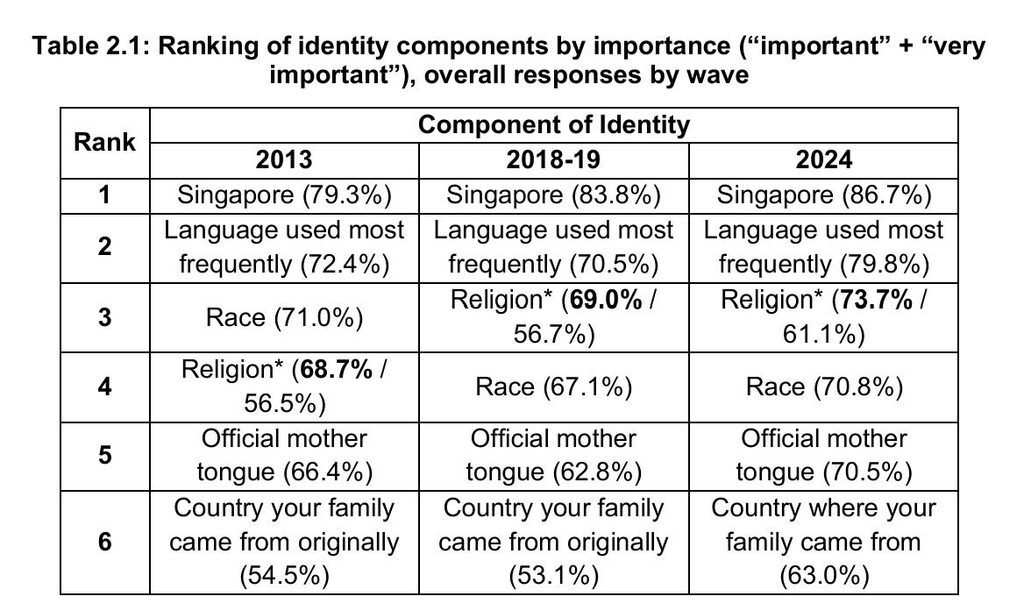
Source: Page 19 of Religious Identity and Practice Among Singaporeans
The table shows that the number of (religious) people who see religion as important for their identity is increasing. However, that is also true for every other item in the list, such as identifying by nationality / language / race / mother tongue etc.
So this not just religion is becoming more important, but identity itself is becoming more important. If this is true, the “dones” should also be recognised in their non-religious identity instead of painting them as still somehow religious.
Moving forward
Singapore’s relative openness and diversity of beliefs should be welcomed. Freedom of religion can coexist with freedom from religion, including the right to question, change or reject religious beliefs without prejudice.
Greater access to information has allowed younger Singaporeans to explore worldviews independently. Critical thinking and scientific literacy are essential safeguards against misinformation. Everyone should develop critical thinking and scientific literacy regardless of religious belief, or lack of.
We agree with Dr Tay when he acknowledged that “Religion doesn’t have a monopoly on teaching moral education.” (at 37:50). We should therefore understand non-religious Singaporeans not merely by what they no longer believe, but by what they value, pursue and contribute to society.
We recognise Dr Tay’s concern about weakening community ties. Towards the end of the interview, he emphasised the importance of community. Religious institutions have historically provided belonging and mutual support, but these are not exclusive to religion. Volunteer organisations, hobby groups, sports clubs and secular associations also foster friendships, shared purpose and compassion.
Overall, as identities become stronger, Singapore still needs to guard against communities becoming isolated from one another. Strengthening shared spaces, where people cooperate regardless of backgrounds and affiliations, remain important.
The Humanist Society (Singapore) affirms that human challenges can be addressed through reason, evidence, empathy and collective action. We remain committed to providing a voice for non-religious Singaporeans while staying engaged with our shared spaces.
Annex
Figures from the non-religious, extracted from the IPS working paper Religion in Singapore: The Private and Public Spheres