Space for Spirituality in Secular Singapore? – Research Findings and Shared Reflections

***

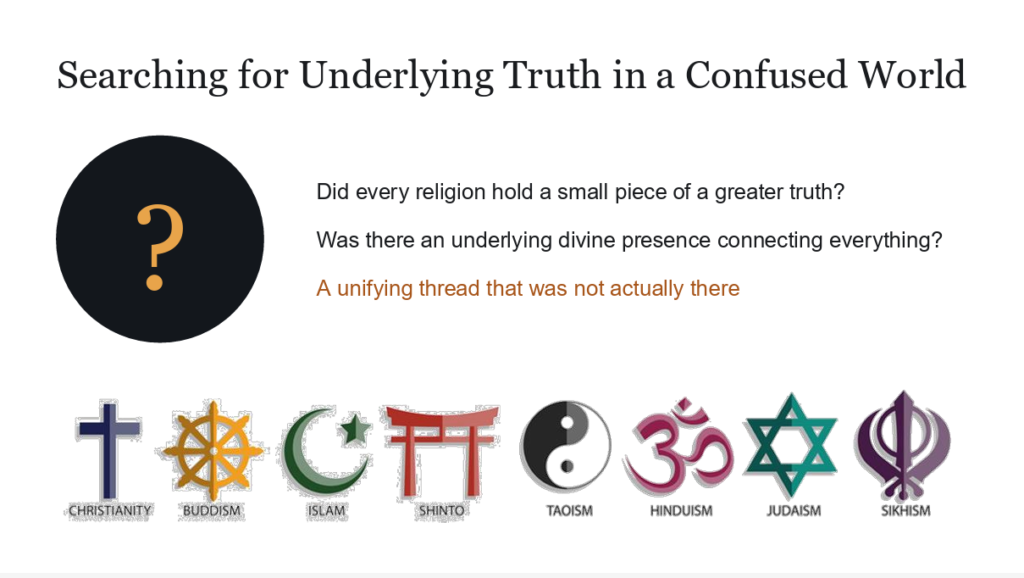
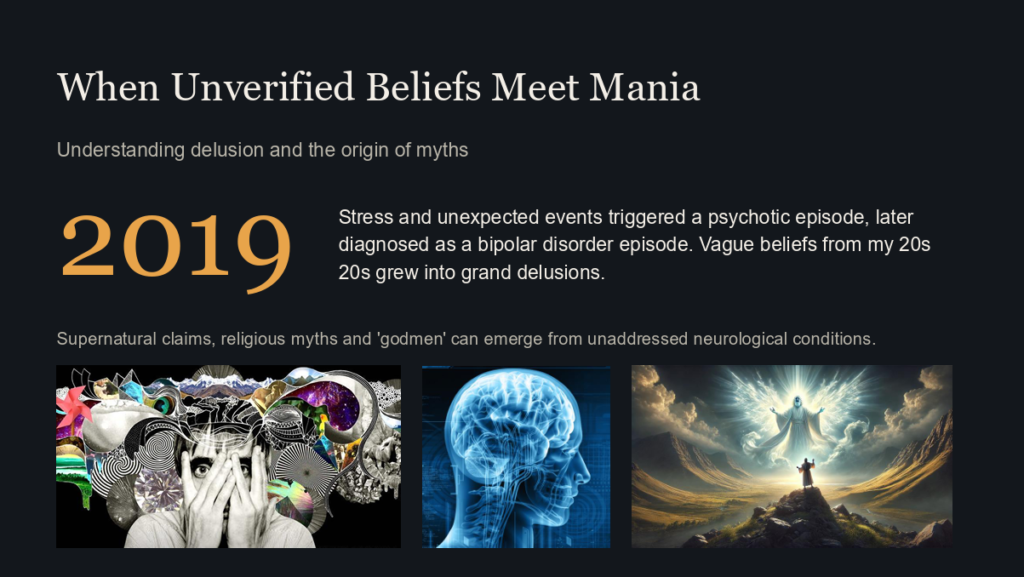
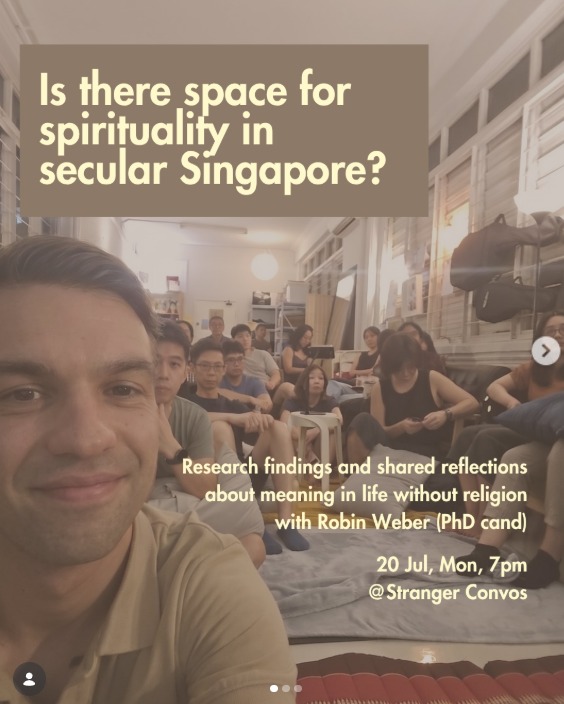
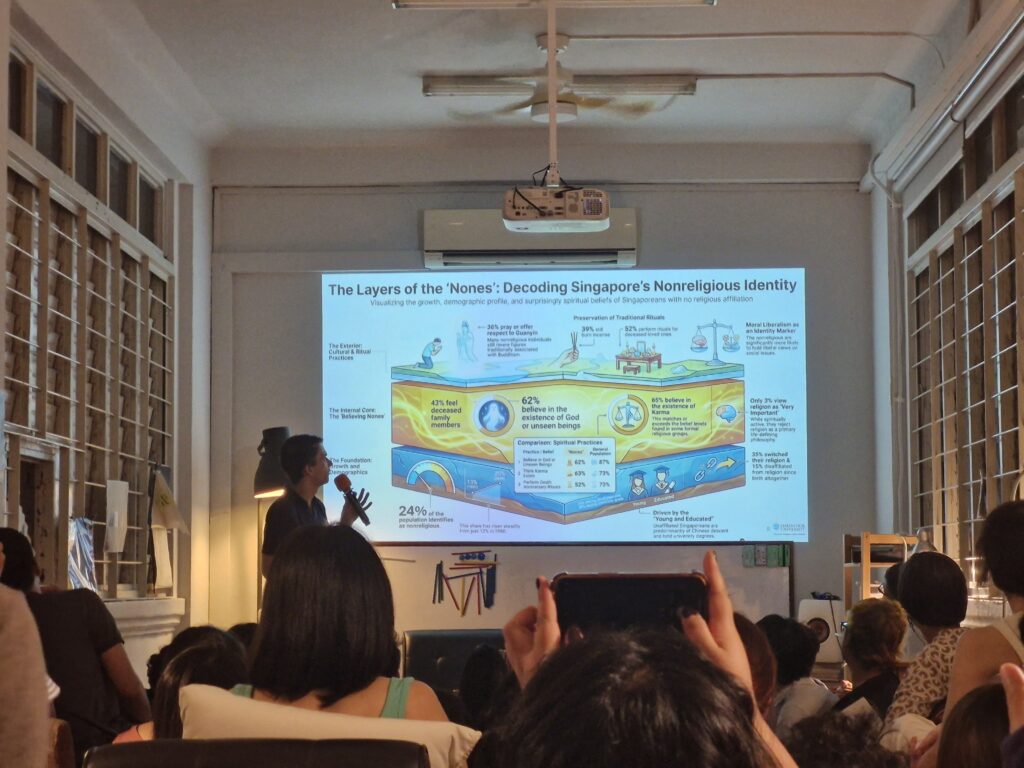
This gathering by Robin Weber, PhD Candidate and Psychological Researcher at James Cook University (Singapore Campus) was an open and collaborative exploration into non-religious spirituality in Singapore, examine the data and results of his ongoing doctoral research studying how spirituality is understood and practised in an increasingly secular society.

Spirituality is defined as “the personal quest for understanding answers to ultimate questions about life,” distinguishing it from organised religion. The study responds to a global increase in nonreligion but lack of research conducted in the Asia-Pacific region – where almost one-quarter of the world’s nonreligious population lives. This risks overlooking spiritual diversity, for example, compared with Europe, a much larger proportion of Singapore’s non-religious population identifies as “spiritual but not religious” (SBNR) and holds implicit spiritual beliefs.

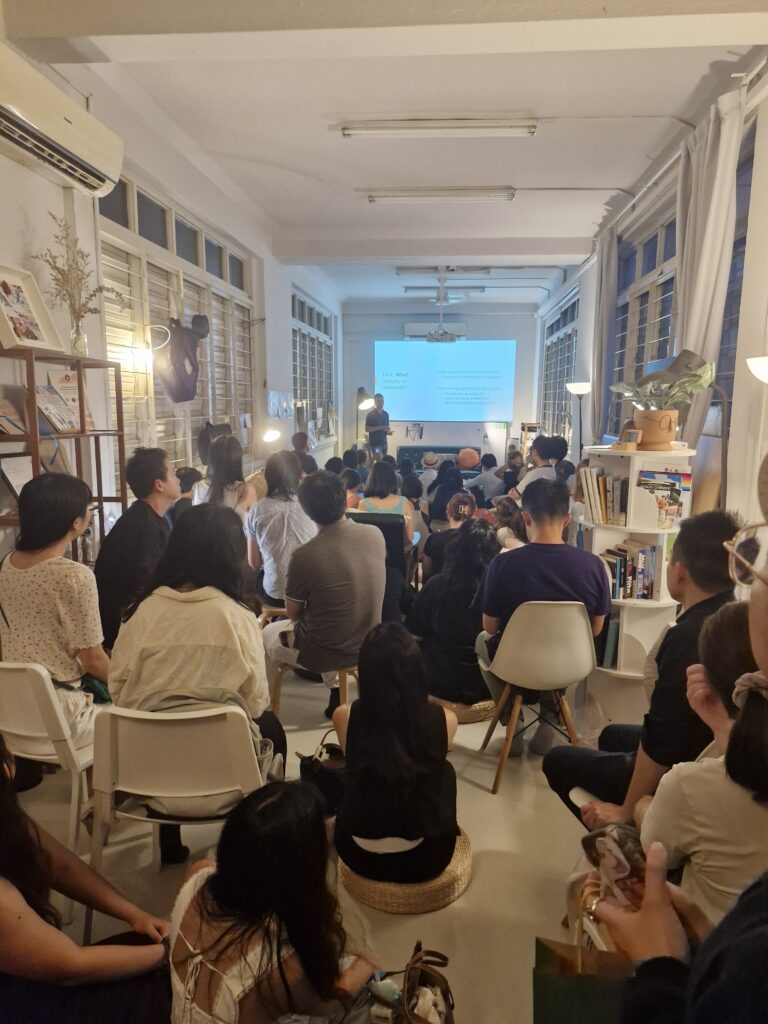
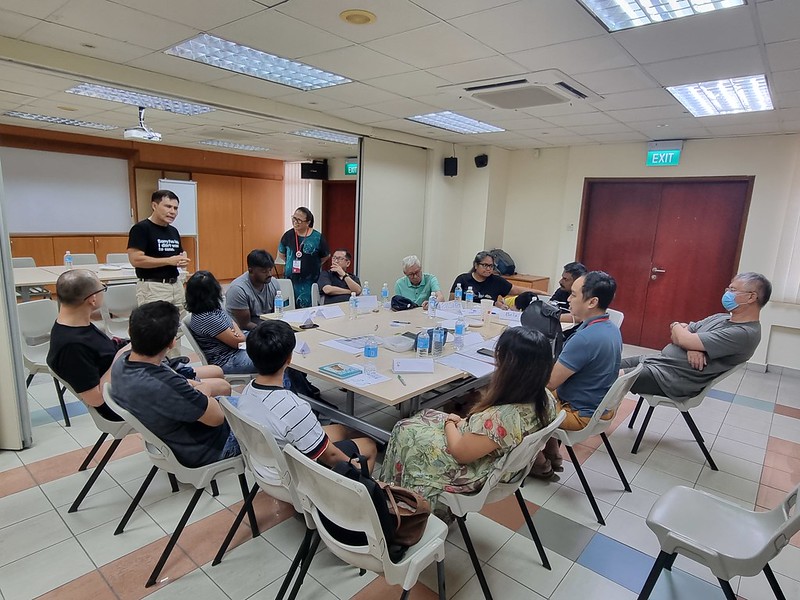
Photo below: Robin speaking to a large crowd.

***

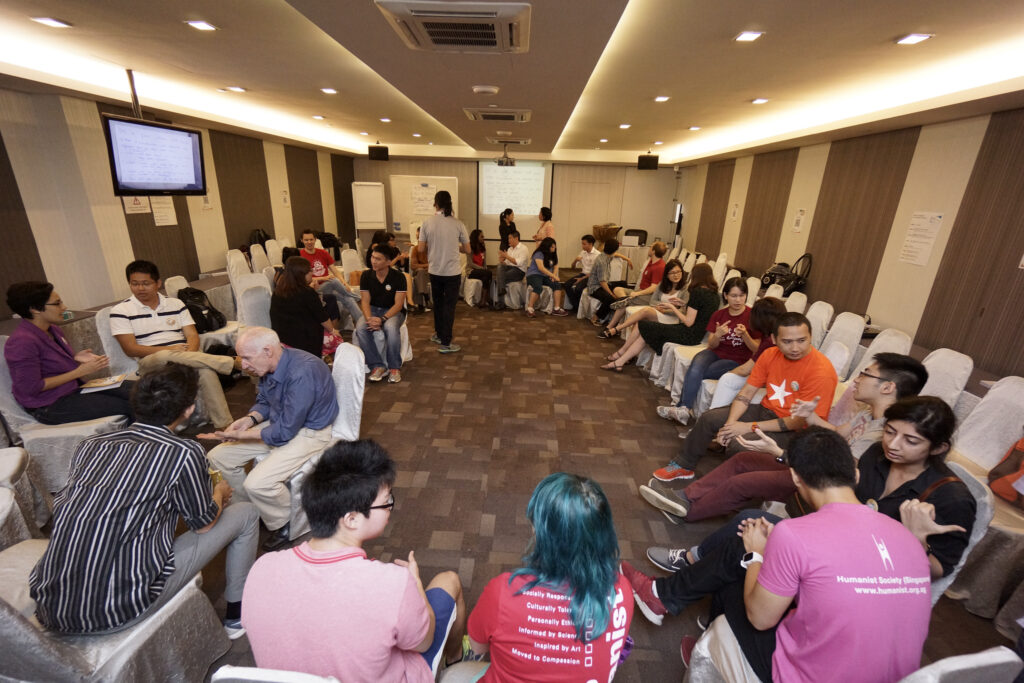
The presentation was centered on the speaker’s qualitative study in Singapore involving participants from diverse walks of life. After outlining the analysis’ six major themes, the room discussed each of them in groups to interpret, reflect and personally apply the implications of the findings. Guiding interview questions and excerpts from the interviews were shared with the groups to facilitate their conversations. Some of the topics participants talked about involved:

  • Connection with oneself, others, nature, and the wider world.
  • Belief in realities beyond the physical world, including higher powers, cosmic principles, an afterlife, etc.
  • Personalised spiritual practices that promote calmness and self-control.
  • Linking happiness with helping others, and community engagement.
  • Searching for meaning and purpose with spiritual guidance.
  • Freedom to choose one’s own path, emphasising autonomy, rationality, and individual agency.

***

An overarching finding is that identity underpins all six themes. Spirituality appears to be an important source of identity for many nonreligious people, yet Singapore’s blend of secularism is often perceived as an obstacle for spiritual expressions outside of religion. Robin reflected the interactions made him think whether dedicated spiritual spaces were desired to offer safe environments for people to explore otherwise often stigmatised beliefs. The presentation concluded with an  outlook on Robin’s future quantitative research.

Reflections on Singapore’s move towards non-religiosity

This is a commentary by the Executive Committee, Humanist Society (Singapore). The key driver of non-religiosity is diversity of information. However, misconceptions about non-religiosity persist and for some who left their faith, the social cost is real.

***

The latest General Household Survey 2025 showed that 23.9% of residents had no religious affiliation in 2025, up from 20% in 2020 and 18.5% in 2015.

This indicates an accelerating uptick in Singapore’s non-religious population, as 3.9% is more than double that of the previous 5 year intervals. Back in 1980, 13% were non-religious, showing that non-religiosity is not new. In fact, this demographic likely predates independence and has always been part of Singapore.

While there are many non-religious people/residents in Singapore from all walks of life, few organisations are dedicated to studying and building communities for the non-religious. The Humanist Society (Singapore) is one such organisation.

Over the years, we have engaged more than 7,000 non-religious individuals through our 300+ events, documenting many personal stories and perspectives. Based on this experience, we offer the following observations:

1) The key driver of non-religiosity is diversity of information

(Above) Asian Humanism Conference 2015, held in Singapore.

Some see non-religiosity as “another religion”, attributing its rise to active promotion. Others blame Westernisation, materialism, moral relativism, or even speculate about devil worship.

Our experience suggests otherwise. People leave religion—or remain non-religious—for many reasons. Some gradually find religious rituals less relevant. Others leave because certain teachings no longer align with their values.

One key factor in this shift is access to diversity of information. The internet exposes people to different religions, philosophies and worldviews. Humanity’s search for meaning is now accessible with a tap on the phone.

Increasingly, people evaluate beliefs critically instead of accepting them at face value. They build their principles from ideas they find most convincing, regardless of culture or religion. Over time, identifying with a particular religion becomes less meaningful, and many simply consider themselves non-religious.

2) Misconceptions about non-religiosity persist

For many, religion is the foundation of morality. This belief is often reinforced through lifelong teachings, while some religious texts portray non-believers negatively.

As a result, some continue to believe that non-religious people lack morality because, without God, nothing restrains immoral behaviour. They may even attribute crime, war and other social problems to godlessness, despite correlation not implying causation.

There is, however, no definitive evidence that being non-religious or atheist makes a person immoral. Multiple studies show that countries with high proportions of non-religious people also perform well on measures such as low crime, prosperity, equality, freedom, democracy, women’s rights, human rights, education and life expectancy. Examples include Sweden, Denmark, Norway, the Czech Republic, Estonia, Uruguay, Japan, Britain, France, the Netherlands, Germany, South Korea, New Zealand and Australia.

This is not to suggest that non-religiosity itself reduces crime. Strong education, effective law enforcement and many other factors also play essential roles. This is something that Singapore as a secular state has achieved since independence because of our strong rule of law and efforts to foster social cohesion. 

3) For some who left their faith, the social cost is real  

From our engagement with the non-religious, those from highly devout or conservative families often face strong opposition after leaving their faith, frequently because of the misconceptions described above in 2).

For those who left their faith, even if they remain kind and well-intentioned, their decision may be seen as rejecting their family’s or community’s identity. In some cases, these relationships never recover.

It is therefore important for those who left their faith, especially those who become non-religious, to have social support networks such as the Humanist Society. It is equally important that their experiences are acknowledged and represented, including in interfaith dialogue. Their pain should not be ignored out of fear of offending others.

(Above) One of the numerous support sessions organised by the Humanist Society (Singapore).

4) Most non-religious people genuinely do not believe in God or consider themselves spiritual

A common response to the growing non-religious population is that they are “still religious”, “culturally religious”, “spiritual”, or simply “temporarily lost”. We sometimes get the sense that people wish to keep them within their religious fold.

While some non-religious people continue to hold supernatural, theistic or spiritual beliefs, our experience is that most do not.

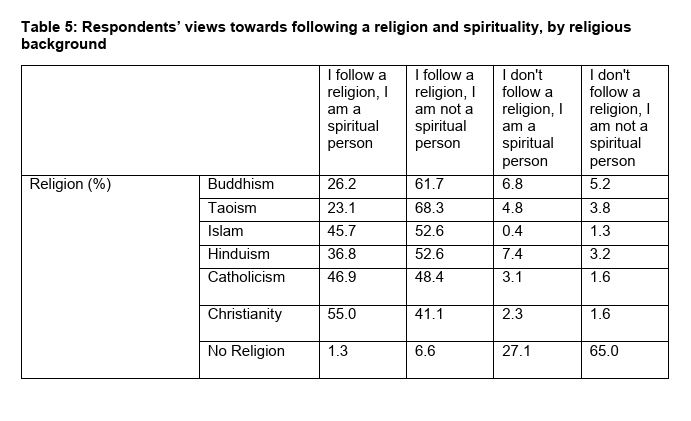
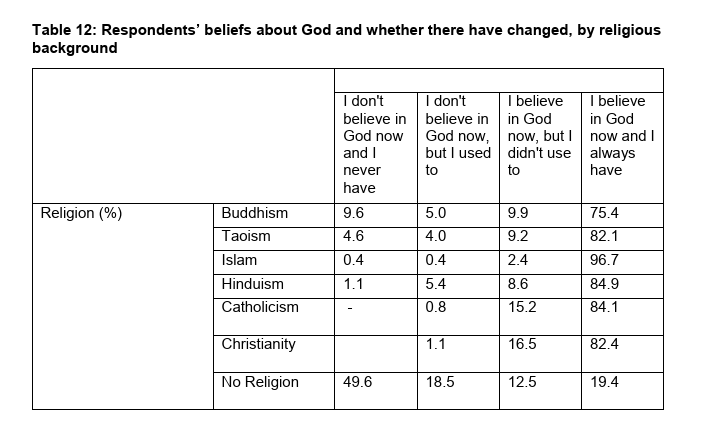
This is supported by this Institute of Policy Studies (IPS) working paper, which found that among non-religious respondents, 65% neither followed a religion nor considered themselves spiritual, while 68.1% did not believe in God.

Source: Pg 28, IPS Working Papers No.33, “Religion in Singapore: The Private and Public Spheres”, published in 2019.

Source: Pg 34, IPS Working Papers No.33, “Religion in Singapore: The Private and Public Spheres”, published in 2019. 

5) The non-religious contribute positively to interfaith dialogue and religious harmony

The Humanist Society (Singapore) supports and has taken part in interfaith dialogues to strengthen understanding among religious communities as well as between religious and non-religious people. We support Singapore’s model of secularism, which provides space for diverse belief systems while ensuring public policy benefits all Singaporeans regardless of race or religion.

Our longstanding positions include:

  • Disagreements over beliefs should be resolved through dialogue rather than police reports or legal action.
  • Every individual has the right to hold and express their beliefs. At the same time, no belief should be beyond scrutiny or discussion. In the pursuit of truth and a better world, all ideas should be examined for logical soundness and tested against the best available evidence.

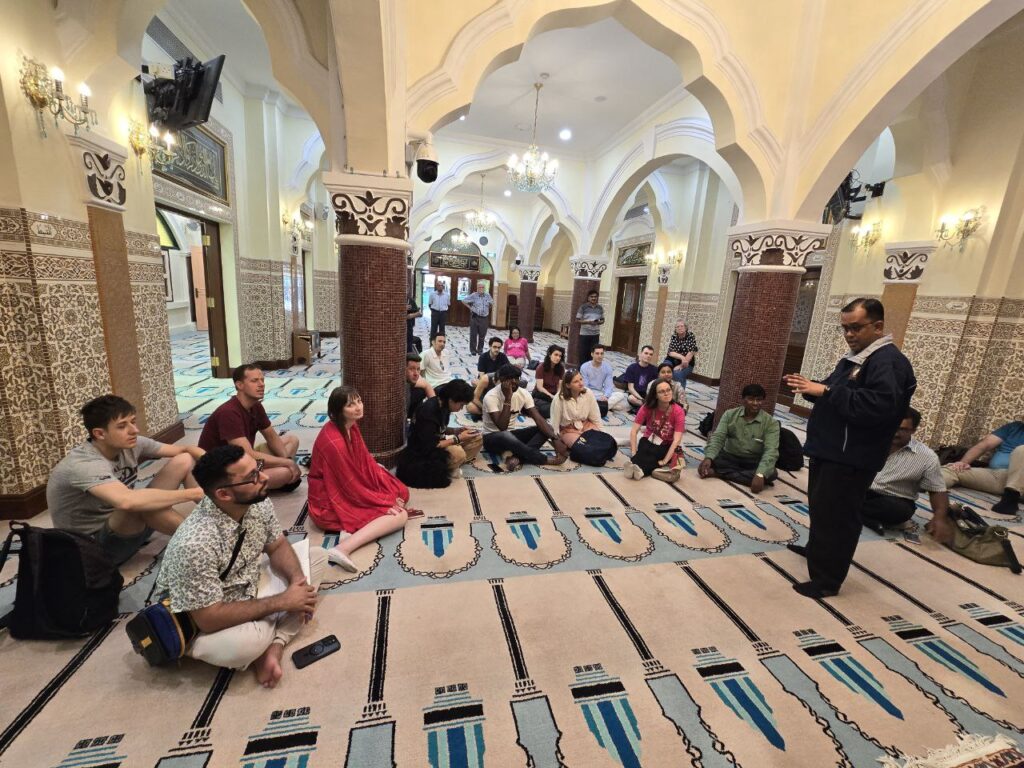
(Above) An interfaith visit to a mosque, organised by the Humanist Society (Singapore) in 2024.

Concluding thoughts 

Freedom from religion should also be part of freedom of religion.

Sadly, being non-religious, particularly atheist, is illegal or dangerous in many countries. The fact that 23.9% of Singapore residents can openly identify as non-religious reflects Singapore’s success in building a forward-looking, multiracial and multireligious society. Freedom from religion is something to be proud of, not feared or viewed with disdain. 

The Humanist Society (Singapore) will continue to monitor developments in this area and serve as a voice and refuge for the non-religious.

Non-religiosity and mental health

***

There has been a lot of debate over the relationship between religion and mental health.

One common misconception that the non-religious face, is that without religion, the non-religious individual will not have sufficient psychological and emotional support in life, leading to increased risk of mental health issues.

The 2021 IMH Study

In 2021, a local study done by a team from the Institute of Mental Health (IMH) and Saw Swee Hock School of Public Health, set out to build upon research on the mental health benefits of religion, especially in the context of multicultural Asian populations like Singapore’s. Their findings were reported in the Straits Times – “Religion linked to better mental health, says study done in Singapore”, published on Aug 03, 2021.

Published in the International Journal Of Environmental Research And Public Health in March, the study assessed the positive mental health (PMH) of 2,270 adults in Singapore and identified trends relating to their religious affiliations. The data was collected from August 2016 to April 2018 as part of the larger Singapore Mental Health Study 2016, which aimed to find out the state of mental health in Singapore’s adult population.

In this study, PMH was measured using six markers: General coping, emotional support, spirituality, interpersonal skills, personal growth and autonomy, and global affect, which is the experience of being calm, happy, peaceful, relaxed or enthusiastic. In an interview with The Straits Times, lead researcher Janhavi Vaingankar described PMH as “a person’s attitudes towards themselves, ability to handle life’s surprises and ability to reach their true potential and resist stress”.

Zeroing in on predominant religions in Singapore, the study evaluated respondents affiliated to Christianity, Islam, Buddhism, Taoism, Hinduism and Sikhism, which made up about 78% of those surveyed. Participants with these religions scored significantly higher in total PMH compared to those without a religion, the study found. The total PMH score did not vary much between people of different religions.

The picture is more nuanced

The Humanist Society argues that the picture is more nuanced, and there are other papers with a different conclusion. 

For example, there is a paper titled “Is religion beneficial for mental health? A 9-year longitudinal study” published in the International Journal of Clinical and Health Psychology (Volume 24, Issue 3, July–September 2024)

The abstract from the paper:

“Using a large sample of adults residing in Germany from the GESIS Panel study (N = 8146), the random intercept cross-lagged panel model was used. Data on six dimensions of religion (i.e., membership in a religious community; attendance at a place of worship; frequency of prayers; importance of religion in life; and participation in a religious organization) and three indicators of mental health (i.e., depression symptoms, happiness, and life satisfaction) were collected.

The findings revealed that there is almost no evidence of lagged effects of religion on mental health and limited evidence regarding the role of mental health in influencing the dimensions of religion. Moreover, at the between-person level, there was some evidence of significant covariance between the trait-like components, indicating stable, trait-like differences between persons on religion and mental health.

The beneficial effect of religion on mental health may have been exaggerated in previous research.”

***

There is also another study published in 2025, and it studies the relationship between religious service attendance (not just having a religion) and mental health.

Using modeling techniques that tracked relationships over time within individuals in the joint relationships between religious attendance and mental health outcome measures, the Italian researcher came to one surprising conclusion. In contrast to the prior literature suggesting mental health would benefit from religious attendance, the effects simply weren’t there.

The actual study can be found here.

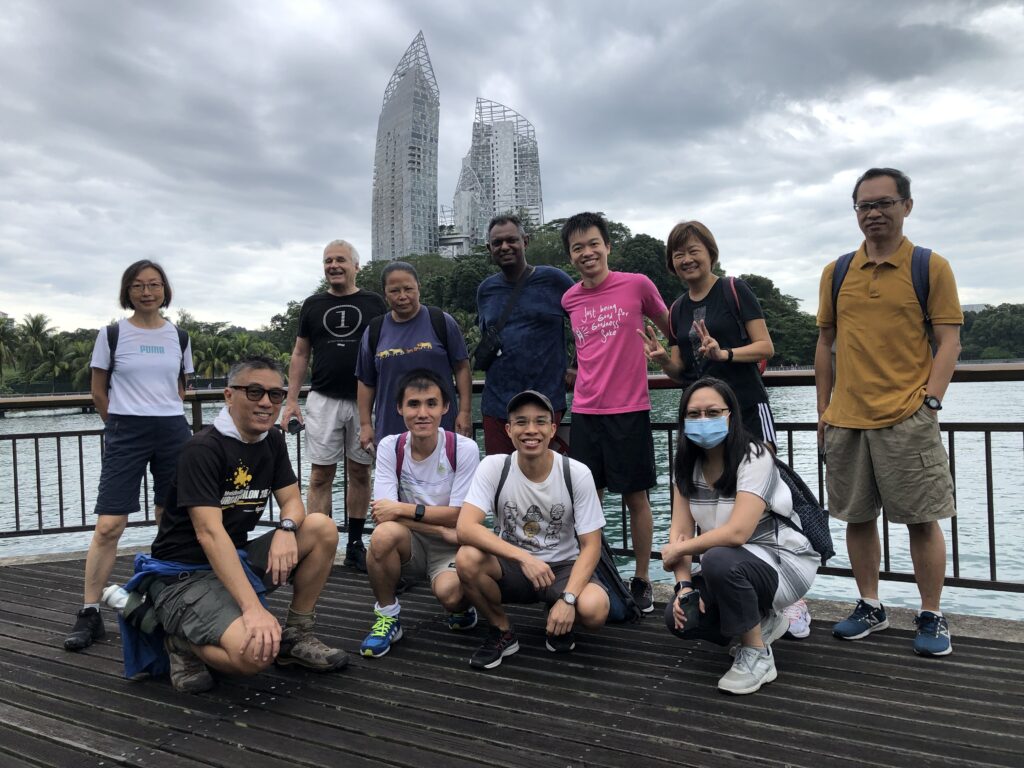
Photo above: The Humanist Society organises events every month. The picture above is a hike along the southern coast of Singapore.

We need to exercise caution

Mental health issues can be very complex and have multiple root causes.

Some mental health issues are genetic and clinical, and simply cannot be attributed to having a religion or not. Some mental health issues are caused by circumstances in life, which also cannot be attributed neatly to religiosity or non-religiousity. 

There is no doubt that supporting communities can be helpful in providing support to people who have poor mental health. And it is widely acknowledged that religious communities are often the most organised and consistently available in many countries.

Nonetheless, attributing better mental health to simply having a religion causes the following risks:

  1. If widely believed, this attribution contributes to stigma for non-religious individuals, especially faith-leavers pressured by their family and community to return to religious communities they were born into.
  • If a person’s mental health is affected by religious trauma, then more religious exposure might actually worsen the situation, rather than help. (Note: Religious trauma can be defined as a psychological condition that occurs when religious teachings and practices become sources of emotional distress.)
  • A non-religious person facing mental health issues might be pressured — even by those who are well-meaning — to join a religious community because they feel that non-religiosity is the root cause of their mental health issues.
  • A person facing mental health issues could see religion as a solution, bypassing professional diagnosis and help. While religious communities can provide a supporting community, they are ultimately not the best place to get evidence-based diagnosis and treatment.

Photo above: The Humanist Society organises the Humanist Cafe which provides peer support to people at different stages of life.

Our experience on the ground

Over the years, the Humanist Society (Singapore) has organised events for many non-religious participants, and met people from all walks of life. Like any community, we have also engaged individuals with underlying mental health conditions.

We do have small numbers of participants who come from conservative religious family backgrounds and had a challenging experience growing up. They can come with religious trauma and take many years to recover.

The Humanist Society strives to build communities to support these people, although it can be challenging given that we are an all-volunteer organisation. But from our experience, attributing better mental health to simply having a religion is most harmful to those with religious trauma.

Future studies on the relationship between religion and mental health should take into account this group, to provide a fuller picture.

The non-religious should not be forgotten

Statement by the Humanist Society (Singapore)

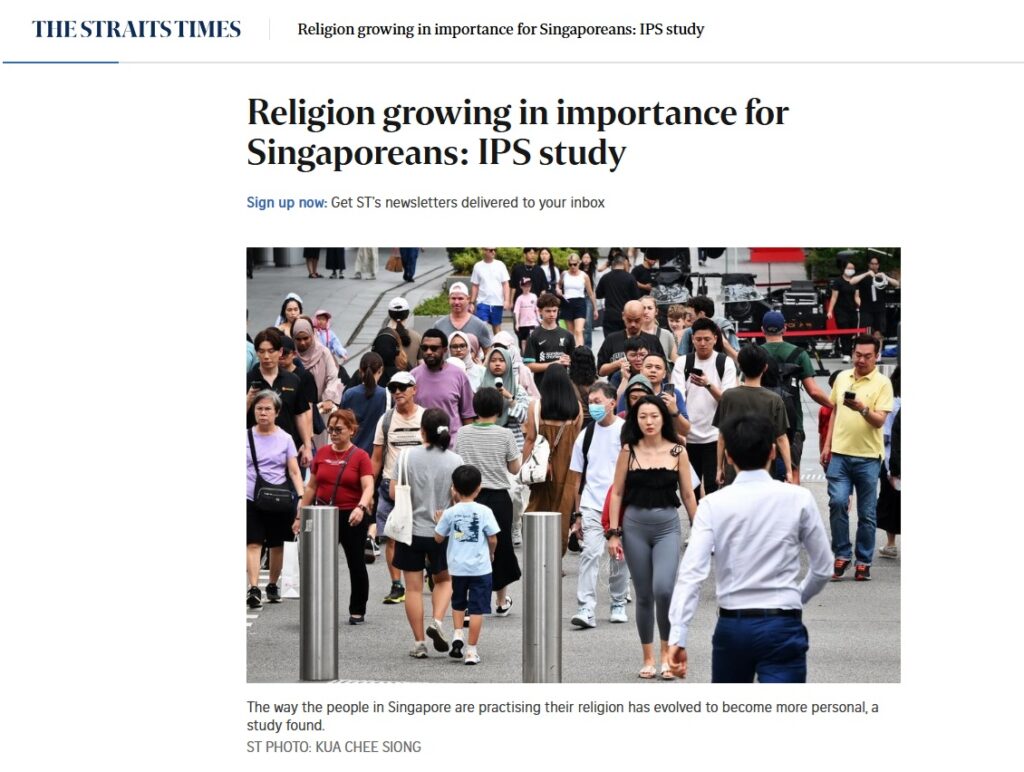
On 20 Aug, the Straits Times published a report titled “Religion growing in importance for Singaporeans: IPS study” (20 August) on religion becoming a more important part of Singaporeans’ identity in recent years, according to latest findings by the Institute of Policy Studies (IPS).

The Straits Times’ summary are as follows:

1) Singaporeans increasingly view religion as vital, influencing their perspectives, as shown in IPS surveys (2013, 2018, 2024) with spirituality giving meaning to life.

2) Religious practices are evolving; more Singaporeans are engaging with religious media and individual practices like meditation, while fewer attend gatherings.

3) A stronger religious identity could lead to groups seeking greater influence in policymaking, requiring careful management to maintain religious harmony in Singapore.

The Humanist Society (Singapore) views are as follows:

On 1), Singaporeans increasingly view religion as vital, as shown in IPS surveys (2013, 2018, 2024).

Based on the Singapore census, the share of residents with no religious affiliation rose to 20% in 2020, up from 17% in 2010, and 15% in 2000. Detailed census data in 2020 also shows non-religiosity is more pronounced among younger age groups. For example, 24.2% of those aged 15-24 reported having no religion, compared to 15.2% of those aged 55 and above.

So it is not true that, for Singaporeans as a whole, religion is growing in importance. It may just be growing among those who are already religious. It is important that this nuance is captured, as the non-religious form a significant proportion of the resident population. They should not be forgotten.

On 2), religious practices are evolving; more Singaporeans are engaging with religious media and individual practices like meditation, while fewer attend gatherings.

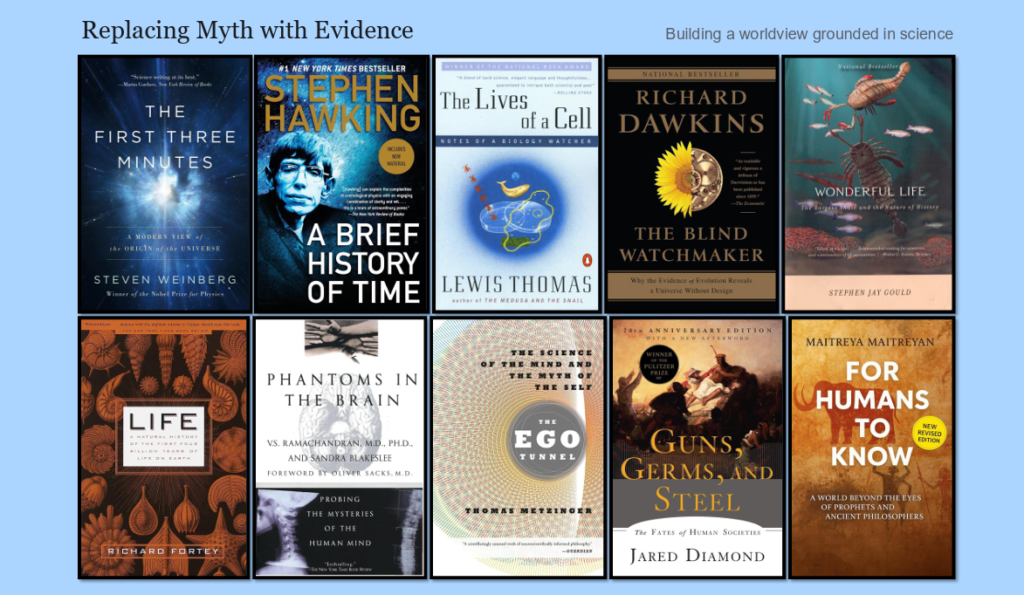
Meditation is not necessarily religious. Sam Harris, the American philosopher and neuroscientist who wrote the book The End of Faith (2004), is one prominent atheist public figure who supports meditation. Over the years, he is a promoter of meditation practices without the need for any religious beliefs.

On 3), a stronger religious identity could lead to groups seeking greater influence in policymaking.

In an increasingly polarized world, eroding the secular nature of the state will not be good for Singapore. Religious fundamentalism can significantly impact policymaking, often leading to tensions between religious values and individual rights. In the United States, debates over reproductive rights and LGBTQ+ issues frequently involve conflict between religious beliefs and personal freedoms. Recently, in Malaysia, recent state policies like mandatory prayer attendance demonstrate the potential consequences when religious fundamentalism heavily influences governance.

We need to maintain balanced approaches that respect both religious diversity and individual liberties. And such a balance is not possible without secularism.

Conclusion

We need to uphold our secular common space and be inclusive of non-religious perspectives, which are crucial in ensuring that Singapore remains a harmonious, multi-faceted society.

Singapore’s strength lies in its diversity, and this diversity should extend beyond race and religion to include those who identify as non-religious. While we are a relatively silent minority, we still need to be heard, our concerns addressed.

Coverage of International Humanist Conference 2024

The following articles were written following the International Humanist Conference 2024, hosted by the Humanist Society (Singapore) from 30 Aug to 1 Sep 2024.

“One of the big takeaways was how much research and how many projects exist related to secularism and interfaith harmony. It often seems like atheism and secularism are not interesting topics for study, as religious scholars tend to focus on new ways of understanding spirituality and religiosity. But at this conference, I saw excellent speakers presenting fascinating research on secularism and interfaith projects and sharing real-life experiences. They offered practical, perhaps diplomatic, approaches to handling interfaith projects.”

“Singaporeans are lovely people, especially older people. For some reason, I connect more with older people because I’m always seeking wisdom from those more experienced than me. I had great conversations with Nora and Peter from Humanists International. Nora has been exceptionally kind and helpful, always going out of her way to assist the attendees. Peter, in particular, was very interested in Ghana and how things are going here. I had many enjoyable conversations with both of them. I also met another remarkable woman, Gerda. It’s quite impressive how we are not alone in our activism. Even though we may have different experiences, the underlying principles—equity, empathy, and so on—remain the same. I enjoyed that aspect of my interactions with everyone.”

Humanist Society (Singapore) did a fantastic job hosting the dozens of delegates who came by preparing six enlightening talks surrounding Interfaith Dialogue and tapping the Ministry of Home Affairs to give us three tours tackling the history of the city’s social diversity. The Society also gave us plenty of time to mingle and befriend one another during several social nights, which my extroverted side (trust me, it’s usually not that active) appreciated!”

“I met people from the Humanist Society (Singapore) without knowing they were staff or in leadership positions. Just meeting them as members of the tour was amazing to me. I emphasize relationality, one of the main frameworks I’m constantly trying to embody, practice, and center in my work and life.

The Humanist Society (Singapore) curated various tours from various organizations. They were ushering us into a world that isn’t my own and listening to how they frame their histories. They live in a relatively young society, yet the design, intentionality, and work that went into building what they have is impressive. That speaks to human creativity and capacity—what can be achieved in what some might call a modern world.

That leads me to the Humanist Society (Singapore) itself. We were able to come in and see the work they’ve done and are still doing, especially in collaboration with Humanists International, to put together this international conference. I’m still reflecting on and cherishing that in my work here and in conversations with peers.”

It was refreshing to be on the road again and to reconnect with fellow humanist friends. The experience may not have been as new or surprising to me as it was for others. Still, I did appreciate the warm Singaporean welcome, generous hospitality, and positive, energetic way of speaking. The honesty in how Malaysians and Singaporeans express themselves resonates with me. The welcome from the humanist community in Singapore was fantastic.

In the lead-up to the conference, there were some concerns about government oversight, surveillance, and their interest in our activities—particularly about speaker visas—which might have conflicted with the human rights values held by many of us. While some concerns did come up, they didn’t overshadow the event. The immigration process was smooth, and the friendliness and dedication of the people immediately struck me.

As for my takeaway, I was particularly pleased that interfaith dialogue and harmony were central themes at this conference. The International Humanist Conference (hosted by Humanists Society Singapore) and the Humanists International General Assembly took place over the long weekend. Interfaith dialogue is a significant aspect of my Humanism and is why I joined the humanist movement. I am a humanist ambassador, someone who engages in dialogue with other faiths and beliefs rather than being inward-looking. Singapore embodies that spirit, and I left with renewed motivation and inspiration to continue my interfaith work. That message truly resonated with me.

“It was quite an experience. It was the first time we hosted such a large conference. We’ve had events like the Asian Humanist Conference, but that was on a smaller scale. That event was back in 2015 and lasted only a few days. But when we bid to host this event, we had our doubts. However, everyone on the committee unanimously said, “Let’s go for it.”

If other countries like Australia and New Zealand can do it, why not us? So, we took the opportunity and won the bid. Initially, it wasn’t very comforting because it was such a challenge. But we eventually came together as a team, and everyone played their part.

For the first time, people from all different countries came together. It was overwhelming, exciting, and yet nerve-wracking because we didn’t want to disappoint anyone. We wanted to ensure that everyone who came to Singapore would have an unforgettable experience. What we learned from organizing such a big event is invaluable. It was a great experience, and we’re glad we did it. It’s a challenge, but you’ll never know what’s possible if you don’t take that first step.”

“The Humanist Society Singapore, whose motto is: “Guided by reason, informed by evidence, and driven by compassion,” were gracious hosts. They started events on Friday, August 30th, with a guided discussion and tour of the nation’s Harmony in Diversity Gallery, where we learned that Singapore is the most religiously diverse country globally but also sees some of the least religiously motivated conflicts. This is no accident. As their presentation showed, they intentionally create shared pluralistic spaces, encouraging engagement between people of differing beliefs and educating about religion and nonbelief to reduce othering and bring people together positively.”

Other articles

A Christian among Humanists: A Chat over Easter #3

Over the long Easter weekend, Christians worldwide commemorated the death and resurrection of Jesus Christ. On Easter, the Humanist Society (Singapore) also occasionally carries out interviews with a handful of Christians have been regularly attending our events for years. They are independent-minded, well-read, and supportive of many Humanist causes. Their perspectives are valuable as a bridge between Christian and non-religious communities.

Previous interviews are with John Hui (2017) and Mathia Lee (2020) and a summary of both interviews are found at the bottom of this post.

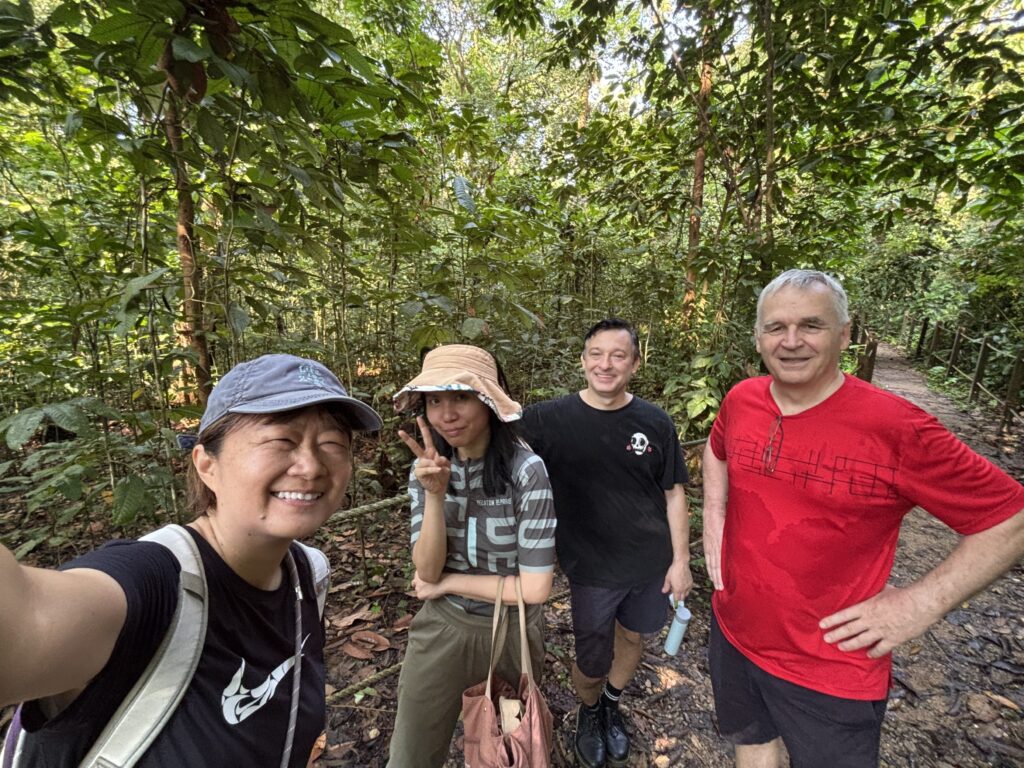
This year, we feature Angela Ow (photo below, first from left), who has been participating in Humanist Society (‘HumanistSG’) events for the past seven years. Her favourite events were the hikes at nature parks, as well as our Humanist Cafe series.

Q: What is your religious faith and what religious services do you attend regularly?

Angela: I identify as a Catholic Christian. My father was an agnostic atheist and my mother was Roman Catholic, so I grew up with a mix but went through Catholic formation from a young age. These days, I go to a non-denominational community church, but I still attend Catholic Masses on many occasions.

Q: When did you start attending Humanist Society events? And what attracted you to our events?

Angela: I can’t remember exactly, but I think it was sometime around late 2018? That’s when I started going to the monthly Humanist Cafés and joined the hikes whenever they were held (I love hiking!). Back then, the Cafés didn’t have set themes, so the conversations just flowed naturally. I remember some interesting discussions on history, astronomy, and science. There was even one on quantum physics that totally went over my head – haha!

Q: What is your first impression of HumanistSG?  What was the biggest surprise to you?

Angela: One of the things that really stood out to me was how intellectual and analytical everyone was! I remember thinking, “Wow, these guys can really discuss very cerebral topics!” It was a little intimidating at first, but I also learnt a lot during the Humanist Café conversations.

Back then, I also noticed that there weren’t many women around – it was mostly a male-dominated space. That was a surprise to me! But it’s been really great to see more women joining Humanist Society events nowadays. It feels more balanced than before, and it’s nice to have a wider mix of perspectives and experiences in the discussions.

Q: How did the humanists, atheists and agnostics etc. react when they learnt you are a Christian? How did you respond to them?

Angela: People are usually surprised when they find out I’m Christian. Some get curious and ask why I’m volunteering with the Humanist Society. Right now, I help out as a Humanist Café facilitator as well as organize bimonthly hikes.

I volunteer because I find these events meaningful – they bring HumanistSG people together and help create a sense of community and friendship. This is especially important since most in the Society do not join religious groups, so they may not have access to the many fellowship and bonding activities that religious groups offer.

Photo above: Angela (standing, 2nd from right) at a HumanistSG hiking event.

Q: Did you feel hurt whenever the Humanist Society releases statements that are critical of religion/religious institutions?

Angela: I don’t think I’ve come across the Humanist Society putting out any statements that were openly critical of religion or religious groups. From what I’ve read, the statement releases have always come across as fair and balanced. What I like is that they highlight the perspectives of non-religious people – views that sometimes get overlooked in our society as Singaporeans with religions still largely outnumber those without.

Q: What is the biggest misunderstanding that many atheists, agnostics, humanists have about Christians?

Angela: I think a lot of non-Christians tend to see Christians as one monolithic group – like everyone believes the same things and acts the same way. To be fair, we all kind of do this sometimes with groups we’re not a part of (I think the term for it is “outgroup homogeneity bias”). It’s common for people to mainly come across Christians who are really active in converting non-believers – whether in public or within their own circles – so it’s easy to assume that all Christians are like that. But that’s not the case. Different Christians choose to live out their faith in different ways, and it’s not a one-size-fits-all thing.

For me, one thing that stood out in the stories of Jesus was how he was always on the lookout for people in the margins of society, people who didn’t fit in, and actively reaching out to them, even if it meant breaking social norms of the time. This aspect of Christianity resonates with me and living out my faith as a Christian means seeking to do the same. That is quite different from seeking the conversion of others, which is often considered by many to be the mainstream or core pursuit of Christianity.

Q: What is the biggest misunderstanding that many Christians have about non-religious people? (atheists, agnostics, humanists etc.)

Angela: I’m not sure if it’s the biggest misunderstanding, but I’ve come across some Christians who think that people without religion don’t have a moral compass – or worse, that they’re amoral and don’t care about doing what’s right.

From what I’ve seen, that’s just not true! Religion and sacred texts can be an important source of guidance, but they’re not the only ones. A person’s sense of right and wrong is also shaped by many other things – their upbringing, the values of society, culture, their lived experiences, and an education that encourages critical, rational and moral thinking.

Take my father, for example. He’s an agnostic atheist, but he’s one of the most honest and considerate people I know – especially for the less abled. Not having a religion won’t make a person less moral or amoral. We all have a conscience, and life is about following one’s conscience to the best of our ability.

Q: How do you think our mutual misunderstandings can be resolved?

Angela: I believe having an open and honest conversation is the best way to go. If we are willing to set aside our preconceived notions, make the effort to see things from the other person’s perspective, and perhaps the hardest part – the courage to be wrong (let’s face it, we all have blind spots and biases), I believe a lot of our misunderstandings can be resolved.

The point of a conversation isn’t about agreeing on everything. We may not see eye to eye as we are all shaped by different lived experiences, ways of thinking and personalities. But that should not preclude us from working together for good. 

Whether it’s doing good because of one’s faith in God, or doing good for goodness’ sake, we all have something to contribute to our shared humanity.  I believe religious and the non-religious have a lot more in common than we think.

Past Interviews

John Hui (2017): John is drawn by its commitment to critical reasoning, secularism, and support for the non-religious community. Despite holding Christian beliefs, including in the resurrection of Jesus, John uses evidence-based reasoning to reconcile his faith with humanist values, engaging respectfully with atheists and agnostics who often question his stance. He sees the Society as a valuable platform for promoting rational discourse and pluralism in Singapore, and believes it can empower progressive religious individuals to stand against religious fundamentalism.

Mathia Lee (2020): Dr Lee sees her faith as a personal moral compass rather than a set of Western-influenced rituals, and appreciates HSS’s respectful but critical stance on harmful religious practices. She highlights the importance of mutual understanding through dialogue, emphasizing that both Christians and non-religious people often hold misconceptions about each other that can be resolved through open, respectful engagement.

ST Forum: Beyond counter-terror drills, people have a vital role to play

The Humanist Society (Singapore) submitted a letter to the Straits Times Forum:

In the letter, our President Nora expressed concern over the recent cases of self-radicalised individuals in Singapore.

She suggested NGOs, including various interfaith groups, can conduct closed-door table-top exercises to simulate first responses to various scenarios of terrorism aimed at weakening social cohesion. And if such exercises already exist, these exercises can be expanded to involve more NGOs and self-help groups.

She added that “scenarios can be based on past attacks that have happened abroad. Scenarios should also change according to how terrorists are adapting to the latest security measures.”

“During an exercise, NGOs and self-help group leaders can take the lead as “social first responders” in the information space, simulating and coordinating their statements and publicity materials, including both social media and mass media,” she said.

Secular Assembly – Jan 2025

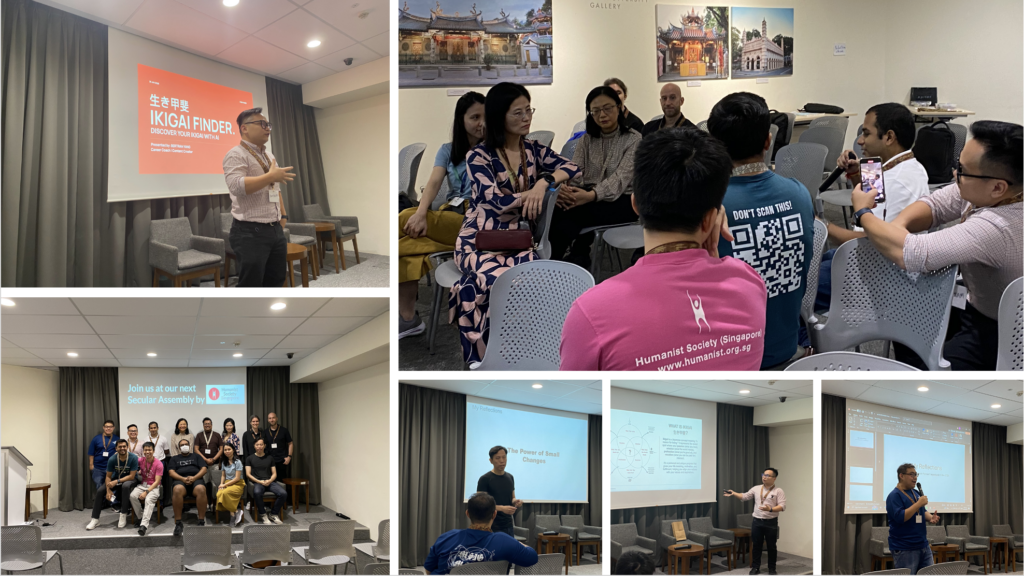
On 25-Jan-2025, our Secular Assembly offered an inspiring mix of creativity, personal growth, and collective sharing. The event kicked off on a high note as everyone united in singing “Firework” by Katy Perry, setting an upbeat and celebratory atmosphere right from the start.

Our highlight speaker, Bertram, then took the stage to share his journey as a coach. With enthusiasm and authenticity, he detailed the evolution of his career and introduced his innovative AI Ikigai webapp—a tool designed to help individuals uncover their life’s purpose. The interactive demo invited the audience to try the app firsthand, sparking engaging discussions about the blend of technology and personal development.

The session continued with heartfelt personal stories from our community. Koi Hin recounted his experiences from a personal retreat, sharing valuable insights on balancing mind, body, and spirit. His reflections resonated deeply with many, encouraging us all to embrace holistic well-being. Adding another layer to the tapestry of experiences, Lionel also shared his personal journey. His story, rich with challenges overcome and transformative insights gained, provided a unique perspective that underscored the power of resilience and self-discovery.

Overall, the Secular Assembly was a celebration of individual narratives woven together by a shared commitment to growth and community support. The day reminded us that every personal story enriches our collective journey, inspiring us to keep exploring new paths towards a more fulfilled and balanced life.

Conversation on Humanism: Irreligiosity and Mental Health

On 25-Jan-2025, we hosted an insightful session as part of our Conversation on Humanism series on Irreligiosity and Mental Health.

This engaging discussion explored the intersection of secular values and mental well-being, addressing key questions like: How does irreligiosity influence mental health, and how can we, as humanists, foster resilience and support?

Key Highlights

Understanding Humanism and Mental Health:

The session began with a broad exploration of humanism, emphasizing its values of compassion, reason, and community. Participants discussed how these principles shape mental well-being in secular contexts.

Insights from Mental Health Statistics and Research:

We delved into local mental health statistics, including findings from the Institute for Health Metrics and Sofia Wellness Clinic, highlighting the growing challenges faced by Singaporeans.

Studies on the relationship between religion and mental health, such as the Straits Times report, were discussed alongside the unique experiences of irreligious individuals.

Debunking Stereotypes:

There is a common misconception that irreligious individuals lack purpose or face higher rates of depression and suicide simply because they don’t adhere to a faith community. However, mental health is influenced by a variety of factors genetics, environment, social support, and personal life experiences rather than religious affiliation alone.

Irreligious people, like those with a religion, can find meaning in family, friendships, personal goals, or ethical and humanitarian values. This highlights that a lack of religious belief does not inherently lead to poor mental health; well-being is shaped by complex, multifaceted influences.

Interactive Activity:

An engaging session on values and coping mechanisms encouraged participants to reflect on their personal approaches to mental health and how their values shape their resilience.

A Humanist Approach

We discussed the “three-prong approach” to mental health which emphasises a holistic framework. It involves three key dimensions:

1. Psychological: Humanism and Mental Well-being

Focuses on fostering emotional resilience and self-awareness through reason, critical thinking, and evidence-based practices like journaling, mindfulness and therapy to build a supportive communities were shared as effective tools for maintaining mental well-being.

2. Existential: Building Meaning and Purpose

Humanists seek answers to life’s big questions—such as existence, morality, and the afterlife—through reason, critical thinking, and shared human experience rather than doctrine. They value personal growth, embracing evolving perspectives shaped by curiosity, compassion, and fairness.Meaning is often found in relationships, creativity, scientific exploration, and contributions to society. Whether through deep personal connections, artistic expression, activism, or altruism, humanists recognize that purpose is self-created and enriched by the positive impact we have on others and the world around us.

3. Social: Supportive Community

Providing a safe and inclusive spaces where irreligious individuals can openly share beliefs, experiences, and support. Rooted in empathy, reason, and respect for autonomy, these communities help combat isolation and foster a sense of belonging.Beyond social connections,  we should promote secular mental health initiatives, including access to non-religious therapists, peer support groups, and evidence-based well-being programs. By encouraging open dialogue and resilience, these efforts ensure that individuals can seek help and thrive without religious judgment.

The session concluded with an open discussion and a call to action, acknowledging that Compassion is at the heart of building strong, supportive secular and humanist communities. By fostering meaningful connections, we create inclusive spaces where individuals feel valued and understood. We encourage everyone to seek support when needed and extend kindness to those around them, reinforcing the humanist commitment to mutual care, empathy, and shared well-being.

A quote by Robert G. Ingersoll beautifully captured the essence of the evening: “Happiness is the only good. The time to be happy is now. The place to be happy is here.”

We’re grateful to everyone who joined us for this meaningful conversation. Stay tuned for updates on upcoming events, including the next session in the Conversation on Humanism Series!

HSS Socials: Movie and Game Night

On 24-Jan-2025, a member initiated a movie and game night, and it was a resounding success! The event brought together a delightful mix of new faces and long-time members, some of whom we were thrilled to welcome back after a long absence. It was heartwarming to see everyone reconnecting and enjoying each other’s company in a relaxed, fun-filled atmosphere.

The evening kicked off with games—many of us learned how to play mahjong and sharpened our skills at pool. Laughter and cheers filled the room as participants discovered hidden talents or simply enjoyed the camaraderie.

After the games, we gathered for the feature movie of the night, Heretic, which did not disappoint! Hugh Grant’s chilling portrayal of a psychopath kept us all on edge, while the unexpected plot twists had the group collectively gasping with “aahs” and “oohs.” It was refreshing to share the thrill of such a gripping film together as a community.

Of course, no movie night would be complete without food, and we indulged in a feast of pizza and KFC, perfectly complementing the electrifying atmosphere. Sharing a meal while engaging in lively post-movie discussions made the night even more enjoyable.

This event marked our first movie and game night, but it’s certainly not the last! The success of the evening reminded us how vital and rejuvenating it is to gather as a community, share experiences, and create lasting memories.

Thank you to everyone who attended and made the night so special. We look forward to seeing you at our next event!