***
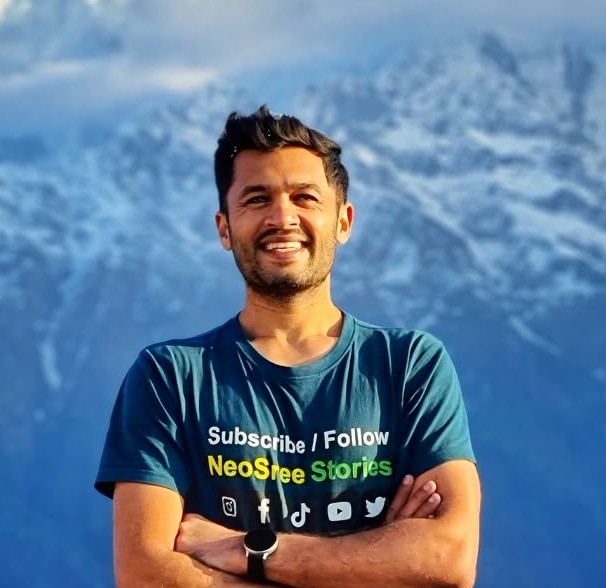
This is the personal journey of Neo Sree, one of the members of the Humanist Society (Singapore), at the 2026 Virtual Asian Humanist Conference organised by Humanists Malaysia with support from Humanists International. He was one of the featured speakers on Oct 3, the first day of the two-day conference.
Growing up in a small village in Kerala, India, Neo Sree was surrounded by religion.
Rituals, traditions and beliefs formed part of everyday life, reinforced by grandparents, relatives and the wider community. Like many children around him, he was largely expected to follow the practices of his elders without questioning them.
But at home, Sree encountered a different influence.
His father, whom Sree described as a “lone sceptic” in the community, was sceptical of much of the Hindu mythology and religious tradition around them. More importantly, when the young Sree began asking questions about God and the universe, his father did not pretend to have the answers.
Instead, he encouraged his son to find out for himself, telling him to “search for the answers, read books, and learn more about science.”
The search for answers
That freedom to question would eventually shape a journey spanning religion, science, mental health and, ultimately, the international humanist movement.
After moving to Singapore in his twenties to study and later work in technology, Sree continued searching for answers to the questions that had occupied him since childhood.
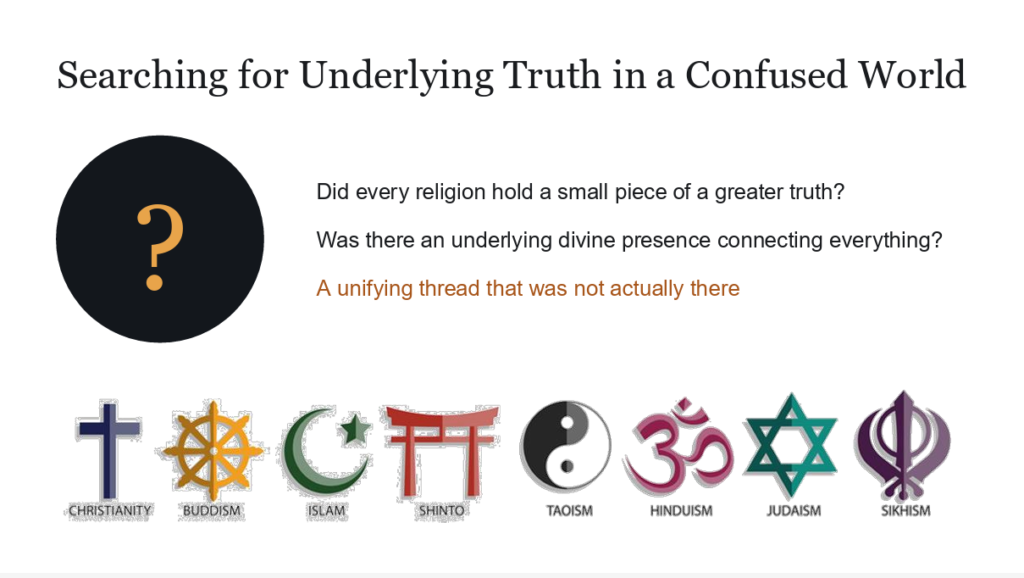
Although no longer particularly religious, he remained open to spirituality. He wondered whether the world’s religions might each contain fragments of a larger truth, perhaps pointing towards an underlying divine presence.
Without what he now describes as a firm grounding in critical thinking, Sree tried to reconcile contradictory religious ideas and find a common thread between them. “I tried to harmonize all these conflicting dogmas and search for some unifying thread, which was not actually there,” said Sree.
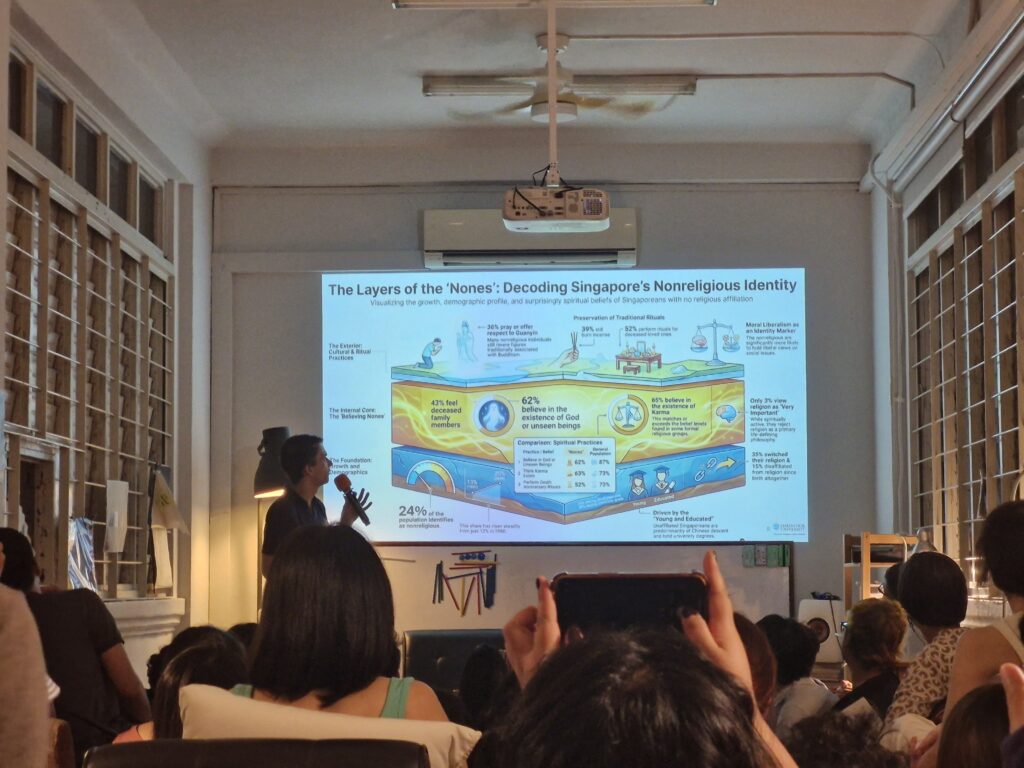
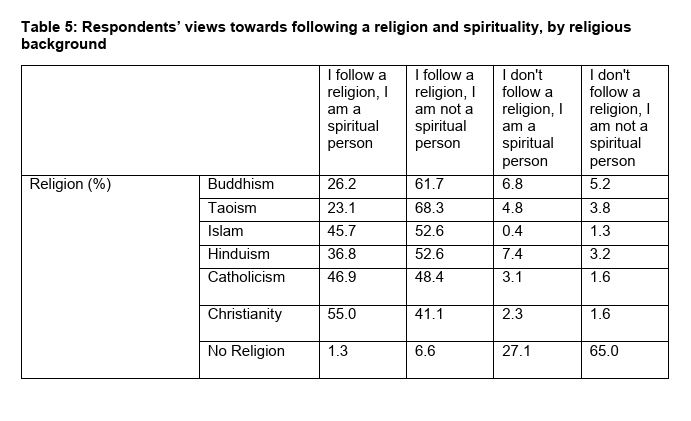
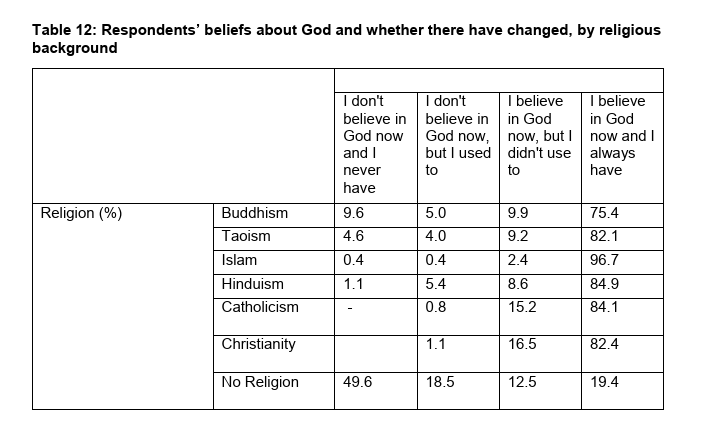
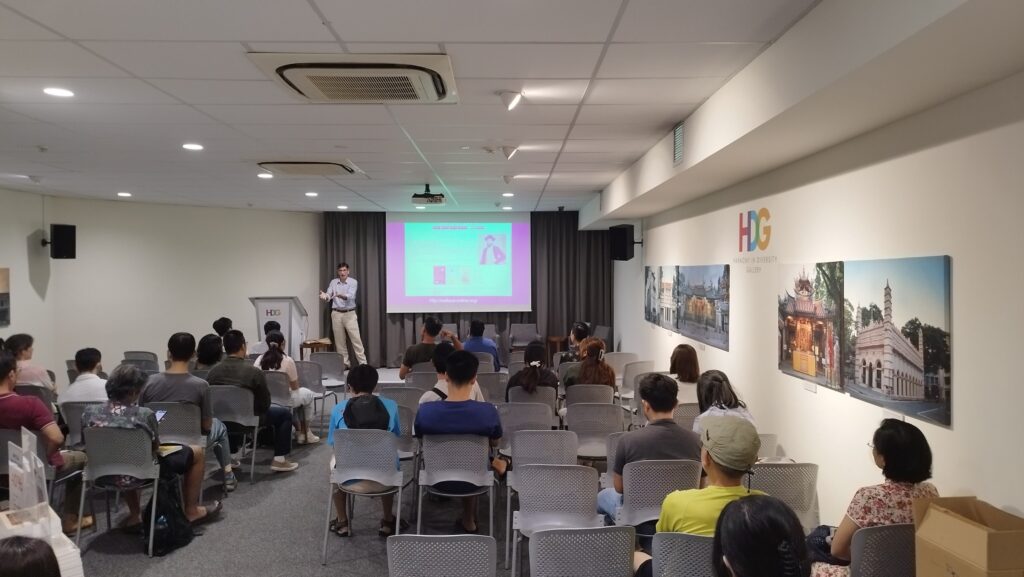
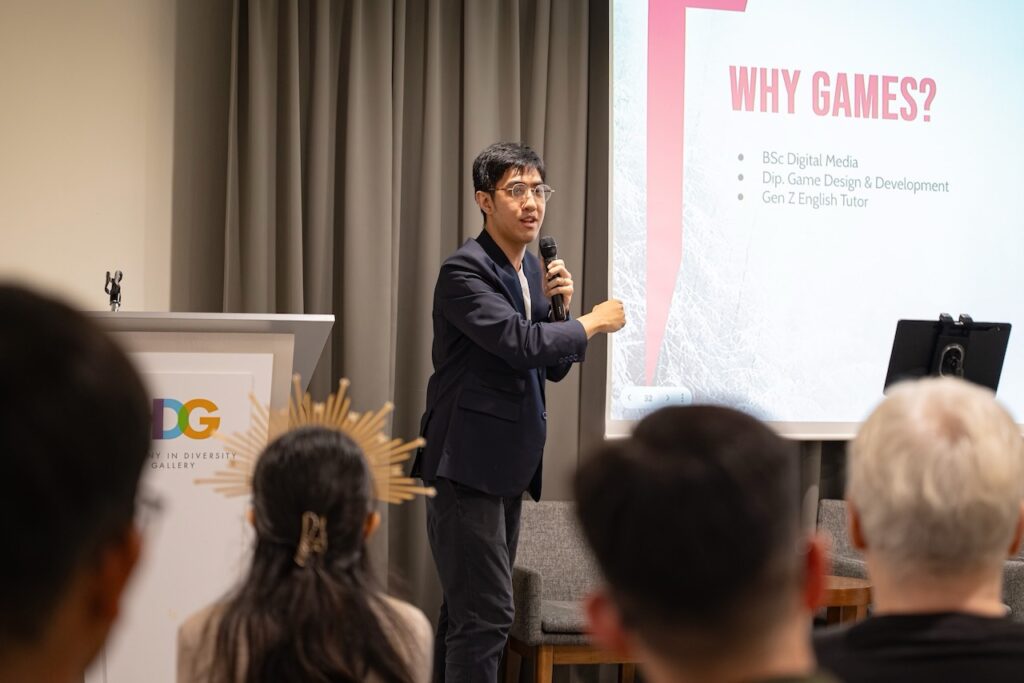
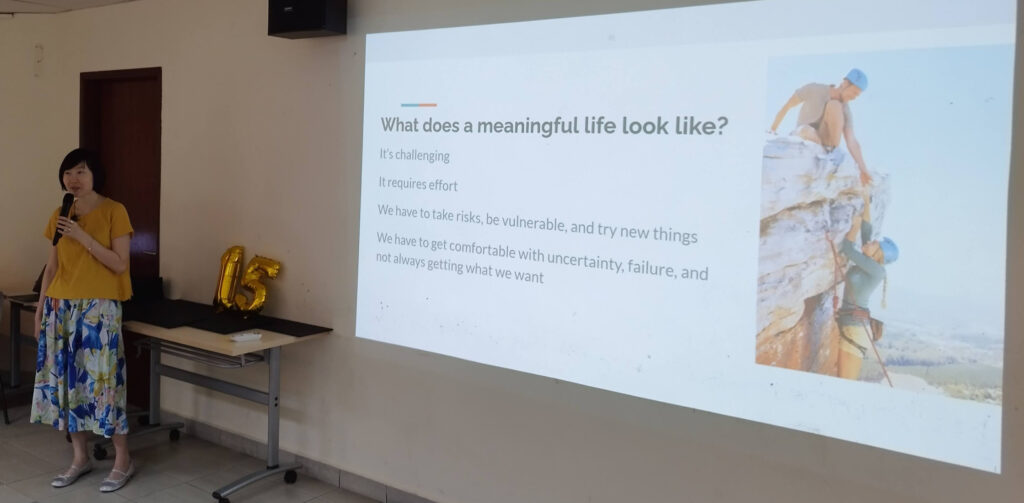
Below: One of the slides shared by Sree during his presentation
***
A crisis that changed his worldview
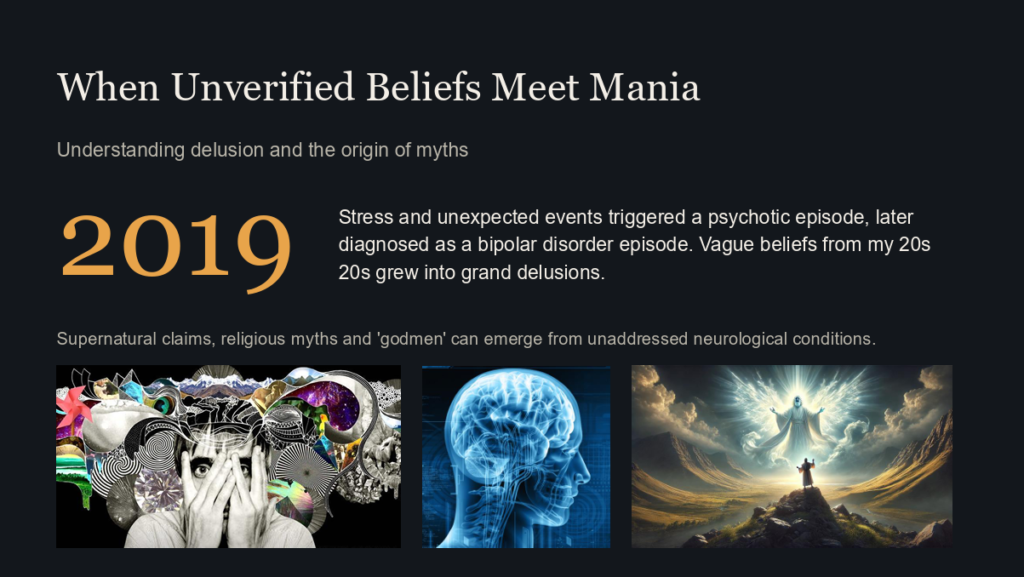
His worldview was dramatically shaken in 2019.
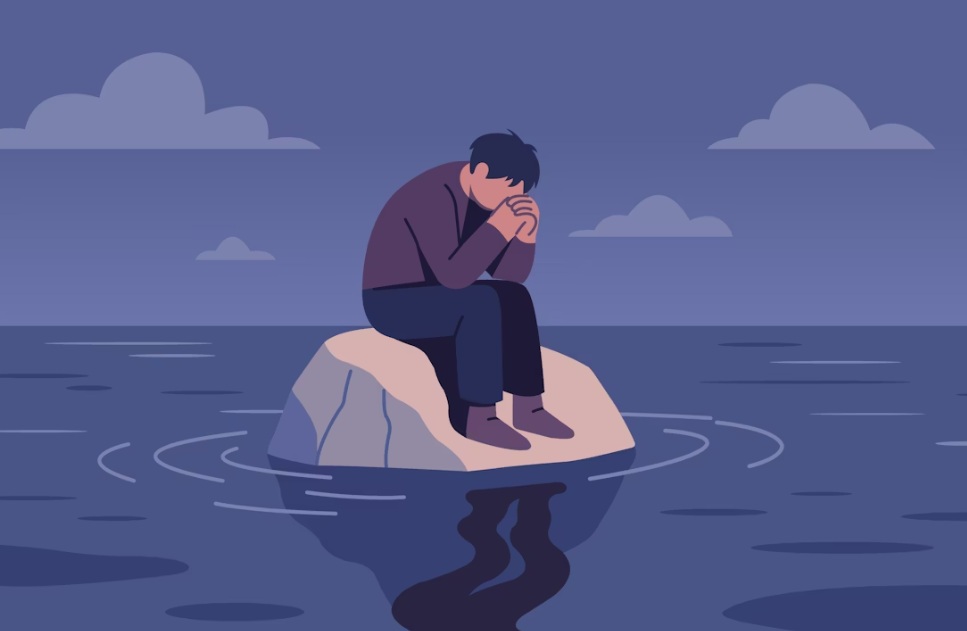
Following a series of stressful events, Sree experienced a psychotic episode and was subsequently diagnosed with bipolar disorder. During the episode, his earlier religious and supernatural ideas became incorporated into elaborate delusions.
He believed he had received a special revelation and, at different points, thought he was a prophet, a messenger of God or God in human form. He also believed he had been given a mission to unite the world’s religions and humanity.
***
To Sree, these experiences felt completely real at the time.
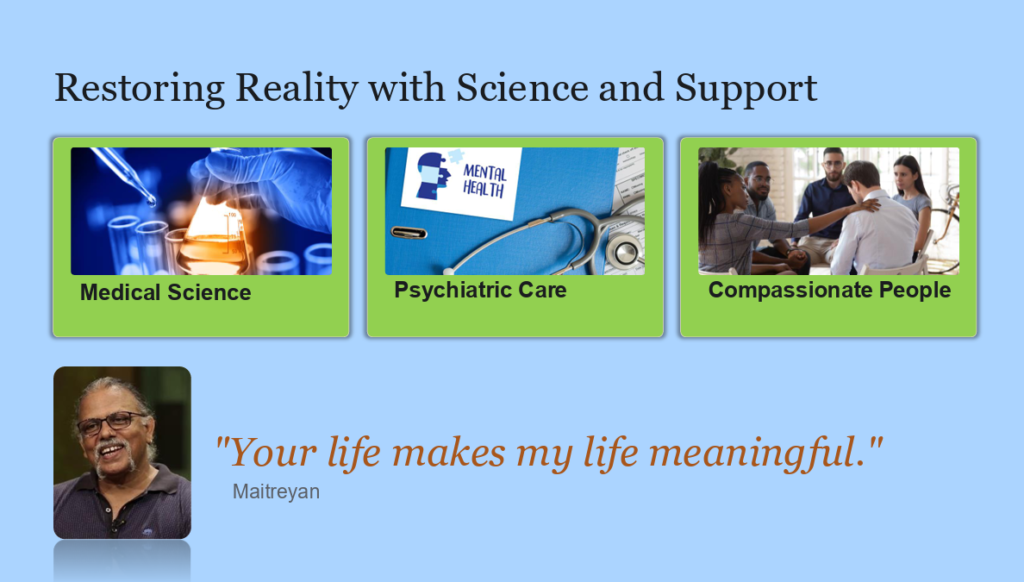
His path out of them came not through religious or mystical intervention, he said, but through psychiatric treatment, medical science and the support of people who helped him reconnect with reality.
Among the most important was Maitreya Maitreyan, a rationalist and activist from Kerala whom Sree contacted during his recovery.
Maitreyan listened to him over numerous conversations, challenged his ideas and encouraged him to continue evidence-based medical treatment. Sree later thanked him for spending so much time helping him through the difficult period.
***
Maitreyan’s response stayed with him: “Your life makes my life meaningful.”
For Sree, the simple sentence provided an answer to another question that had long troubled him: where could meaning come from without religion?
Meaning, he began to realise, could be found in human relationships and in what people did for one another.
Rebuilding through science and reason
As he rebuilt his worldview, Sree turned increasingly towards science and literature.
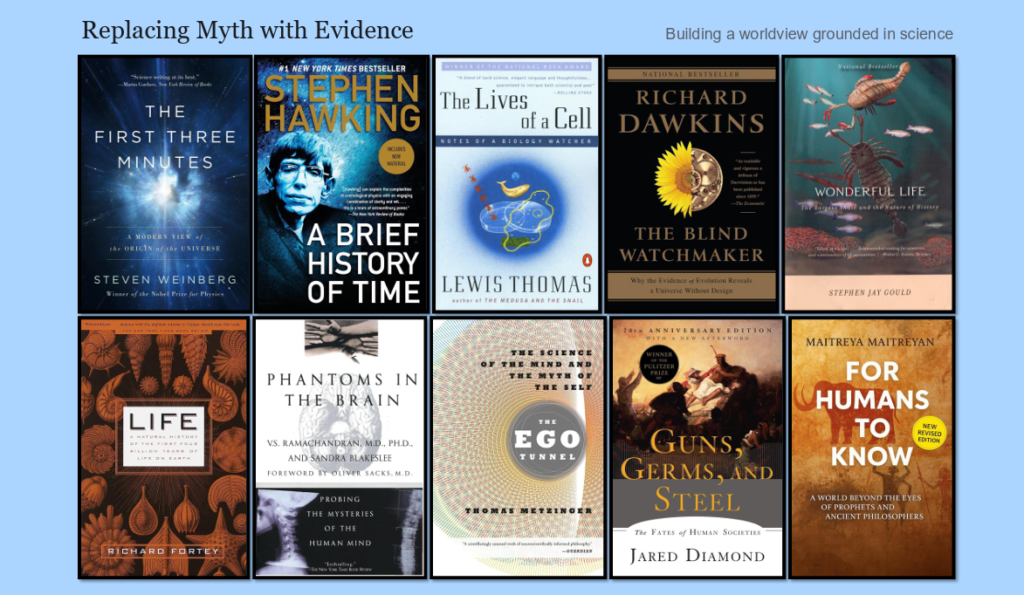
Books on cosmology, evolution and biology, including The First Three Minutes, A Brief History of Time, The Blind Watchmaker and Wonderful Life, offered naturalistic explanations for questions he had once approached through religion.
***
His experience with psychosis also sparked an interest in neuroscience. Books such as Phantoms in the Brain and The Ego Tunnel helped him explore how the brain constructs perception and our sense of self.
Together, he said, these works gave him a more coherent foundation for understanding the universe, life and the human mind.
Finding the humanist movement
His path towards organised humanism, however, had already begun quietly.
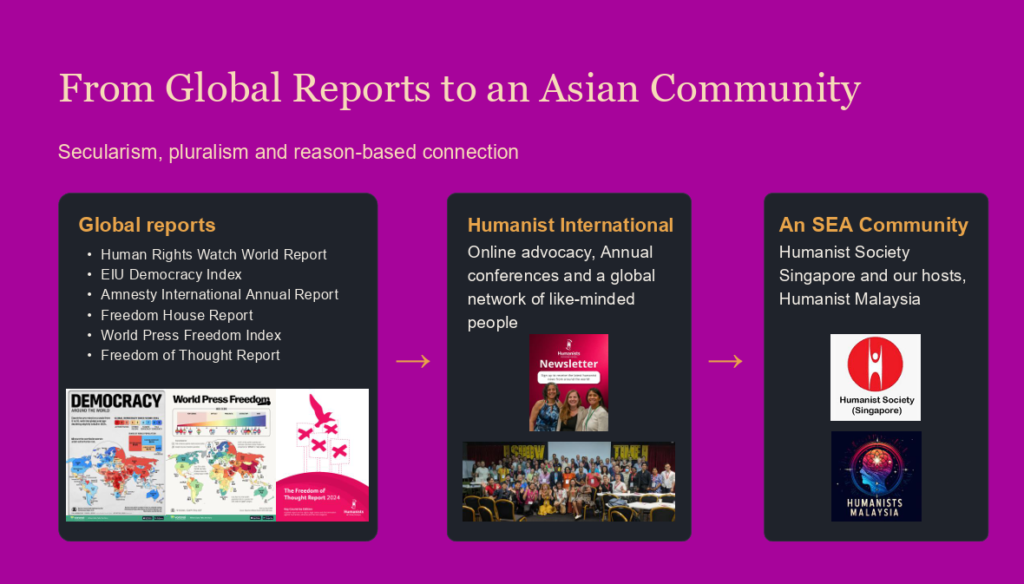
Since around 2017, Sree had been reading international reports on democracy, human rights and civil liberties. Among them was the Freedom of Thought Report, published by Humanists International.
He began following the organisation and became interested in its advocacy for freedom of thought and the rights of non-religious people.
That connection eventually led him to the Humanist Society (Singapore).
***
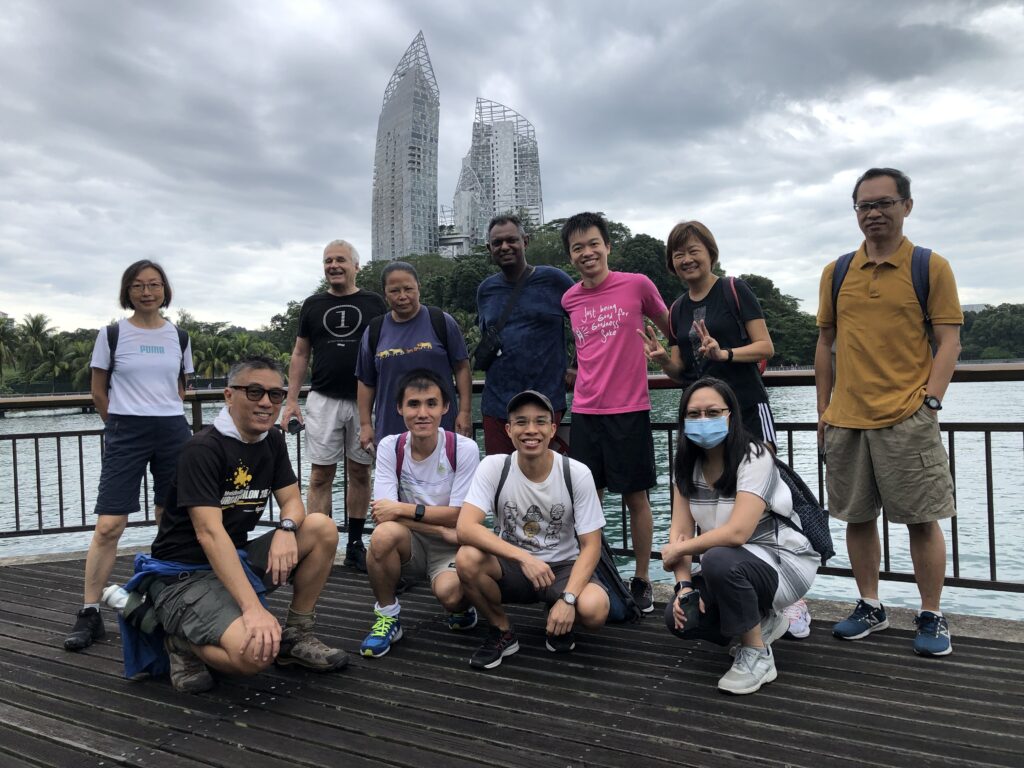
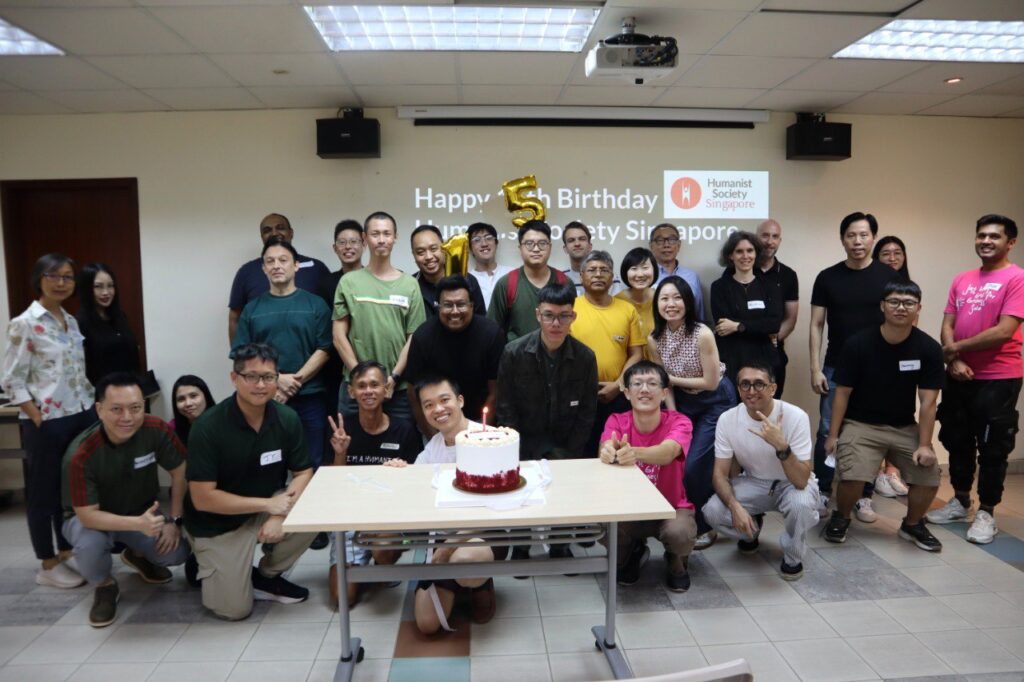
Sree began volunteering at its events and later attended the International Humanist Conference 2024 in Singapore. There, he encountered something that had been largely absent during his earlier journey: a community.
He met people from different countries who shared an emphasis on reason, critical thinking and human welfare without relying on supernatural beliefs. He also met members of the emerging Humanist Malaysia community, including A. Jay Surin, with whom he became friends.
Sree subsequently attended more international humanist gatherings, deepening his involvement in a movement he had first discovered through an online report.
***
Finding meaning and community without religion
Looking back, he sees a journey that began with the freedom his father gave him to question inherited beliefs and eventually led to a global community built around many of the same questions.
Speaking at the Asian Humanist Conference hosted by Humanist Malaysia, Sree said his experience had convinced him that abandoning religious belief did not require abandoning purpose or belonging.
“Leaving religion behind does not mean losing meaning and community. We do not need divine or supernatural beliefs to live a meaningful and fulfilling life,” he said.
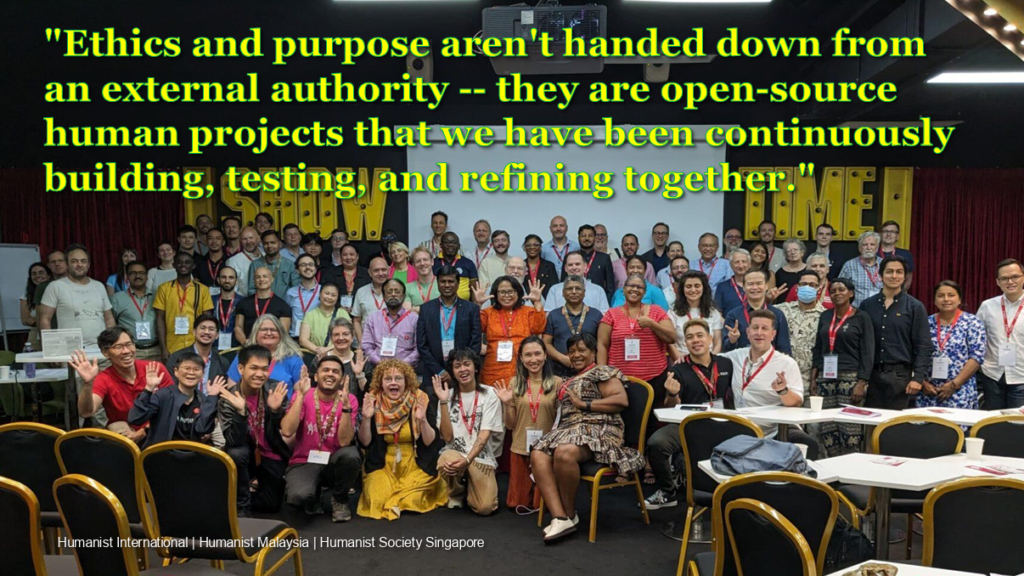
For Sree, ethics and purpose are instead things human beings create collectively — ideas that can be questioned, improved and passed on.
“They are open-source human projects,” he said, “that we have been continuously building, testing and refining together.”