***
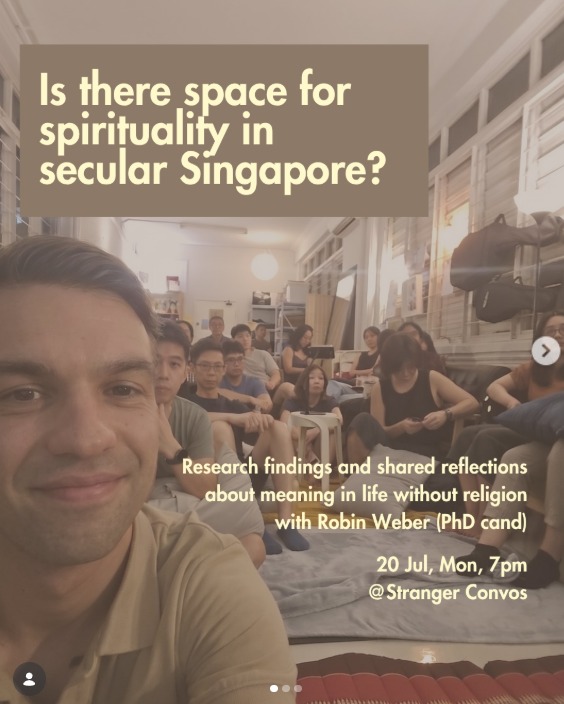
This gathering by Robin Weber, PhD Candidate and Psychological Researcher at James Cook University (Singapore Campus) was an open and collaborative exploration into non-religious spirituality in Singapore, examine the data and results of his ongoing doctoral research studying how spirituality is understood and practised in an increasingly secular society.
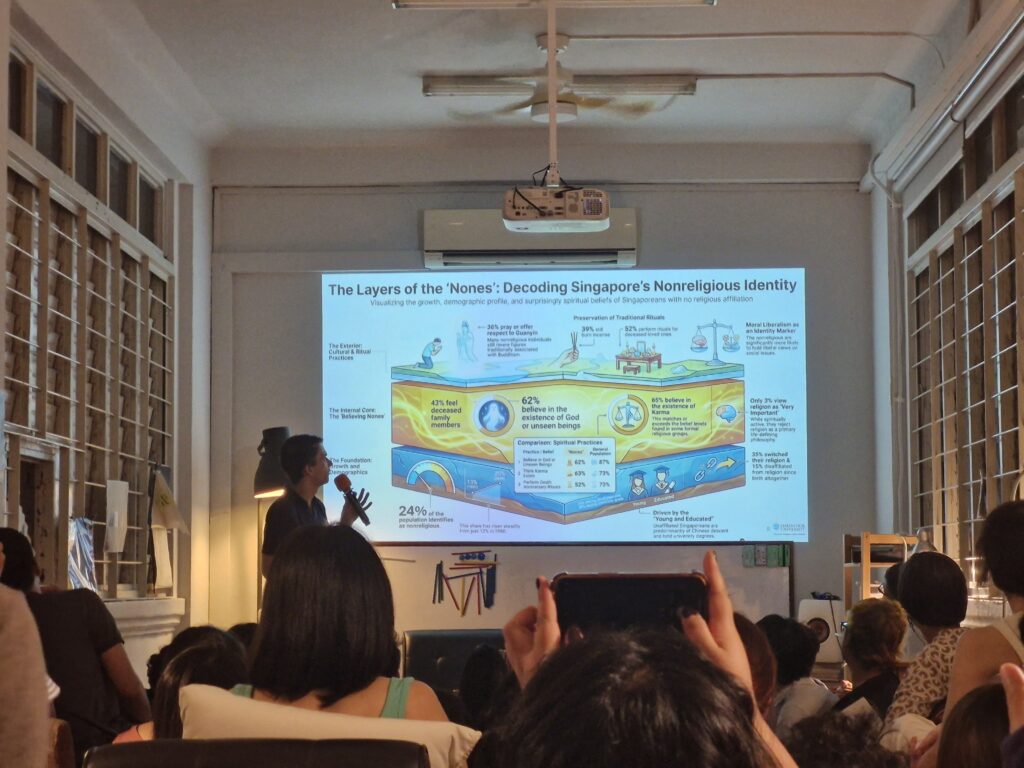
Spirituality is defined as “the personal quest for understanding answers to ultimate questions about life,” distinguishing it from organised religion. The study responds to a global increase in nonreligion but lack of research conducted in the Asia-Pacific region – where almost one-quarter of the world’s nonreligious population lives. This risks overlooking spiritual diversity, for example, compared with Europe, a much larger proportion of Singapore’s non-religious population identifies as “spiritual but not religious” (SBNR) and holds implicit spiritual beliefs.
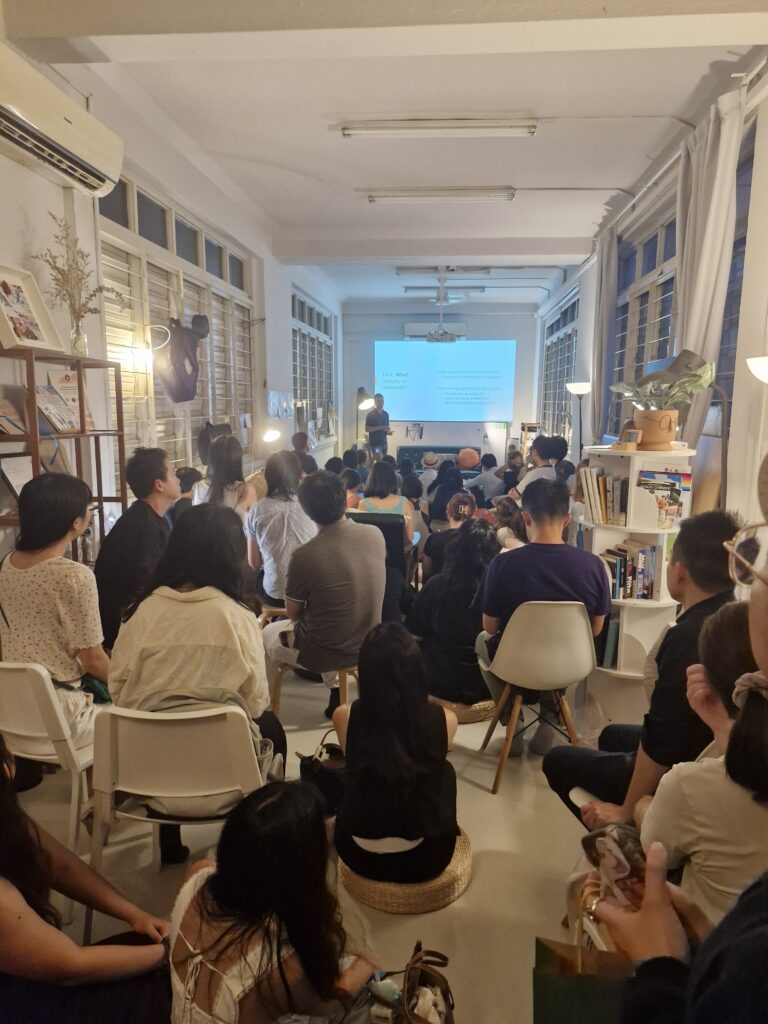
Photo below: Robin speaking to a large crowd.
***
The presentation was centered on the speaker’s qualitative study in Singapore involving participants from diverse walks of life. After outlining the analysis’ six major themes, the room discussed each of them in groups to interpret, reflect and personally apply the implications of the findings. Guiding interview questions and excerpts from the interviews were shared with the groups to facilitate their conversations. Some of the topics participants talked about involved:
- Connection with oneself, others, nature, and the wider world.
- Belief in realities beyond the physical world, including higher powers, cosmic principles, an afterlife, etc.
- Personalised spiritual practices that promote calmness and self-control.
- Linking happiness with helping others, and community engagement.
- Searching for meaning and purpose with spiritual guidance.
- Freedom to choose one’s own path, emphasising autonomy, rationality, and individual agency.
***
An overarching finding is that identity underpins all six themes. Spirituality appears to be an important source of identity for many nonreligious people, yet Singapore’s blend of secularism is often perceived as an obstacle for spiritual expressions outside of religion. Robin reflected the interactions made him think whether dedicated spiritual spaces were desired to offer safe environments for people to explore otherwise often stigmatised beliefs. The presentation concluded with an outlook on Robin’s future quantitative research.