Secular Assembly – 27 December 2025

If life were a game, what kind of main character would you be? At our last Secular Assembly of 2025, this question was explored by our guest speaker amid a festive and reflective atmosphere.

In a presentation titled “Embracing Your Protagonism”, guest speaker Melvin Lim, President of HSS, discussed how one might use the lenses of storytelling and games to navigate a complex world.
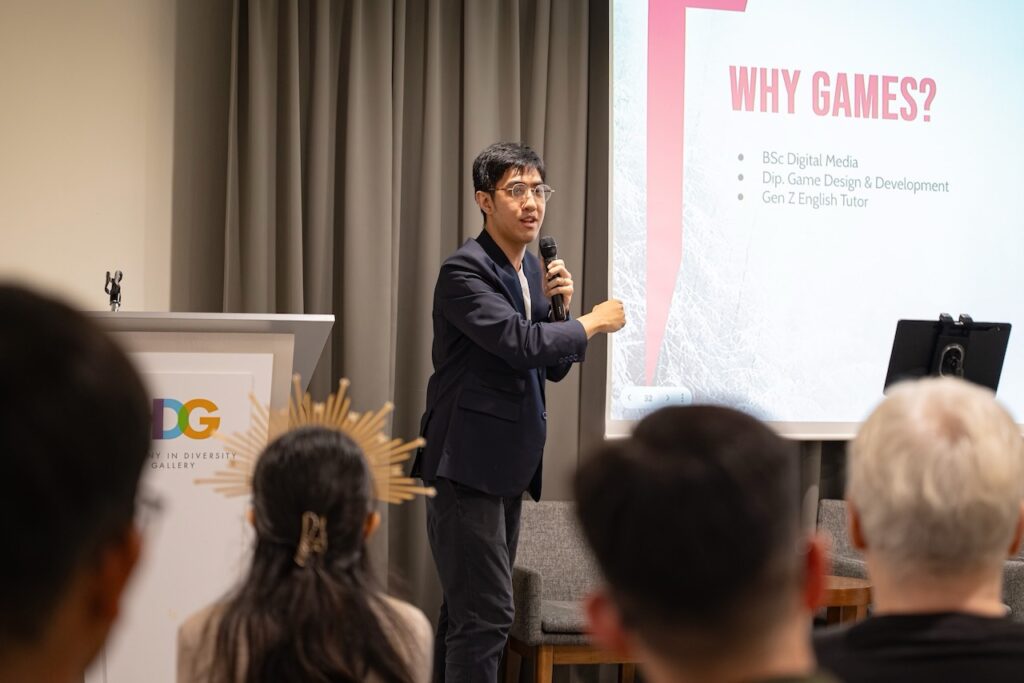
Starting with an overview of folklore around the world related to winter, Melvin helped situate Christmas traditions within a vibrant tapestry of cultures with origins ranging from Japan to Europe.

Like folklore that can convey important moral and practical knowledge, narrative games, Melvin posited, is one lens we could use to navigate our lives. Some questions raised by his presentation:

  • Do you prefer a ‘restricted’ environment (where there is a specific condition to ‘win’, such as in chess) or a ‘free’ one (where the success criterion is self-defined, such as in Minecraft)?
  • Are you more ‘autotelic’ (motivated by intrinsic factors such as curiosity) or ‘exotelic’ (motivated by external factors such as prestige)?
  • How are you nurturing your talent, and improving your luck (which can be thought of as a combination of opportunity and preparedness)?

Other highlights of the programme:

  • Before the main Assembly, a group of attendees enjoyed a guided tour of the Harmony in Diversity gallery, kindly made possible by our gallery partners. Read more about the gallery here.
  • Lit by (electronic) candlelight, participants were guided to share reflections on things that they were grateful for over the past year.
  • The jolliest fellow of the season dropped by! Santa Claus surprised attendees with presents and led us in a medley of classic Christmas songs.

Join us at the next Secular Assembly, where we’ll continue to build the Humanist community!
Secular Assembly and 15th Anniversary

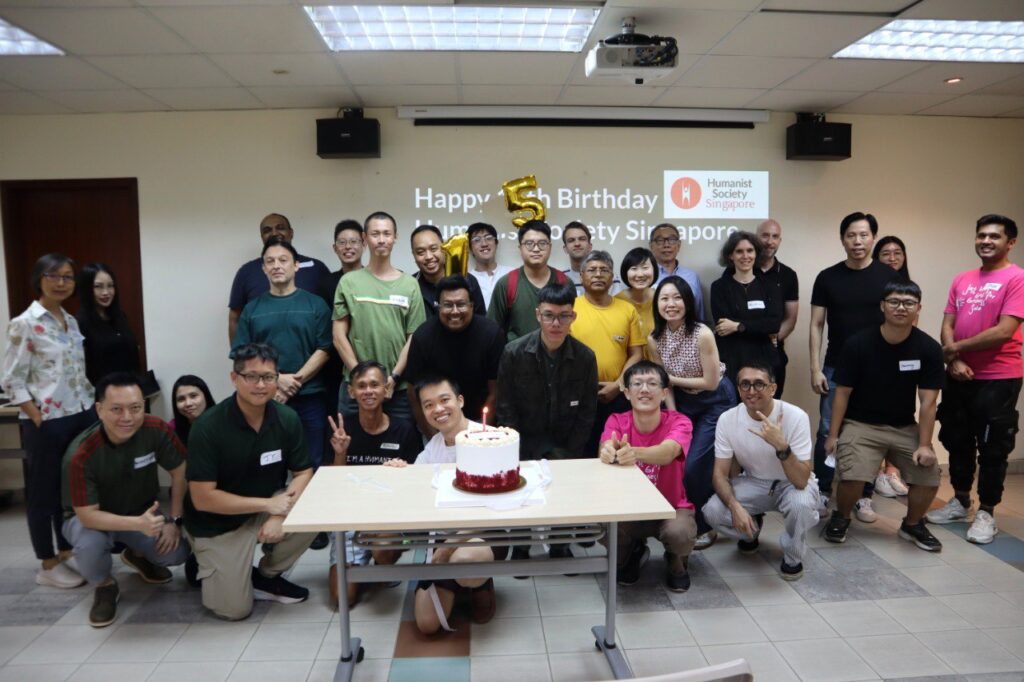
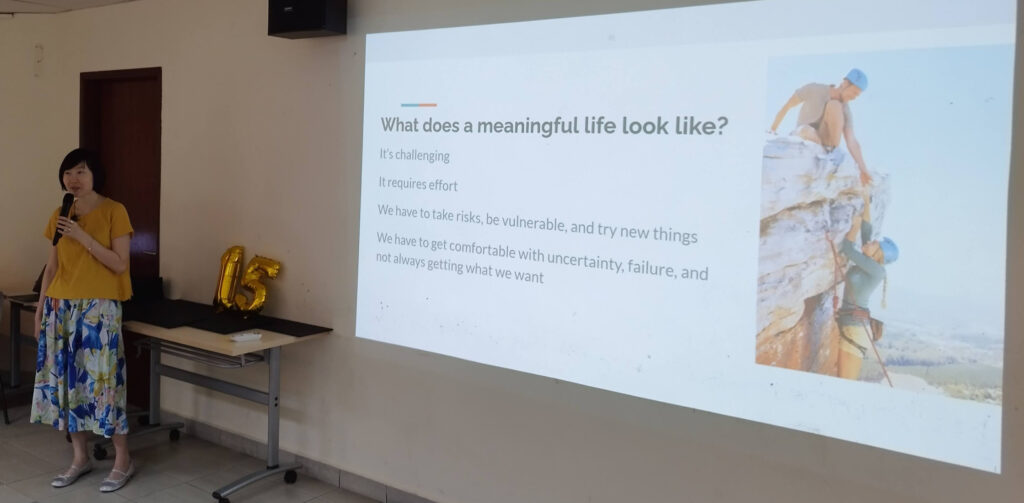
On October 25, HSS celebrated 15 years since the Society’s founding and held a Secular Assembly that encouraged attendees to infuse life with meaning. 


Secular Assembly: Finding Meaning

The afternoon began with a lively Secular Assembly that offered approaches for finding meaning in life when one feels unable to progress. 

Leading an interactive workshop and sharing session on the topic of “Finding Meaning When You Feel Stuck in Life”, Registered Counsellor Deborah Koh guided attendees to discover and reconnect with their personal values as the fundamental building blocks of a fulfilling life. 

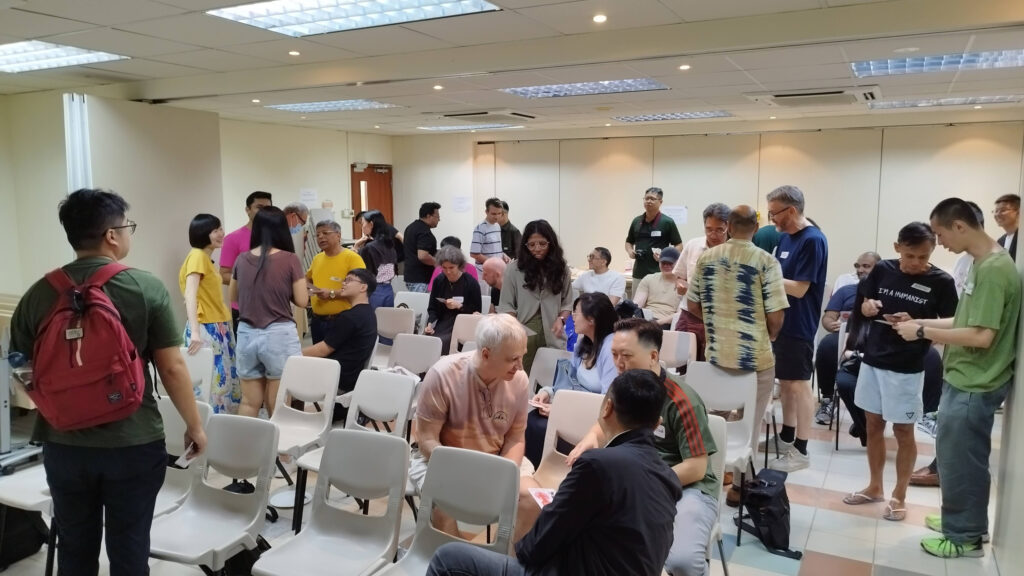
Participants taking part in “Values Exchange” activity

The session showed us that while the instinctive reaction to feeling stuck may be to withdraw from challenges, this reaction can be addressed with various strategies. These include:

  • accepting that uncertainty and failure are part of a meaningful life;
  • detaching yourself from thoughts that are unhelpful;
  • and self-reflection to achieve clarity on your core values.

15th Anniversary Gathering: A Look Back and Forward

With attendees energised by the workshop, the mood swiftly shifted to one of celebration for the Society’s 15th Anniversary Gathering!

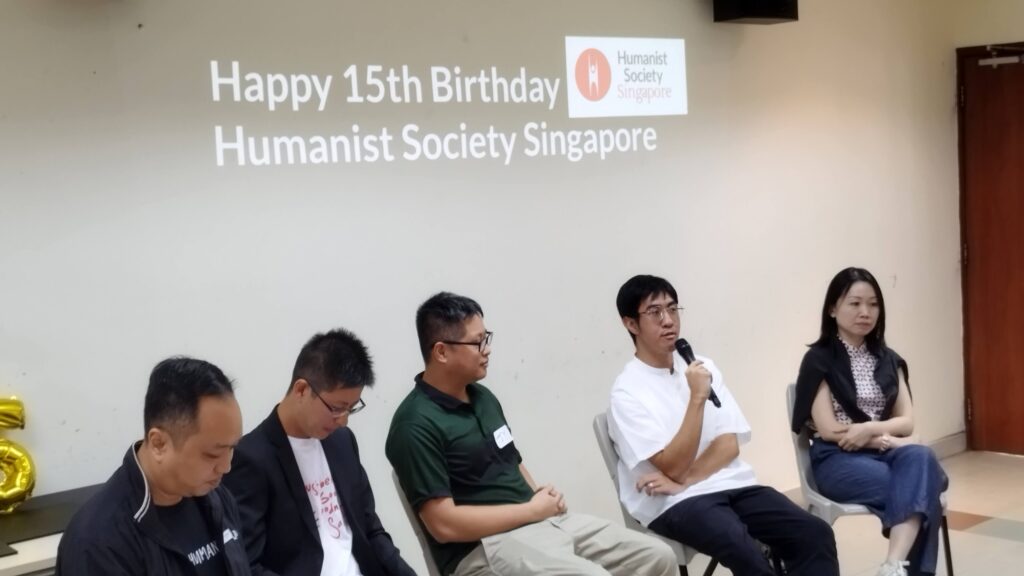
A major highlight was an intimate fireside chat featuring past and present HSS leadership. Moderated by current HSS Vice-President Xiang Hong, the speakers comprised the Society’s founding and early Executive Committee (Exco) members (Eugene, Jianyue and Huifen) alongside current HSS President (Melvin). This intergenerational conversation brought to light memorable moments from the past and shared aspirations for the Society’s next chapter.

Speakers candidly shared insights on topics that included:

  • HSS’ notable achievements. As examples of major achievements by the Society, speakers cited the international Humanist conferences hosted by HSS and its various collaborations with government statutory boards over the years. These events have helped HSS make its mark and reflect that it has a level of trust from local authorities.
  • Vision for the Society’s public image. President Melvin spoke on his hope for the Society to be better connected to Humanist communities in the region, and to be seen as a bastion of critical thinking. 
  • How to keep HSS going. Speakers suggested:
    • An Exco that is willing to learn and experiment and that keeps the trust of attendees and volunteers
    • Continually holding events to bring in new members
    • Looking to other long-running groups for applicable lessons

The Exco also honoured a number of HSS members for their contributions to the Society with awards for Best Member, Best Volunteer, Community Builder and Best Newcomer. Our sincere congratulations to all the worthy recipients! Your gifts of time and effort—along with those of every volunteer—are the driving force of our Humanist community, and we are profoundly grateful for your service.

The gathering wrapped up with a spread of finger food, including homemade dishes contributed by members, and a special birthday cake. The cake celebrated both recent birthdays (in line with our Secular Assembly tradition) and the landmark achievement of 15 years of serving as a voice for the non-religious in Singapore.

Thank you to everyone who joined us for this special day. Your presence, participation, and stories are what make our Humanist community vibrant. Here’s to many more years of promoting reason, compassion, and meaningful living!

Secular Assembly – 27 September 2025

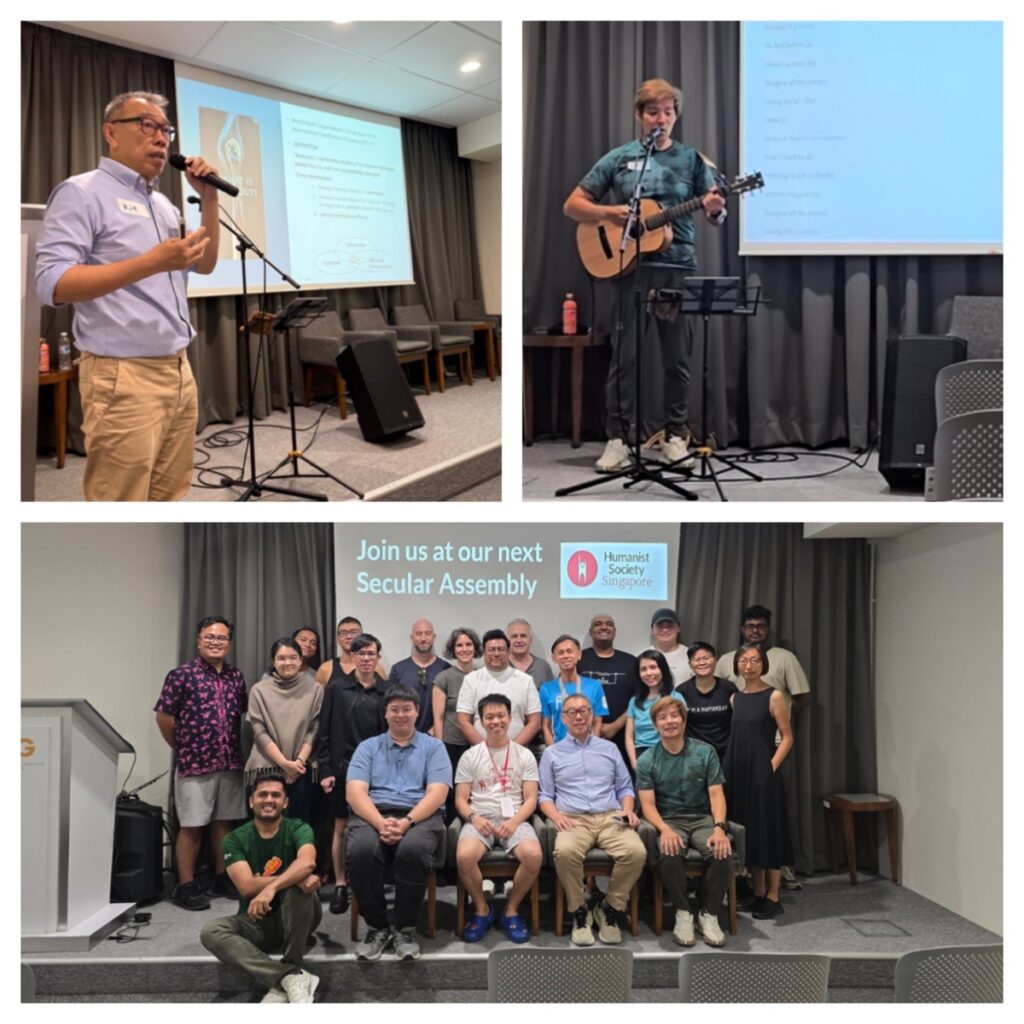
Burnout from work stress is a common problem in our fast-paced city. How can individuals prevent burnout and what role can non-religious organisations play? At our eighth Secular Assembly of the year, held on 27 September, these topics were explored by our guest speaker Kit Koh, a career coach and mental health counsellor.

First, a definition of burnout. For this, Kit cited the World Health Organisation (WHO), which defines burnout as a condition “resulting from chronic workplace stress that has not been successfully managed”.  It comprises three aspects: “feelings of energy depletion or exhaustion; increased mental distance from one’s job, or feelings of negativism or cynicism related to one’s job; and reduced professional efficacy”. When burnout sets in, Kit noted that it could lead to more problems such as depression, weakened immunity and strained relationships.

Regarding strategies an individual could use to prevent burnout, Kit shared that these include minimising sources of stress (e.g., by setting physical and digital boundaries), addressing deeper dysfunctional cognitive patterns, and engaging in activities that produce “happy hormones”. These hormones – dopamine, endorphins, oxytocin and serotonin – are known to be powerful contributors to positive emotions.

Oxytocin facilitates feelings of trust and connection, and is often produced during activities that involve interpersonal bonding. Thus, to promote oxytocin and the positive emotions associated with it, Kit suggested that a secular society like HSS could hold group activities that are “psychologically safe, emotionally positive [and] mentally restful” – such as group singalongs and events for appreciating people (e.g., celebrating good deeds). Not so coincidentally, these suggested activities are typically part of the Secular Assembly.

On the flip side, Kit also suggested what NOT to do: namely, if social bonding is the goal, we should avoid turning every space into one for critical discussion and debate – a frequent temptation for opinionated humanists!

Other highlights of the programme:

  • Before the main Assembly, a group of attendees went on a guided tour of the Harmony in Diversity Gallery (HDG), kindly made possible by our HDG partners. Read more about the Gallery here.
  • For the first time at the Secular Assembly, live singing AND music! James, an HSS volunteer, provided skilful vocals and guitar to lead us in singalongs of Imagine and other classic songs.
  • A gratitude exercise led by Dan, Secular Assembly programme director, encouraged thankfulness and reflections on our interconnectedness.

Join us at the next HSS event, where we’ll continue to build the humanist community!

Secular Assembly – 30 August 2025

How can non-religious communities promote helping behaviour? Our seventh Secular Assembly of the year, held on 30 August, explored this question with compelling research insights.

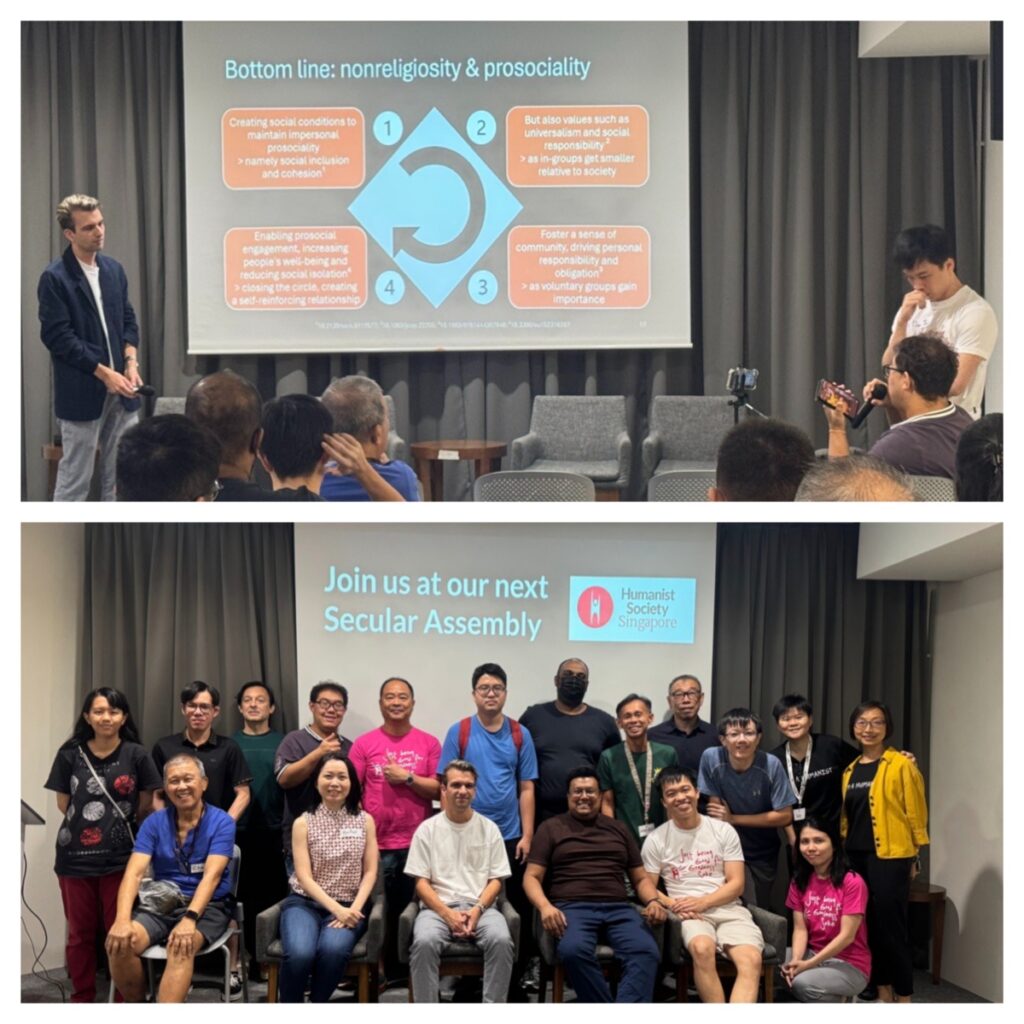
‘The Rise of Nonreligion and its Perpetuating Beliefs’ was the subject of a guest presentation by Robin Weber, a member of our humanist community and a researcher. Robin began with various studies on global trends in religiosity and non-religiosity, highlighting the increasing prevalence of non-religious demographics around the world. He also shared surprising research about the religiously unaffiliated in Singapore, such as the Pew Research finding that 62% of non-religious adults in Singapore ‘believe in God or unseen beings’.

Indeed, even within the non-religious, there is a huge range of beliefs. As societies become increasingly diverse and secular, it’s important to ask what factors independent of religion can contribute to prosociality, or behaviour that benefits others.

Robin shared that at an individual level, these factors include self-compassion and empathy for others, as well as social support (the perception of being understood, supported and respected.) In fact, social networks are thought to be a generally stronger driver of religious groups’ prosociality compared with a belief in a higher power.

As such, for a secularising society to maintain impersonal prosociality (prosociality towards others outside of one’s in-group), a sense of social inclusion and cohesion are essential. With this foundation, if other-oriented values such as a sense of social responsibility are cultivated, a stronger community is more likely to arise and in turn bring about prosocial behaviour. 

In addition to Robin’s enriching talk, the Assembly programme included an update on the Society’s donation drive for Singapore Red Cross (we exceeded our $1,000 fundraising target!), and soul-nourishing traditions: a lively singalong and a guided mindfulness exercise.

Join us at the next HSS event, where we’ll continue to build the humanist community!

Secular Assembly – 2 August 2025

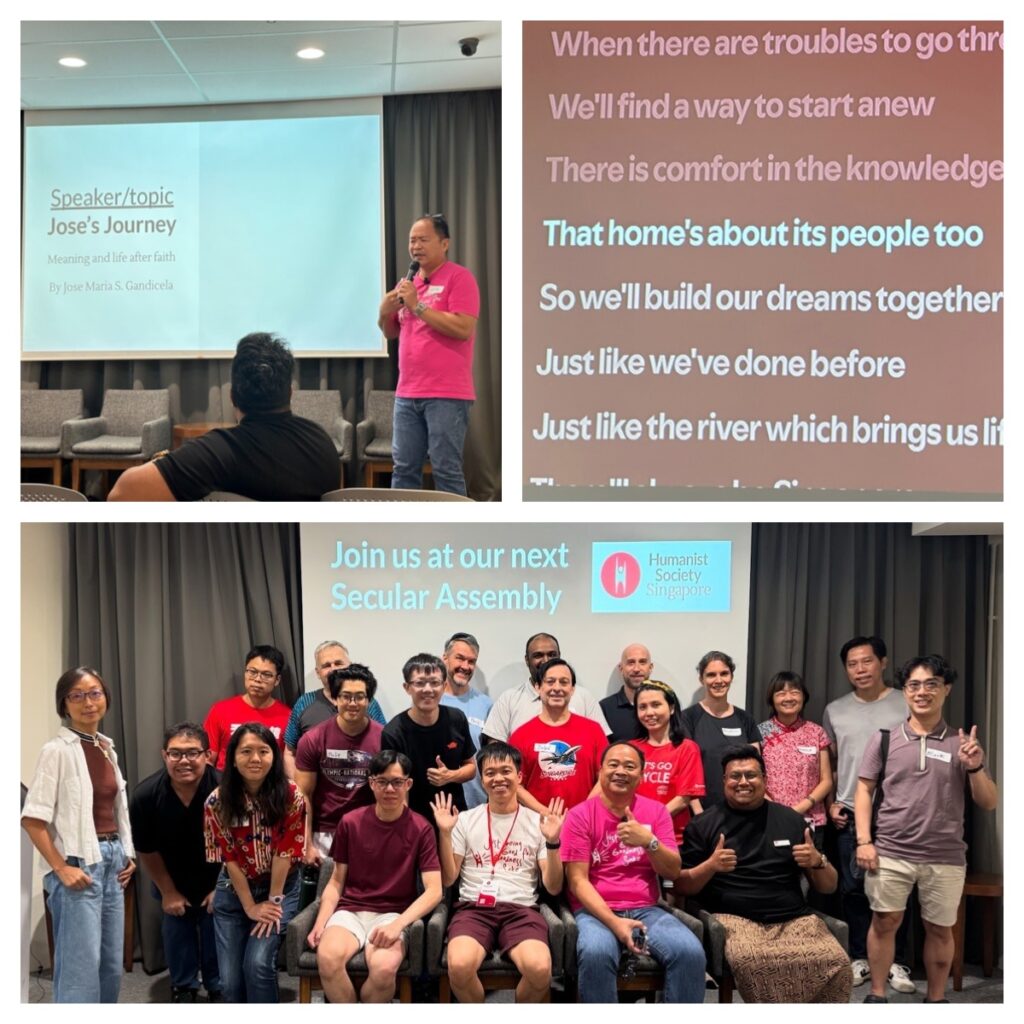
Our sixth Secular Assembly of the year featured a heartfelt talk by HSS member Jose, who recounted his journey from priest to atheist. 

Jose discussed his past – first as a Roman Catholic, and then as a missionary and a priest within a Christian sect. He recounted how his relationship to religion began to shift due to two main events.

The first was moving to multi-religious Singapore, where leadership was detached from religion, he met non-religious people for the first time and realised that “non-Christians are also good people”. The second event was his church’s criticisms of the popular novel The Da Vinci Code, which prompted him to learn more about the history of Catholicism. This led to questions he could not satisfactorily resolve, and a period of emotional turmoil.

Today, having navigated that tumultuous period, Jose is an atheist who accepts that beliefs in the supernatural will always be a part of human culture. He raises his children to compare religious tenets across faiths, ask questions and think independently.

By sharing his personal account, Jose shed light on the complexities of leaving religion, and showed one way an atheist could peacefully participate in a multi-faith society.

In addition to hearing Jose’s story, participant took part in Assembly traditions, featuring a singalong to ‘Home’ in honour of National Day.

Join us at the next HSS event where we will continue to build the humanist community!

Humanist Society (Singapore) is on Giving.sg — our very own hub for doing good practically

https://www.giving.sg/donate/campaign/humanists-for-red-cross-grateful-heart-day-2025

Last month’s Secular Assembly (24 May 2025) explored Effective Altruism and featured an inspiring presentation by Singapore Red Cross (SRC) on how evidence-based giving transforms lives — from tutoring under-resourced children to supporting vulnerable seniors and disaster-hit communities. Many of you left the session asking, “How can I act on this right away?”

Today, we’re thrilled to announce the answer:

1 · Our new Giving.sg organisation page

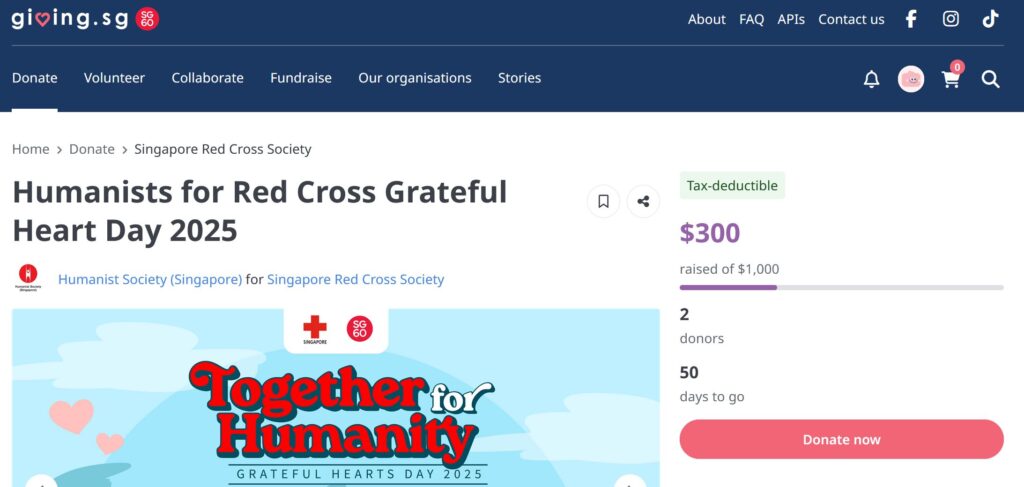
We’ve officially registered Humanist Society (Singapore) on Giving.sg — Singapore’s one-stop, government-supported donation portal. Every dollar you give there is channelled directly to vetted local charities, and your tax-deductible receipt is generated instantly. By donating through our page you’ll also fly the humanist flag, showing that people without religion live well and do good.

2 · Launch campaign: Humanists for Red Cross – Grateful Hearts Day 2025

Our first fundraiser Humanists for Red Cross Grateful Heart Day 2025 is now live! We aim to raise S$1,000 in the next 50 days (campaign closes 15 Aug 2025) in support of SRC’s Grateful Hearts initiative. SRC is Singapore’s national humanitarian organisation, mobilising blood donations, emergency relief, and community programmes that uplift children, families, seniors and persons with disabilities.


Call to action — how you can help

  1. Give what you can
    Even a small recurring gift signals our collective commitment to compassion backed by reason.
  2. Spread the word
    Share the campaign link on WhatsApp, Instagram, LinkedIn or wherever you meet friends who value secular kindness. A quick note like “I’m supporting Humanists SG’s drive for Red Cross — join me?” goes a long way.

Why this matters

  • Embodies our motto “Good for Goodness’ Sake.”
  • Demonstrates that non-religious Singaporeans contribute tangibly to society.
  • Amplifies evidence-based giving principles introduced at May’s Assembly.

Let’s make this first campaign a success and set the tone for many more cause-driven collaborations.

Ready? Go to the fundraiser Humanists for Red Cross Grateful Heart Day 2025, click Donate, share the link, and let’s show Singapore what humanists can achieve together.

Thank you for living your values out loud.

Secular Assembly – May 2025

Our fifth Secular Assembly of the year, held on 24 May, was on the theme of doing good –  particularly, how reason and compassion can guide us to make real impact in the world.

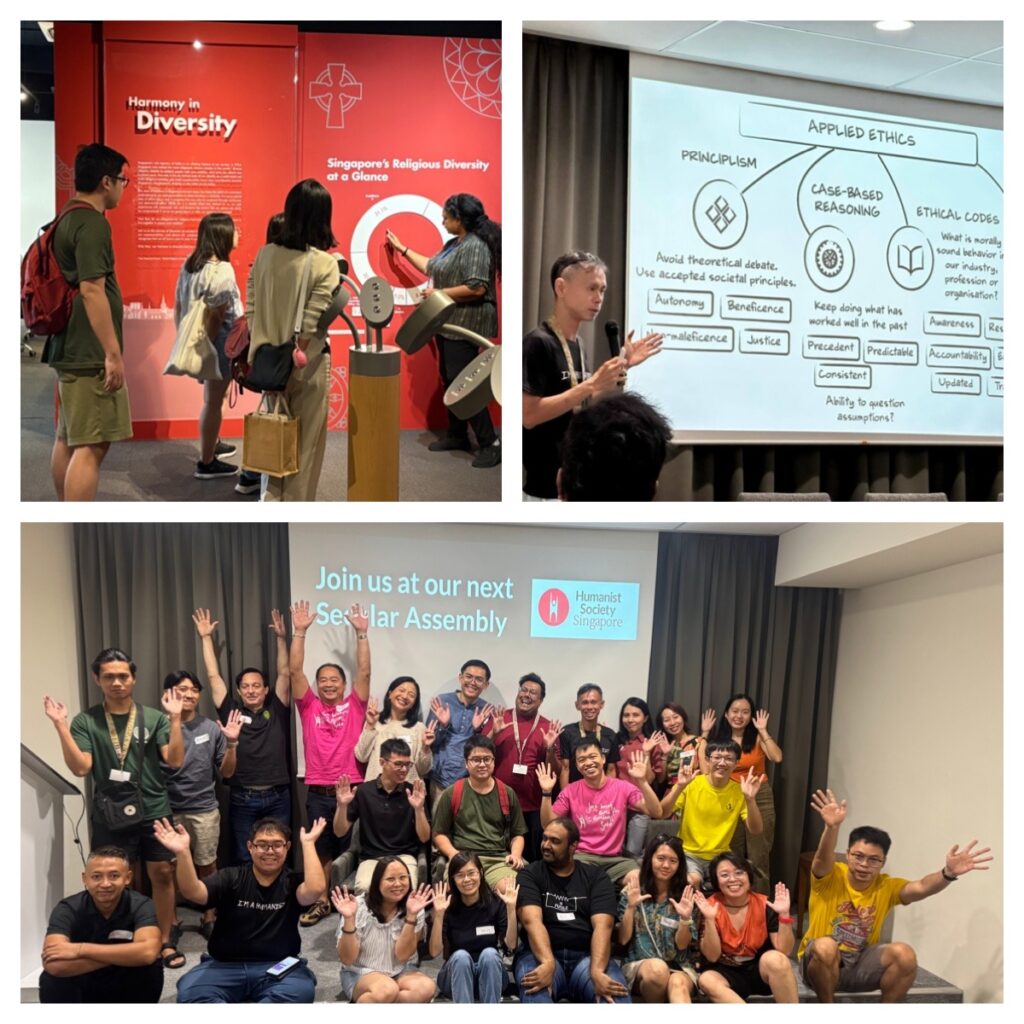
The Assembly was preceded by an optional tour of the Harmony in Diversity gallery, which conveyed to participants the importance of maintaining harmonious ties among different belief groups in Singapore.

Following the tour, the main Assembly featured two engaging guest talks:

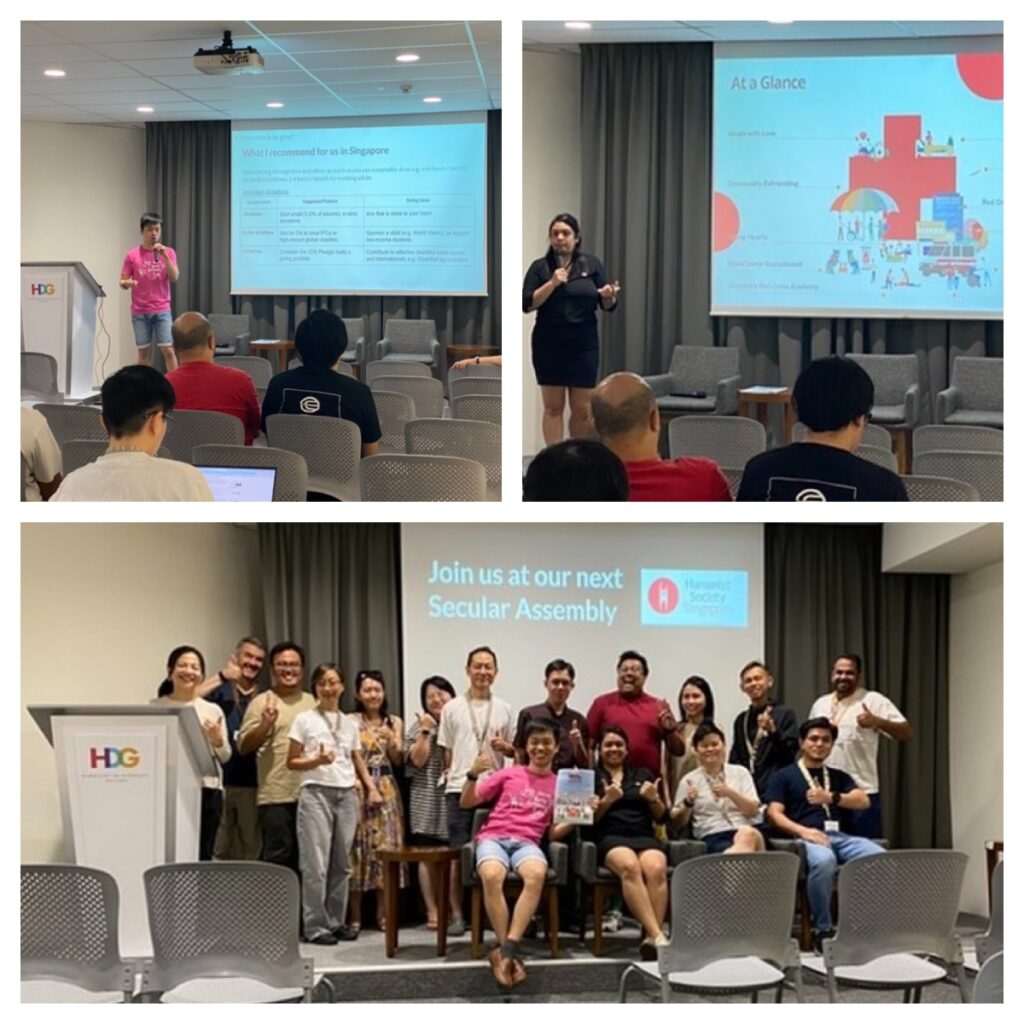
  • A presentation on Effective Altruism, a powerful evidence-based approach to doing the most good, was delivered by HSS co-founder and Secular Assembly Programme Director Dan Thio. (Thanks to the Effective Altruism Singapore group, which generously shared reference materials that informed this talk!) Dan offered his own suggestions on how Effective Altruism principles could translate to the Singaporean context.
  • Ain from Singapore Red Cross Singapore (SRC) gave an inspiring introduction to the initiatives undertaken by the humanitarian group in support of local and international causes. In Singapore, SRC extends helping hands to beneficiaries ranging from underprivileged children, who benefit from tutoring and other enrichment, to the vulnerable elderly who receive material and social support. This presentation nicely connected with the earlier talk by offering further real-world examples of worthy causes.

Attendees also took part in the Assembly’s traditions, such as a singalong session and a gratitude exercise that invited reflection on our interdependence. Join us at the next HSS event where we will continue to build the humanist community, and hopefully, a better world!

Secular Assembly – April 2025

Our fourth Secular Assembly of the year, held on 19 April, responded to a fundamental question. Without depending on a supernatural authority, what frameworks can non-religious people use to live an ethical and meaningful life? 

A look at the philosophy of ethics

Our guest speaker Adrian Chia provided a whirlwind introduction to ethical approaches and acknowledged their links to humankind’s history of cultural traditions and intellectual inquiry. Adrian, a regular volunteer at HSS with a background in philosophy, ethics, and psychology, discussed four main branches of the philosophy of ethics: metaethics, descriptive ethics, normative ethics and applied ethics. Diving into applied ethics, the study of how moral principles can be used in real-life situations, he discussed principlism (an approach that prioritises commonly accepted principles such as justice and autonomy), case-based reasoning and ethical codes (e.g., codes of conducts followed by professions). 

Beyond the Golden Rule 

The study of ethics gives us a plethora of concepts. Want a quick takeaway that can be applied to daily life? In terms of personal and specific recommendations to humanists, Adrian highlighted the Golden Rule and its variations as useful moral tools.

A formulation of the Golden Rule is “Treat others as you would like others to treat you”. Related principles have arisen across the major faiths across the world, which arguably indicates that these principles are rooted in collective human experience. Beyond the Golden Rule, Adrian noted its limitations and certain variations to consider: the Silver Rule (“Do not treat others in ways that you would not like to be treated”) the Platinum Rule (“Treat others the way they would like to be treated”) and the Rhodium Rule (“Think about the entire ecosystem”).

Throughout the talk, members of the audience added their perspectives on varied topics such as karma, sin and gender biases. Attendees were also polled on a variety of trolley problems that challenged us to determine what to do in a situation where individual rights and collective good seem in conflict. As Adrian put it, readymade answers to complex ethical questions are in short supply: “there is no Ten-Year Series”.  

Adrian’s recommendations for further reading and exploration included:

  • Sophie’s World by Jostein Gaardner – an introduction to philosophy in novel form
  • The Moral Landscape by Sam Harris – a neuroscientific look at morality
  • The Moral Landscape Challenge, an essay rebutting the book
  • Three Worlds Collide by Eliezer Yudkowsky, a short story on metaethics
  • The Effective Altruism movement, which provides a framework for identifying effective charities

In addition to the guest talk, we continued the tradition of previous Assemblies by holding a fun singalong and a closing meditation which united our group in reflection on everyone’s interdependence within wider society. For more fellowship and thought-provoking conversations, join us for the next Assembly as we continue to build the Humanist community!
Secular Assembly [ 22nd March 2025 ]  

Celebrating International Women’s Day- A Humanist Reflection

The Secular Assembly has always embraced discussions on meaningful, worldly themes. This month, in celebration of International Women’s Day, we were honored to welcome a visiting speaker and guests from AWARE (Association of Women for Action and Research) to engage in dialogue on gender equality, human rights, and social progress.

A Song of Strength and Solidarity

The assembly opened with a sing-along of Helen Reddy’s iconic anthem, I Am Woman, a song that has long been a rallying cry for women’s empowerment:

“I am woman, hear me roar… Whoa, yes, I am wise,

But it’s wisdom born of pain. …

If I have to, I can do anything,

I am strong,

I am invincible,

I am woman.”

The lyrics resonated deeply with the audience, setting the tone for the event—one of reflection, solidarity, and action. It was a fitting reminder of the resilience and determination that have fueled both the feminist and humanist movements throughout history.

Humanism and Gender Equality

Following this uplifting start, Nora, President of the Humanist Society of Singapore (HSS), introduced the audience to the principles of humanism, emphasizing its core belief in rational thought, compassion, and individual freedom. Dan, the event’s lead organizer, then highlighted a significant statistic: according to the Singapore Census 2020, nearly 20% of Singapore residents identified as having no religious affiliation. In a society as diverse as Singapore, he stressed, harmony and mutual respect must never be taken for granted.

A Personal Journey: Breaking Stereotypes

The keynote speaker, Shamima, opened her talk by sharing her personal journey—one that led her away from the traditional expectations of women in her community. Growing up in a Muslim family, she had been expected to follow a conventional path, but her search for meaning and self-determination led her toward humanism. She eventually became a member of HSS and even served as Vice President for one term. 

Her personal experiences also reinforced a critical lesson: simplifying identities through labels and stereotypes is both dangerous and dehumanizing. A society that confines women to a single narrative fails to see the richness of human experience.

The AWARE Saga: A Defining Moment

Shamima then turned the discussion to a pivotal event in Singapore’s feminist history—the 2009 AWARE Saga, a dramatic power struggle within AWARE that captured the nation’s attention and led to significant public discourse on women’s rights, religious influence in civil society, and democratic values.

Though Shamima had not personally attended the Extraordinary General Meeting (EGM) that saw thousands rally to reclaim AWARE’s mission, her years working with the organization put her in close contact with the “old guards”—the women who fought through the crisis. One such figure was Constance Singam, an AWARE veteran of 24 years and a six-term president, whose powerful speech at the EGM remains an enduring testament to activism and resilience. It is a timely reminder to us all, that change happens because people decide to make a difference, not because they wait for the world to change around them.

The impact of the AWARE Saga extended beyond the feminist movement. Dan, a founding member of HSS, noted that the reflections and social awakening it inspired also contributed to the birth of the Humanist Society—which later became Singapore’s first recognized humanist organization.

Shared Values, Common Purpose

As stated at the start of the assembly, humanism affirms that individuals have the right and responsibility to shape their own lives. This philosophy mirrors AWARE’s core principles:

• Embrace diversity

• Respect for individual choices

• Recognition of universal human rights, regardless of gender

The fact that AWARE Saga is still studied in some junior colleges and high schools in Singapore is a testament to its enduring social and educational relevance. As we revisited this chapter in history, we were reminded of the words from I Am Woman:

“It’s wisdom born of pain.”

Engaging the Next Generation

During the Q&A session, participants explored questions on how to engage younger women in the feminist movement and how to encourage more involvement in HSS and AWARE. Those interested were encouraged to sign up through the official websites or reach out to the relevant organizers via email.

A Celebration of Life and Diversity

Before closing, Dan orchestrated a lighthearted moment by identifying the “birthday celebrant of the month” among the audience. With a surprise cake and warm wishes, we celebrated not just an individual milestone, but the shared journey of humanist and feminist activism.

Life, in all its diversity, is always a journey worth celebrating.

Stay tuned for our next assembly!

Write up by Humanist OQ

Secular Assembly : Celebrating Charles Darwin.

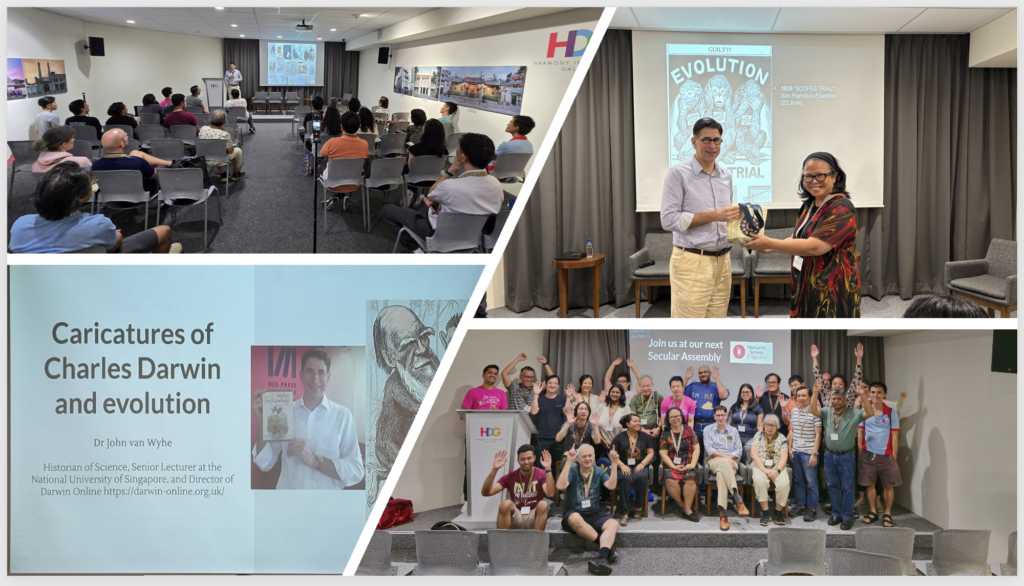
Our second Secular Assembly of the year was held on 22 February 2025. Featuring an intriguing talk that dispelled common myths about reactions to the theory of evolution, the Assembly once again invited attendees to connect, learn and reflect.

The Assembly began with a tour of the Harmony in Diversity Gallery. This gallery celebrates Singapore’s multi-cultural society and depicts the importance of getting along with others of different creeds.

Indeed, while differences of belief are part of a healthy society, they can also lead to ridicule and conflict. For example, it’s easy to assume that Charles Darwin’s ground-breaking theory of evolution was met with an angry backlash from everyone in his time.

This brings us to our guest speaker Dr John van Wyhe, a historian of science at NUS who has also spoken at our past Darwin Day events. Through an engaging presentation on his research into historical caricatures of Darwin and evolution, Dr van Wyhe showed that many contemporary reactions to Darwin’s ideas were in fact more light-hearted and less dismissive than one might have assumed.

Dr van Whye’s insights gave attendees an appreciation of religious contexts and historical shifts regarding reactions to the theory of evolution, and sparked a lively Q & A session. Other highlights of the Assembly included a rousing rendition of “That’s What Friends Are For” by Dionne Warwick, led by our intrepid president Nora. The event closed with a gratitude exercise, a welcome pause to reflect on interconnectedness and aspects of our lives for which we felt thankful.

See you at the next Assembly where we will continue to enjoy food for thought and build the humanist community!

Complete work of Charles Darwin online