Secular Assembly – 27 December 2025

If life were a game, what kind of main character would you be? At our last Secular Assembly of 2025, this question was explored by our guest speaker amid a festive and reflective atmosphere.

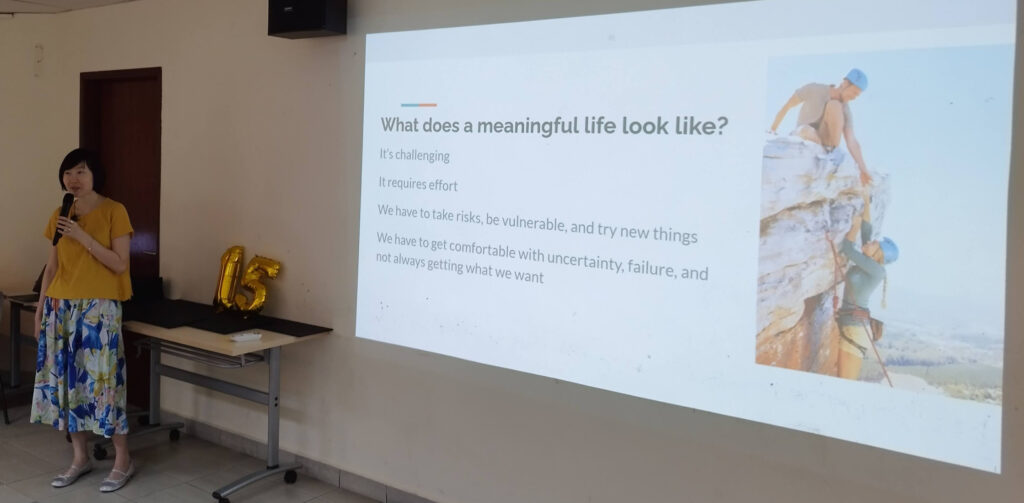
In a presentation titled “Embracing Your Protagonism”, guest speaker Melvin Lim, President of HSS, discussed how one might use the lenses of storytelling and games to navigate a complex world.
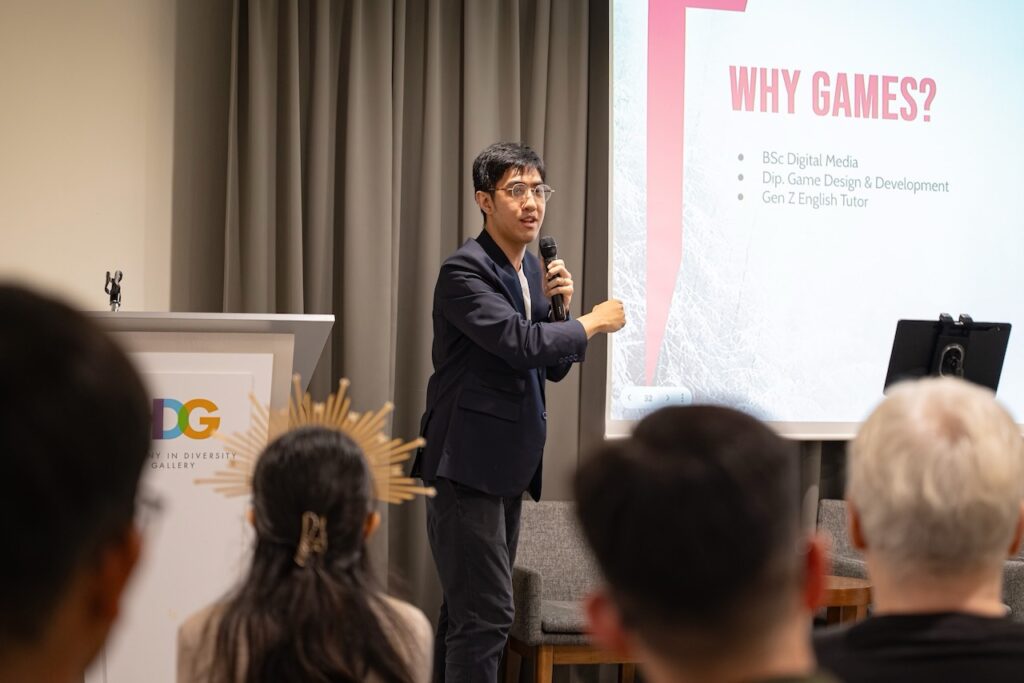
Starting with an overview of folklore around the world related to winter, Melvin helped situate Christmas traditions within a vibrant tapestry of cultures with origins ranging from Japan to Europe.

Like folklore that can convey important moral and practical knowledge, narrative games, Melvin posited, is one lens we could use to navigate our lives. Some questions raised by his presentation:

  • Do you prefer a ‘restricted’ environment (where there is a specific condition to ‘win’, such as in chess) or a ‘free’ one (where the success criterion is self-defined, such as in Minecraft)?
  • Are you more ‘autotelic’ (motivated by intrinsic factors such as curiosity) or ‘exotelic’ (motivated by external factors such as prestige)?
  • How are you nurturing your talent, and improving your luck (which can be thought of as a combination of opportunity and preparedness)?

Other highlights of the programme:

  • Before the main Assembly, a group of attendees enjoyed a guided tour of the Harmony in Diversity gallery, kindly made possible by our gallery partners. Read more about the gallery here.
  • Lit by (electronic) candlelight, participants were guided to share reflections on things that they were grateful for over the past year.
  • The jolliest fellow of the season dropped by! Santa Claus surprised attendees with presents and led us in a medley of classic Christmas songs.

Join us at the next Secular Assembly, where we’ll continue to build the Humanist community!

Non-religiosity and mental health

***

There has been a lot of debate over the relationship between religion and mental health.

One common misconception that the non-religious face, is that without religion, the non-religious individual will not have sufficient psychological and emotional support in life, leading to increased risk of mental health issues.

The 2021 IMH Study

In 2021, a local study done by a team from the Institute of Mental Health (IMH) and Saw Swee Hock School of Public Health, set out to build upon research on the mental health benefits of religion, especially in the context of multicultural Asian populations like Singapore’s. Their findings were reported in the Straits Times – “Religion linked to better mental health, says study done in Singapore”, published on Aug 03, 2021.

Published in the International Journal Of Environmental Research And Public Health in March, the study assessed the positive mental health (PMH) of 2,270 adults in Singapore and identified trends relating to their religious affiliations. The data was collected from August 2016 to April 2018 as part of the larger Singapore Mental Health Study 2016, which aimed to find out the state of mental health in Singapore’s adult population.

In this study, PMH was measured using six markers: General coping, emotional support, spirituality, interpersonal skills, personal growth and autonomy, and global affect, which is the experience of being calm, happy, peaceful, relaxed or enthusiastic. In an interview with The Straits Times, lead researcher Janhavi Vaingankar described PMH as “a person’s attitudes towards themselves, ability to handle life’s surprises and ability to reach their true potential and resist stress”.

Zeroing in on predominant religions in Singapore, the study evaluated respondents affiliated to Christianity, Islam, Buddhism, Taoism, Hinduism and Sikhism, which made up about 78% of those surveyed. Participants with these religions scored significantly higher in total PMH compared to those without a religion, the study found. The total PMH score did not vary much between people of different religions.

The picture is more nuanced

The Humanist Society argues that the picture is more nuanced, and there are other papers with a different conclusion. 

For example, there is a paper titled “Is religion beneficial for mental health? A 9-year longitudinal study” published in the International Journal of Clinical and Health Psychology (Volume 24, Issue 3, July–September 2024)

The abstract from the paper:

“Using a large sample of adults residing in Germany from the GESIS Panel study (N = 8146), the random intercept cross-lagged panel model was used. Data on six dimensions of religion (i.e., membership in a religious community; attendance at a place of worship; frequency of prayers; importance of religion in life; and participation in a religious organization) and three indicators of mental health (i.e., depression symptoms, happiness, and life satisfaction) were collected.

The findings revealed that there is almost no evidence of lagged effects of religion on mental health and limited evidence regarding the role of mental health in influencing the dimensions of religion. Moreover, at the between-person level, there was some evidence of significant covariance between the trait-like components, indicating stable, trait-like differences between persons on religion and mental health.

The beneficial effect of religion on mental health may have been exaggerated in previous research.”

***

There is also another study published in 2025, and it studies the relationship between religious service attendance (not just having a religion) and mental health.

Using modeling techniques that tracked relationships over time within individuals in the joint relationships between religious attendance and mental health outcome measures, the Italian researcher came to one surprising conclusion. In contrast to the prior literature suggesting mental health would benefit from religious attendance, the effects simply weren’t there.

The actual study can be found here.

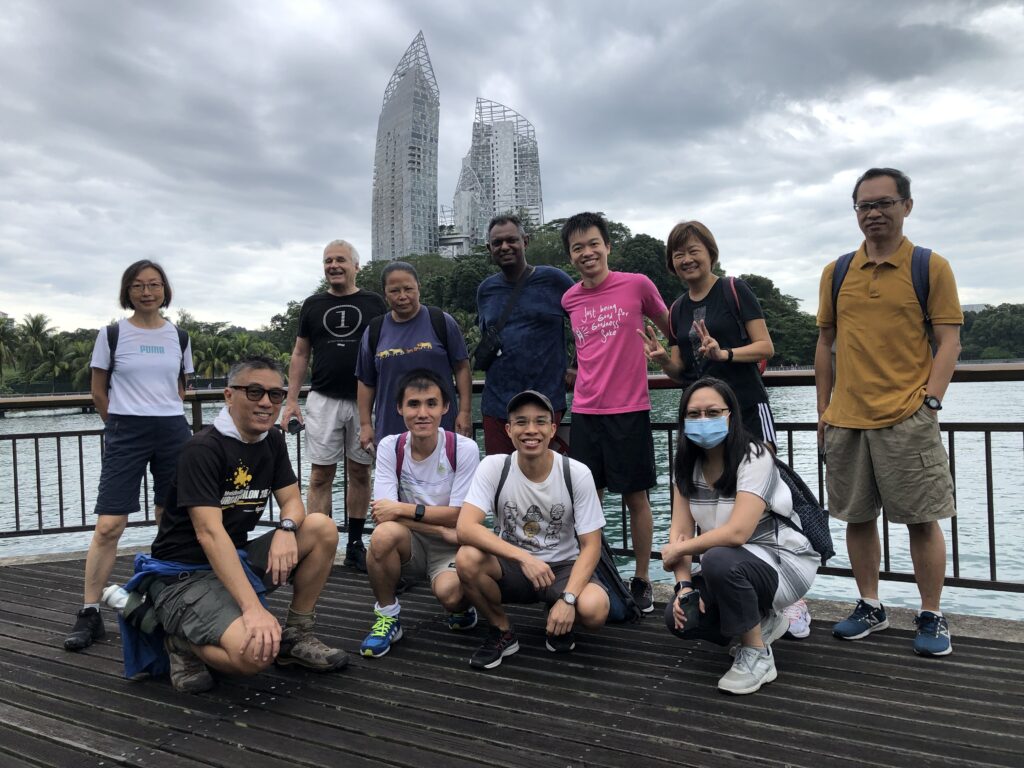
Photo above: The Humanist Society organises events every month. The picture above is a hike along the southern coast of Singapore.

We need to exercise caution

Mental health issues can be very complex and have multiple root causes.

Some mental health issues are genetic and clinical, and simply cannot be attributed to having a religion or not. Some mental health issues are caused by circumstances in life, which also cannot be attributed neatly to religiosity or non-religiousity. 

There is no doubt that supporting communities can be helpful in providing support to people who have poor mental health. And it is widely acknowledged that religious communities are often the most organised and consistently available in many countries.

Nonetheless, attributing better mental health to simply having a religion causes the following risks:

  1. If widely believed, this attribution contributes to stigma for non-religious individuals, especially faith-leavers pressured by their family and community to return to religious communities they were born into.
  • If a person’s mental health is affected by religious trauma, then more religious exposure might actually worsen the situation, rather than help. (Note: Religious trauma can be defined as a psychological condition that occurs when religious teachings and practices become sources of emotional distress.)
  • A non-religious person facing mental health issues might be pressured — even by those who are well-meaning — to join a religious community because they feel that non-religiosity is the root cause of their mental health issues.
  • A person facing mental health issues could see religion as a solution, bypassing professional diagnosis and help. While religious communities can provide a supporting community, they are ultimately not the best place to get evidence-based diagnosis and treatment.

Photo above: The Humanist Society organises the Humanist Cafe which provides peer support to people at different stages of life.

Our experience on the ground

Over the years, the Humanist Society (Singapore) has organised events for many non-religious participants, and met people from all walks of life. Like any community, we have also engaged individuals with underlying mental health conditions.

We do have small numbers of participants who come from conservative religious family backgrounds and had a challenging experience growing up. They can come with religious trauma and take many years to recover.

The Humanist Society strives to build communities to support these people, although it can be challenging given that we are an all-volunteer organisation. But from our experience, attributing better mental health to simply having a religion is most harmful to those with religious trauma.

Future studies on the relationship between religion and mental health should take into account this group, to provide a fuller picture.

Secular Assembly and 15th Anniversary

On October 25, HSS celebrated 15 years since the Society’s founding and held a Secular Assembly that encouraged attendees to infuse life with meaning. 


Secular Assembly: Finding Meaning

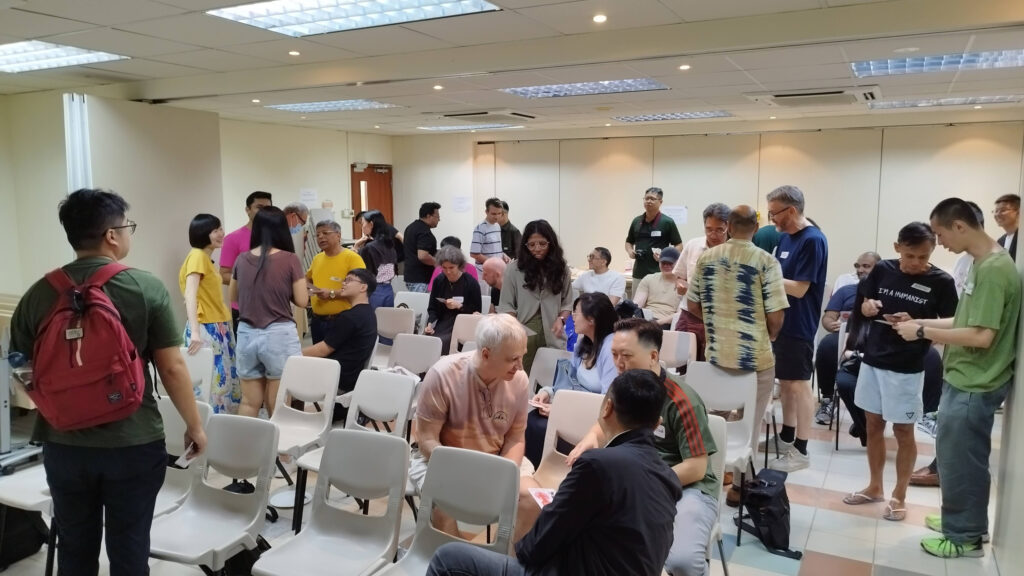
The afternoon began with a lively Secular Assembly that offered approaches for finding meaning in life when one feels unable to progress. 

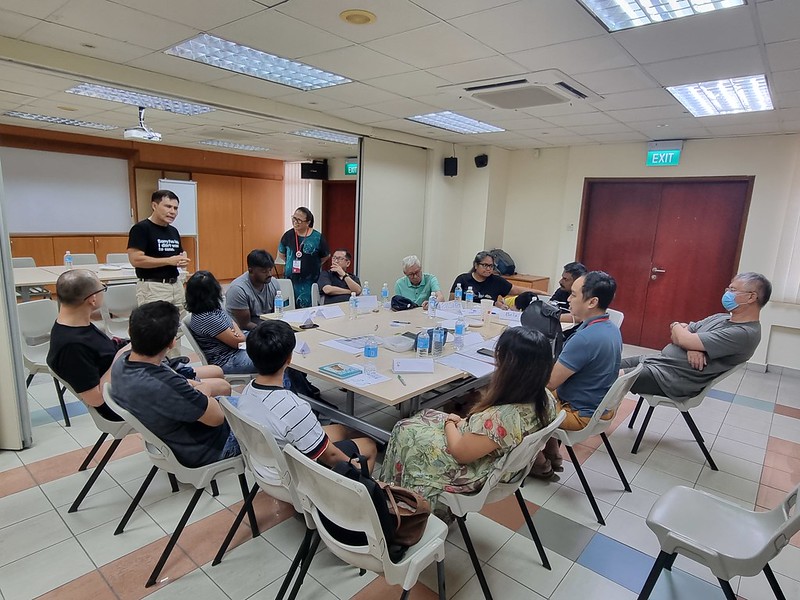
Leading an interactive workshop and sharing session on the topic of “Finding Meaning When You Feel Stuck in Life”, Registered Counsellor Deborah Koh guided attendees to discover and reconnect with their personal values as the fundamental building blocks of a fulfilling life. 

Participants taking part in “Values Exchange” activity

The session showed us that while the instinctive reaction to feeling stuck may be to withdraw from challenges, this reaction can be addressed with various strategies. These include:

  • accepting that uncertainty and failure are part of a meaningful life;
  • detaching yourself from thoughts that are unhelpful;
  • and self-reflection to achieve clarity on your core values.

15th Anniversary Gathering: A Look Back and Forward

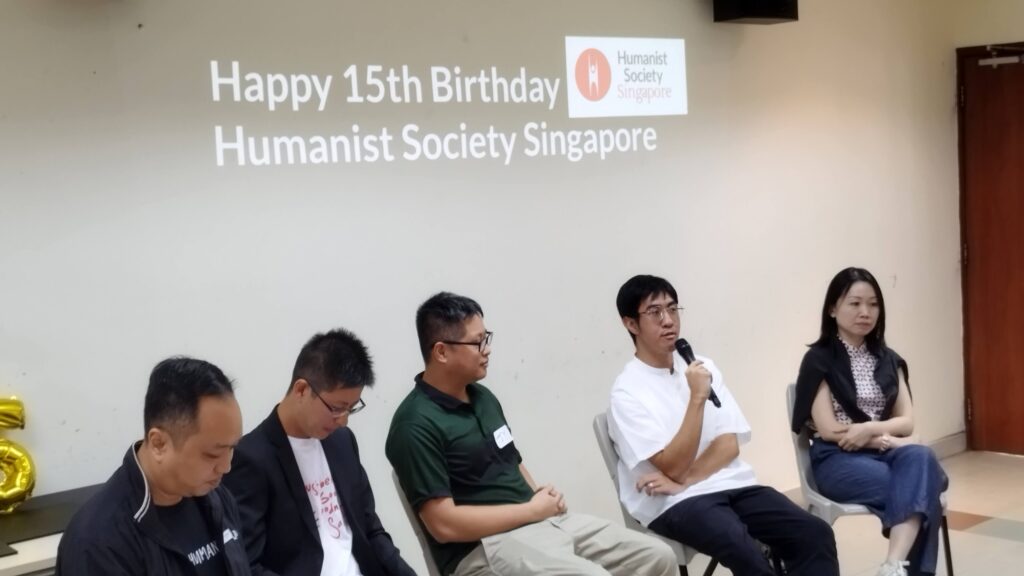
With attendees energised by the workshop, the mood swiftly shifted to one of celebration for the Society’s 15th Anniversary Gathering!

A major highlight was an intimate fireside chat featuring past and present HSS leadership. Moderated by current HSS Vice-President Xiang Hong, the speakers comprised the Society’s founding and early Executive Committee (Exco) members (Eugene, Jianyue and Huifen) alongside current HSS President (Melvin). This intergenerational conversation brought to light memorable moments from the past and shared aspirations for the Society’s next chapter.

Speakers candidly shared insights on topics that included:

  • HSS’ notable achievements. As examples of major achievements by the Society, speakers cited the international Humanist conferences hosted by HSS and its various collaborations with government statutory boards over the years. These events have helped HSS make its mark and reflect that it has a level of trust from local authorities.
  • Vision for the Society’s public image. President Melvin spoke on his hope for the Society to be better connected to Humanist communities in the region, and to be seen as a bastion of critical thinking. 
  • How to keep HSS going. Speakers suggested:
    • An Exco that is willing to learn and experiment and that keeps the trust of attendees and volunteers
    • Continually holding events to bring in new members
    • Looking to other long-running groups for applicable lessons

The Exco also honoured a number of HSS members for their contributions to the Society with awards for Best Member, Best Volunteer, Community Builder and Best Newcomer. Our sincere congratulations to all the worthy recipients! Your gifts of time and effort—along with those of every volunteer—are the driving force of our Humanist community, and we are profoundly grateful for your service.

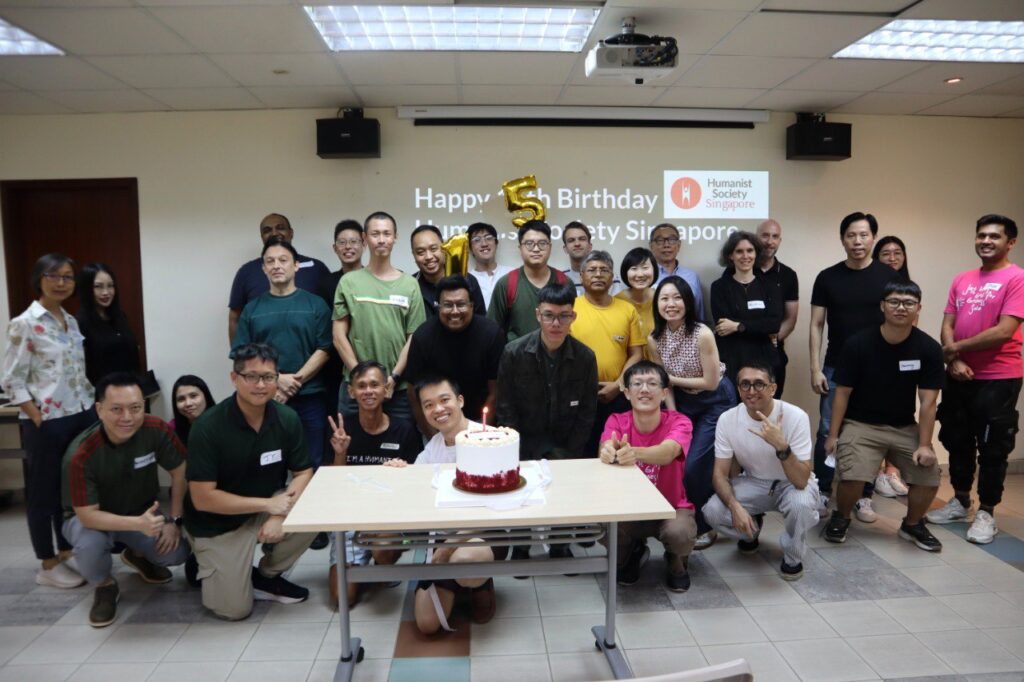
The gathering wrapped up with a spread of finger food, including homemade dishes contributed by members, and a special birthday cake. The cake celebrated both recent birthdays (in line with our Secular Assembly tradition) and the landmark achievement of 15 years of serving as a voice for the non-religious in Singapore.

Thank you to everyone who joined us for this special day. Your presence, participation, and stories are what make our Humanist community vibrant. Here’s to many more years of promoting reason, compassion, and meaningful living!

Secular Assembly – 27 September 2025

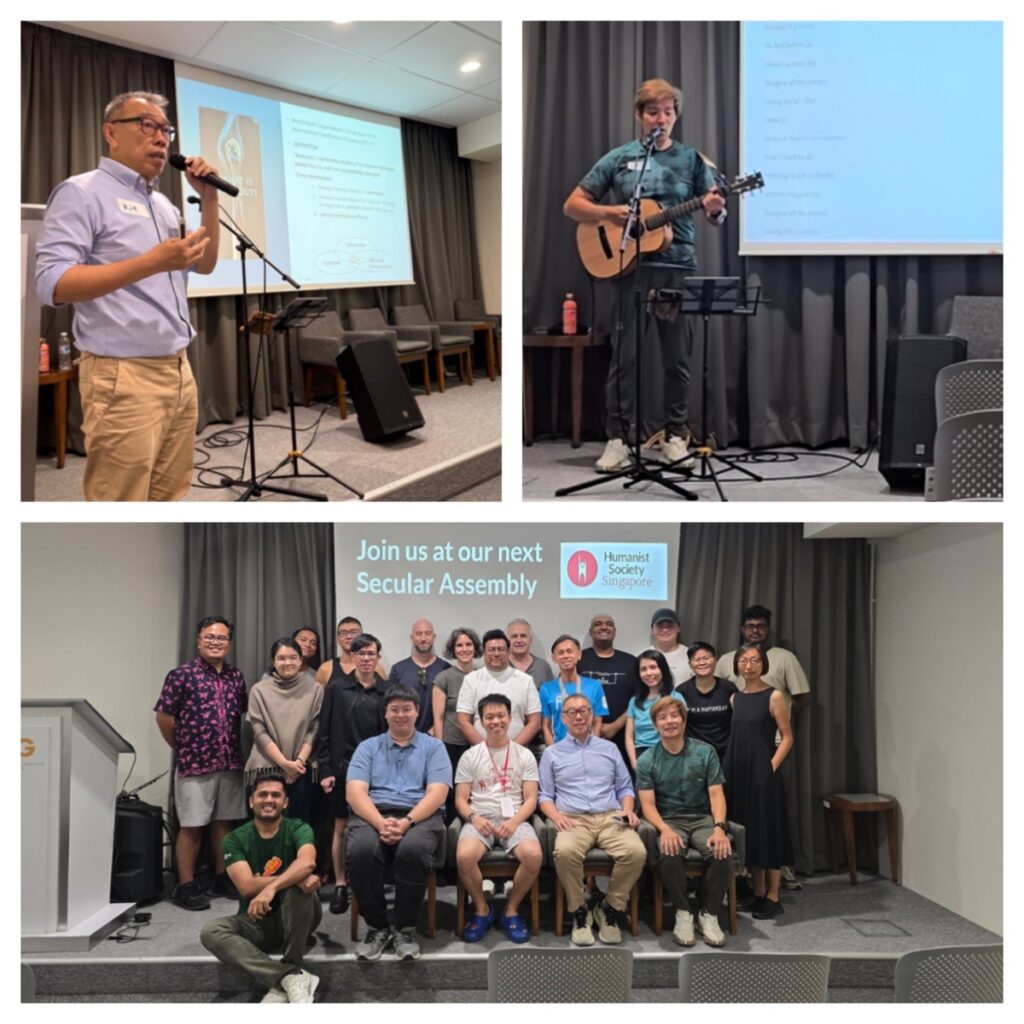
Burnout from work stress is a common problem in our fast-paced city. How can individuals prevent burnout and what role can non-religious organisations play? At our eighth Secular Assembly of the year, held on 27 September, these topics were explored by our guest speaker Kit Koh, a career coach and mental health counsellor.

First, a definition of burnout. For this, Kit cited the World Health Organisation (WHO), which defines burnout as a condition “resulting from chronic workplace stress that has not been successfully managed”.  It comprises three aspects: “feelings of energy depletion or exhaustion; increased mental distance from one’s job, or feelings of negativism or cynicism related to one’s job; and reduced professional efficacy”. When burnout sets in, Kit noted that it could lead to more problems such as depression, weakened immunity and strained relationships.

Regarding strategies an individual could use to prevent burnout, Kit shared that these include minimising sources of stress (e.g., by setting physical and digital boundaries), addressing deeper dysfunctional cognitive patterns, and engaging in activities that produce “happy hormones”. These hormones – dopamine, endorphins, oxytocin and serotonin – are known to be powerful contributors to positive emotions.

Oxytocin facilitates feelings of trust and connection, and is often produced during activities that involve interpersonal bonding. Thus, to promote oxytocin and the positive emotions associated with it, Kit suggested that a secular society like HSS could hold group activities that are “psychologically safe, emotionally positive [and] mentally restful” – such as group singalongs and events for appreciating people (e.g., celebrating good deeds). Not so coincidentally, these suggested activities are typically part of the Secular Assembly.

On the flip side, Kit also suggested what NOT to do: namely, if social bonding is the goal, we should avoid turning every space into one for critical discussion and debate – a frequent temptation for opinionated humanists!

Other highlights of the programme:

  • Before the main Assembly, a group of attendees went on a guided tour of the Harmony in Diversity Gallery (HDG), kindly made possible by our HDG partners. Read more about the Gallery here.
  • For the first time at the Secular Assembly, live singing AND music! James, an HSS volunteer, provided skilful vocals and guitar to lead us in singalongs of Imagine and other classic songs.
  • A gratitude exercise led by Dan, Secular Assembly programme director, encouraged thankfulness and reflections on our interconnectedness.

Join us at the next HSS event, where we’ll continue to build the humanist community!

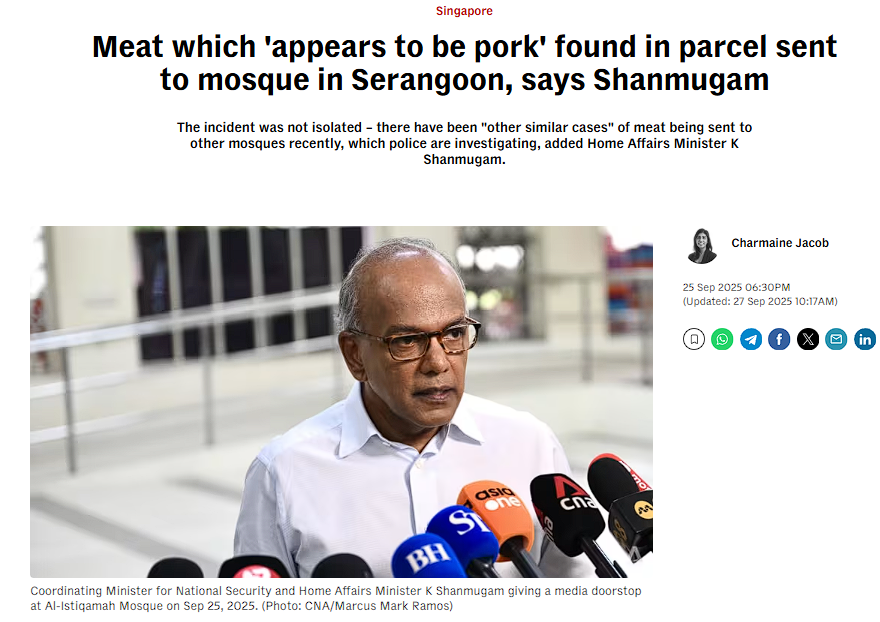
Humanist society Singapore’s official statement on the pork meat parcel sent to Al-Istiqamah and a few other mosques Singapore

1. The Humanist Society encourages a rational approach to human problems via informed and reasoned discussion of issues, backed by evidence and guided by compassion.

2. Reasoned discussion of issues is not possible when tensions are high between racial and religious communities due to deliberate inflammatory actions aimed at sowing discord in the country.

3. Recent actions by a Singaporean man to send an envelope containing a piece of pork with an offensive note to a mosque is deplorable. There is no value in such an action.

4. We support efforts to ensure a safe, stable and secular Singapore where freedom of religion is guaranteed and no person should be harassed just because of his/her beliefs.

Written by JY

Secular Assembly – 30 August 2025

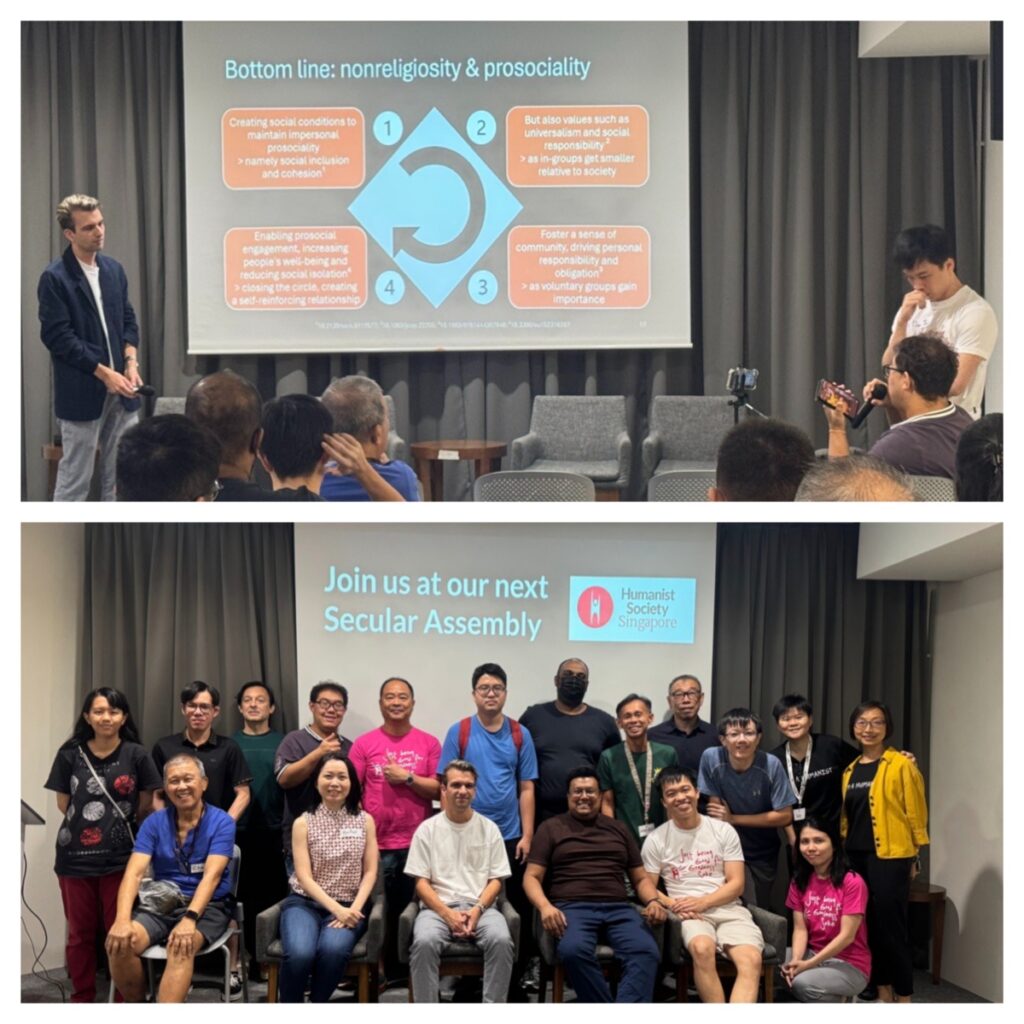
How can non-religious communities promote helping behaviour? Our seventh Secular Assembly of the year, held on 30 August, explored this question with compelling research insights.

‘The Rise of Nonreligion and its Perpetuating Beliefs’ was the subject of a guest presentation by Robin Weber, a member of our humanist community and a researcher. Robin began with various studies on global trends in religiosity and non-religiosity, highlighting the increasing prevalence of non-religious demographics around the world. He also shared surprising research about the religiously unaffiliated in Singapore, such as the Pew Research finding that 62% of non-religious adults in Singapore ‘believe in God or unseen beings’.

Indeed, even within the non-religious, there is a huge range of beliefs. As societies become increasingly diverse and secular, it’s important to ask what factors independent of religion can contribute to prosociality, or behaviour that benefits others.

Robin shared that at an individual level, these factors include self-compassion and empathy for others, as well as social support (the perception of being understood, supported and respected.) In fact, social networks are thought to be a generally stronger driver of religious groups’ prosociality compared with a belief in a higher power.

As such, for a secularising society to maintain impersonal prosociality (prosociality towards others outside of one’s in-group), a sense of social inclusion and cohesion are essential. With this foundation, if other-oriented values such as a sense of social responsibility are cultivated, a stronger community is more likely to arise and in turn bring about prosocial behaviour. 

In addition to Robin’s enriching talk, the Assembly programme included an update on the Society’s donation drive for Singapore Red Cross (we exceeded our $1,000 fundraising target!), and soul-nourishing traditions: a lively singalong and a guided mindfulness exercise.

Join us at the next HSS event, where we’ll continue to build the humanist community!

The non-religious should not be forgotten

Statement by the Humanist Society (Singapore)

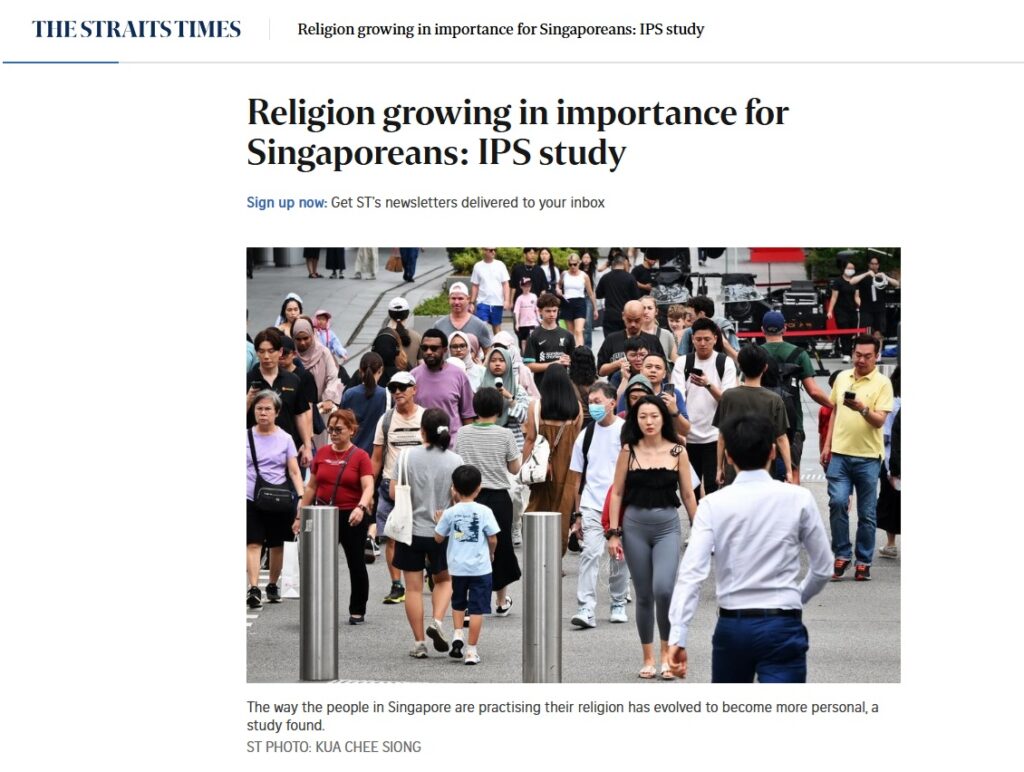
On 20 Aug, the Straits Times published a report titled “Religion growing in importance for Singaporeans: IPS study” (20 August) on religion becoming a more important part of Singaporeans’ identity in recent years, according to latest findings by the Institute of Policy Studies (IPS).

The Straits Times’ summary are as follows:

1) Singaporeans increasingly view religion as vital, influencing their perspectives, as shown in IPS surveys (2013, 2018, 2024) with spirituality giving meaning to life.

2) Religious practices are evolving; more Singaporeans are engaging with religious media and individual practices like meditation, while fewer attend gatherings.

3) A stronger religious identity could lead to groups seeking greater influence in policymaking, requiring careful management to maintain religious harmony in Singapore.

The Humanist Society (Singapore) views are as follows:

On 1), Singaporeans increasingly view religion as vital, as shown in IPS surveys (2013, 2018, 2024).

Based on the Singapore census, the share of residents with no religious affiliation rose to 20% in 2020, up from 17% in 2010, and 15% in 2000. Detailed census data in 2020 also shows non-religiosity is more pronounced among younger age groups. For example, 24.2% of those aged 15-24 reported having no religion, compared to 15.2% of those aged 55 and above.

So it is not true that, for Singaporeans as a whole, religion is growing in importance. It may just be growing among those who are already religious. It is important that this nuance is captured, as the non-religious form a significant proportion of the resident population. They should not be forgotten.

On 2), religious practices are evolving; more Singaporeans are engaging with religious media and individual practices like meditation, while fewer attend gatherings.

Meditation is not necessarily religious. Sam Harris, the American philosopher and neuroscientist who wrote the book The End of Faith (2004), is one prominent atheist public figure who supports meditation. Over the years, he is a promoter of meditation practices without the need for any religious beliefs.

On 3), a stronger religious identity could lead to groups seeking greater influence in policymaking.

In an increasingly polarized world, eroding the secular nature of the state will not be good for Singapore. Religious fundamentalism can significantly impact policymaking, often leading to tensions between religious values and individual rights. In the United States, debates over reproductive rights and LGBTQ+ issues frequently involve conflict between religious beliefs and personal freedoms. Recently, in Malaysia, recent state policies like mandatory prayer attendance demonstrate the potential consequences when religious fundamentalism heavily influences governance.

We need to maintain balanced approaches that respect both religious diversity and individual liberties. And such a balance is not possible without secularism.

Conclusion

We need to uphold our secular common space and be inclusive of non-religious perspectives, which are crucial in ensuring that Singapore remains a harmonious, multi-faceted society.

Singapore’s strength lies in its diversity, and this diversity should extend beyond race and religion to include those who identify as non-religious. While we are a relatively silent minority, we still need to be heard, our concerns addressed.

Secular Assembly – 2 August 2025

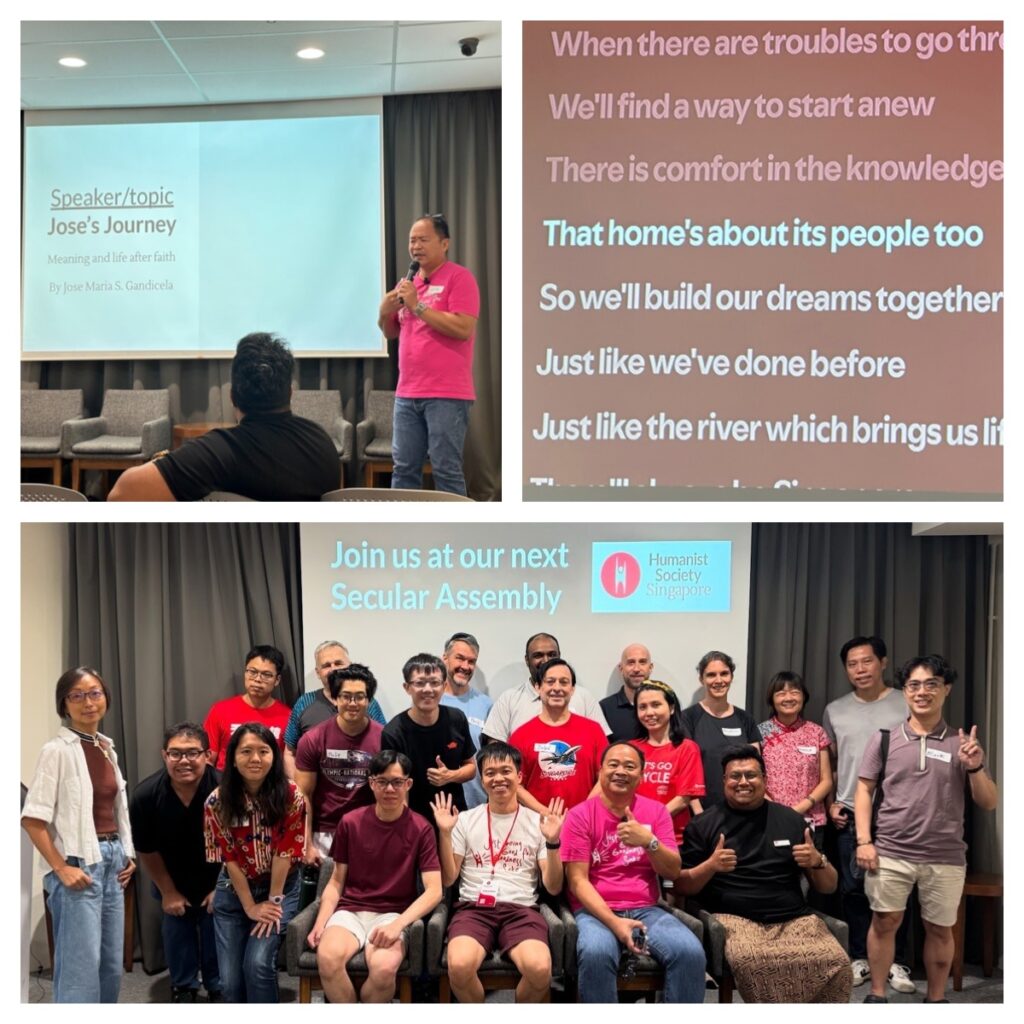
Our sixth Secular Assembly of the year featured a heartfelt talk by HSS member Jose, who recounted his journey from priest to atheist. 

Jose discussed his past – first as a Roman Catholic, and then as a missionary and a priest within a Christian sect. He recounted how his relationship to religion began to shift due to two main events.

The first was moving to multi-religious Singapore, where leadership was detached from religion, he met non-religious people for the first time and realised that “non-Christians are also good people”. The second event was his church’s criticisms of the popular novel The Da Vinci Code, which prompted him to learn more about the history of Catholicism. This led to questions he could not satisfactorily resolve, and a period of emotional turmoil.

Today, having navigated that tumultuous period, Jose is an atheist who accepts that beliefs in the supernatural will always be a part of human culture. He raises his children to compare religious tenets across faiths, ask questions and think independently.

By sharing his personal account, Jose shed light on the complexities of leaving religion, and showed one way an atheist could peacefully participate in a multi-faith society.

In addition to hearing Jose’s story, participant took part in Assembly traditions, featuring a singalong to ‘Home’ in honour of National Day.

Join us at the next HSS event where we will continue to build the humanist community!

Post-Event Write-Up: Humanist Society at Pink Dot 17

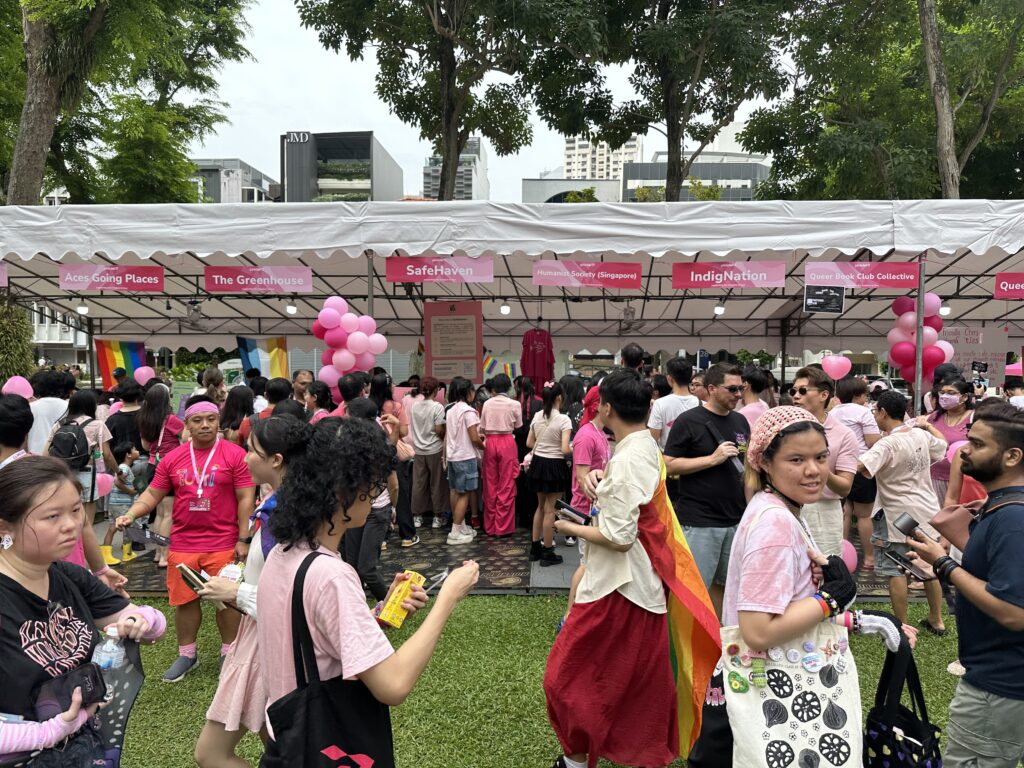
On 28 June 2025, under the banner of Pink Dot 17’s theme “Different Stories, Same Love,” Hong Lim Park turned into a sea of pink as thousands gathered to celebrate the freedom to love in all its forms.

From 4:00 pm to 8:00 pm, Humanist Society (Singapore) operated our community tent where visitors learnt about the society, the secular values we stand for, and what humanism is via our flyers, and picked up goodies (e.g. recycled cloth coasters and “Just being good for goodness’ sake” buttons and T-shirts).

Visitors queued up all afternoon to learn about our community

Our volunteer Sree kicked off the afternoon with a Facebook Live tour, joined by co-founder Dan Thio, who pointed out highlights across the bustling row of community tents. You can look back at the video here: https://www.facebook.com/share/v/1E2NbJGJzj/

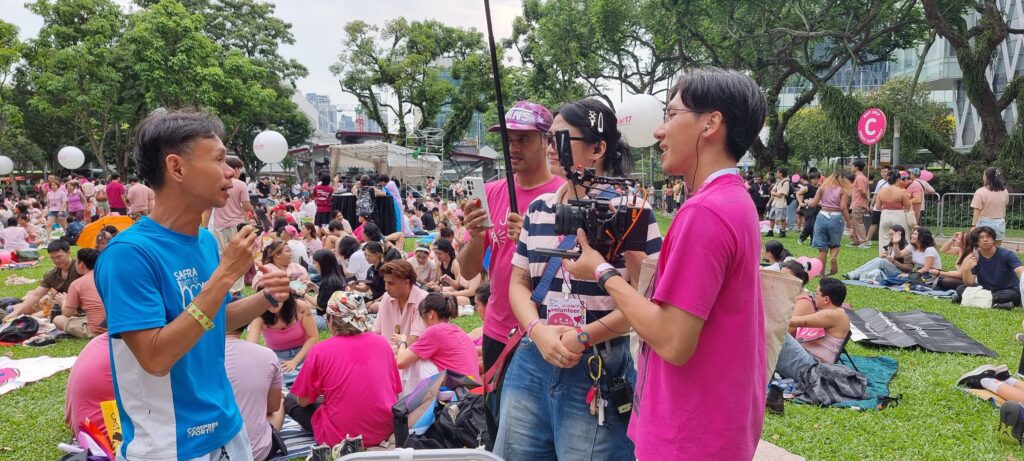
Long-time member Adrian (in blue) speaking on camera with the Pink Dot media team
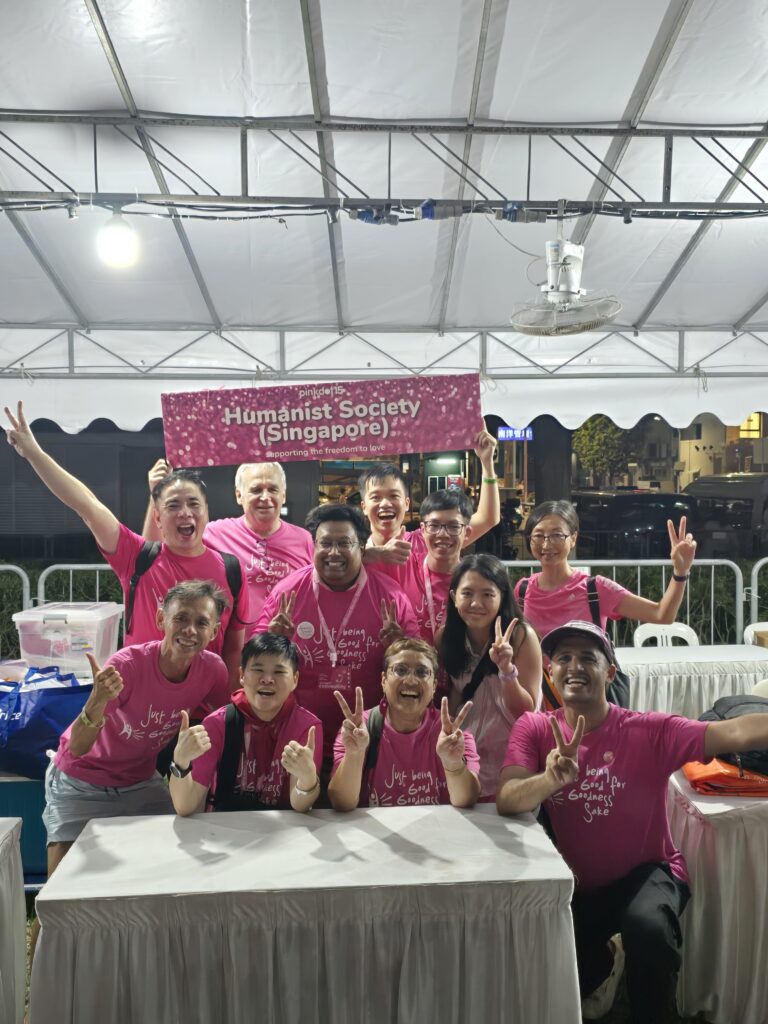
As dusk fell and after the pink dot display, our volunteers beamed under the “Humanist Society (Singapore)” banner.

Our submission to the Pink Dot Time Capsule

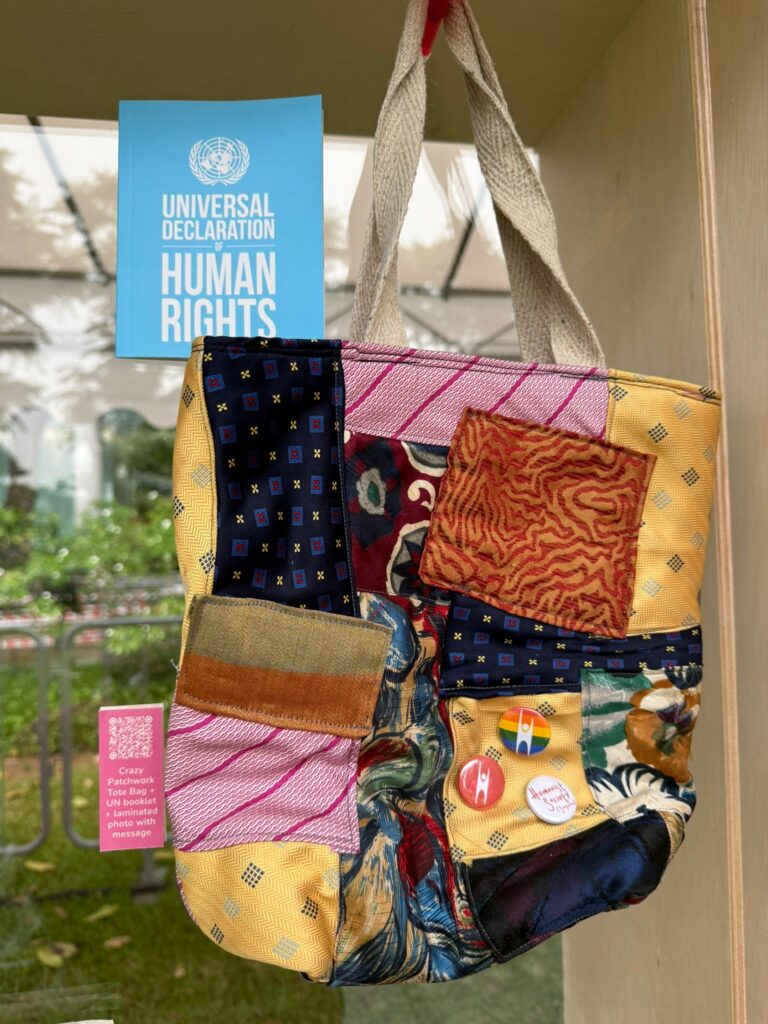
At the Time Capsule Gallery, curated mementos were showcased in glass cases before being sealed away until 2050. Our featured contributions was a “Crazy Patchwork Tote Bag”—stitched from reclaimed fabrics to symbolize the vibrant diversity of our communities—hanging alongside a pocket-sized copy of the Universal Declaration of Human Rights, underscoring our shared duty to uphold fundamental freedoms. https://timecapsule.pinkdot.sg/item/crazy-patchwork-tote-bag-un-booklet-laminated-photo-with-message/

Our tote bag and UN booklet on display at the Time Capsule Gallery.

By entrusting these items to the capsule, Humanist Society has preserved a tangible reminder of our commitment to reason, compassion, and equal rights.


Volunteer Appreciation Dinner

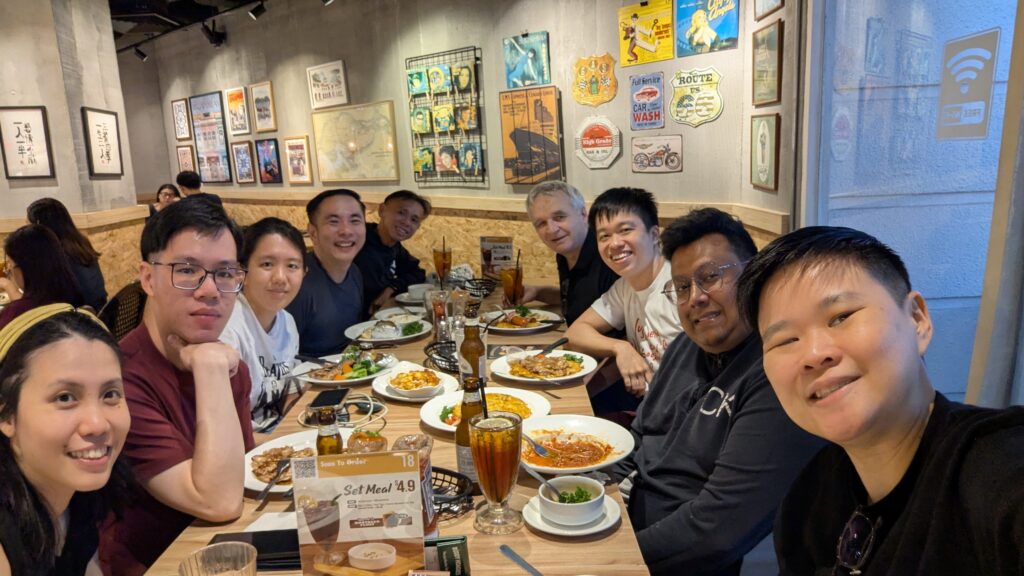
Some days after Pink Dot, the dedicated team of volunteers reconvened over dinner to celebrate our shared success. We swapped memorable moments, toasted each other’s hard work, and deepened the bonds that make our volunteer community so special.

Volunteers and committee members enjoying a well-deserved meal together.

A heartfelt thank you to everyone who visited our tent, shared their stories, contributed to the capsule, and stood with us in solidarity. Your energy and passion fuel Humanist Society’s mission—here’s to many more years of building a kinder, more equal Singapore!

Dan Thio on behalf of the volunteers
Humanist Society (Singapore)

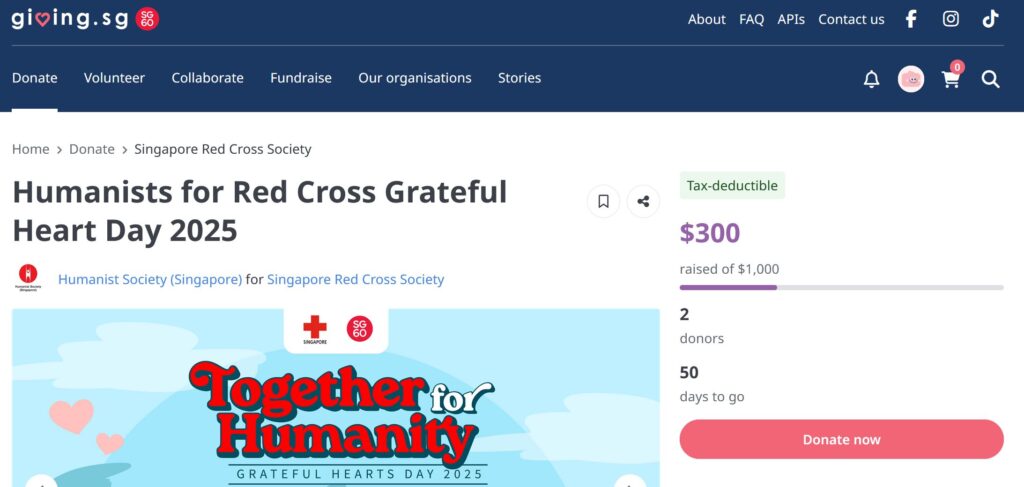
Humanist Society (Singapore) is on Giving.sg — our very own hub for doing good practically

https://www.giving.sg/donate/campaign/humanists-for-red-cross-grateful-heart-day-2025

Last month’s Secular Assembly (24 May 2025) explored Effective Altruism and featured an inspiring presentation by Singapore Red Cross (SRC) on how evidence-based giving transforms lives — from tutoring under-resourced children to supporting vulnerable seniors and disaster-hit communities. Many of you left the session asking, “How can I act on this right away?”

Today, we’re thrilled to announce the answer:

1 · Our new Giving.sg organisation page

We’ve officially registered Humanist Society (Singapore) on Giving.sg — Singapore’s one-stop, government-supported donation portal. Every dollar you give there is channelled directly to vetted local charities, and your tax-deductible receipt is generated instantly. By donating through our page you’ll also fly the humanist flag, showing that people without religion live well and do good.

2 · Launch campaign: Humanists for Red Cross – Grateful Hearts Day 2025

Our first fundraiser Humanists for Red Cross Grateful Heart Day 2025 is now live! We aim to raise S$1,000 in the next 50 days (campaign closes 15 Aug 2025) in support of SRC’s Grateful Hearts initiative. SRC is Singapore’s national humanitarian organisation, mobilising blood donations, emergency relief, and community programmes that uplift children, families, seniors and persons with disabilities.


Call to action — how you can help

  1. Give what you can
    Even a small recurring gift signals our collective commitment to compassion backed by reason.
  2. Spread the word
    Share the campaign link on WhatsApp, Instagram, LinkedIn or wherever you meet friends who value secular kindness. A quick note like “I’m supporting Humanists SG’s drive for Red Cross — join me?” goes a long way.

Why this matters

  • Embodies our motto “Good for Goodness’ Sake.”
  • Demonstrates that non-religious Singaporeans contribute tangibly to society.
  • Amplifies evidence-based giving principles introduced at May’s Assembly.

Let’s make this first campaign a success and set the tone for many more cause-driven collaborations.

Ready? Go to the fundraiser Humanists for Red Cross Grateful Heart Day 2025, click Donate, share the link, and let’s show Singapore what humanists can achieve together.

Thank you for living your values out loud.