Archives for October 2026

Teaming Up to Support the Fight Against Cancer

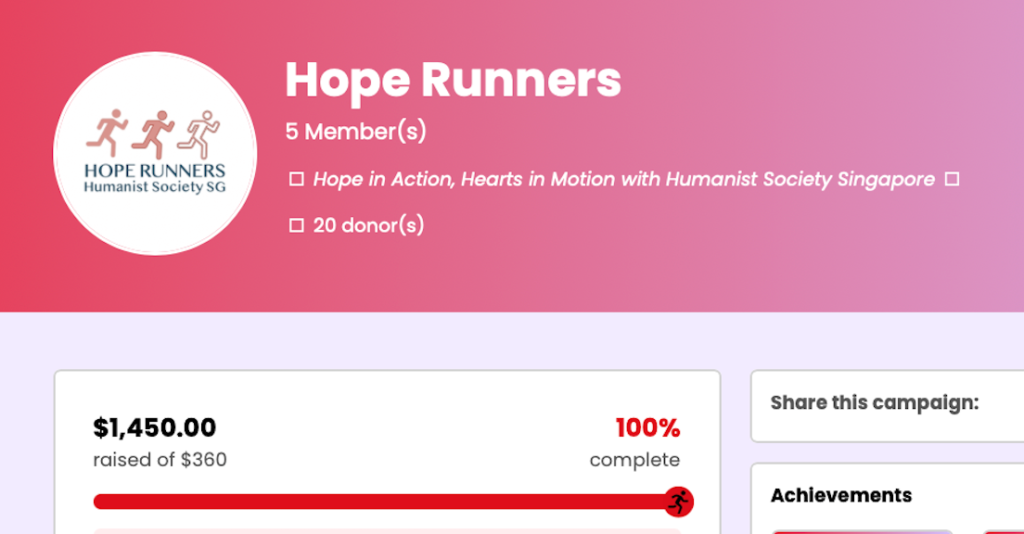
The HumanistSG team Hope Runners took part in the Singtel-Singapore Cancer Society Race Against Cancer 2026, raising $1,450 for cancer patients and their families!
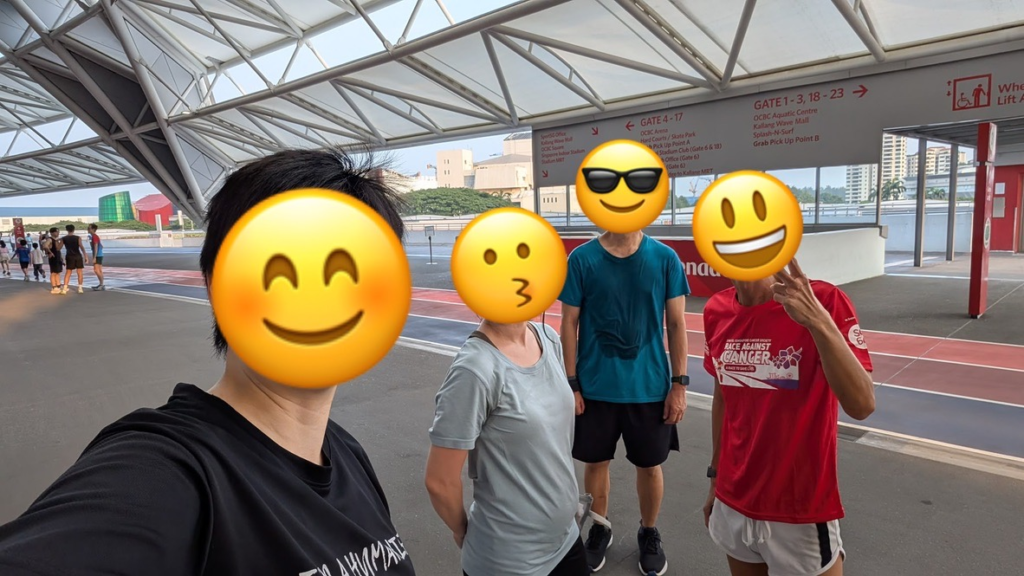
Some Hope Runners after a group run
Screenshot of team page
Screenshot of our team page

Participating in the Virtual Race category, Hope Runners ran and walked between 20 September and 15 October to support programmes of the Singapore Cancer Society. These programmes include medical support, counselling services and financial assistance for cancer patients and their families. This is the second year that Hope Runners has taken part in the Race Against Cancer.

Thanks to all those who cheered us on and donated to this meaningful cause!
Humanist Society (Singapore) Celebrates 16th Anniversary with “Stories from Afar”

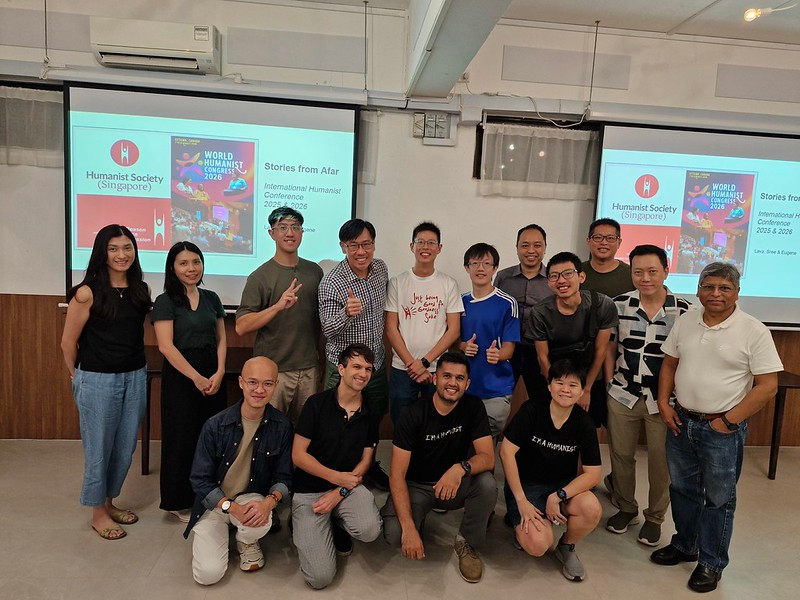
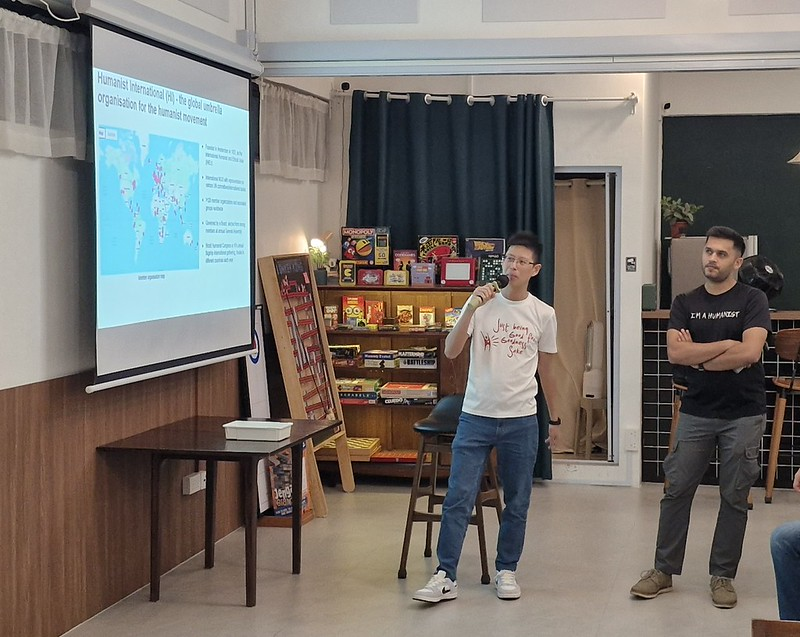
On 17 October 2026, the Humanist Society (Singapore) (HSS) celebrated its 16th anniversary with “Stories from Afar”, an event featuring insights and experiences from two major international humanist gatherings in Luxembourg and Canada.

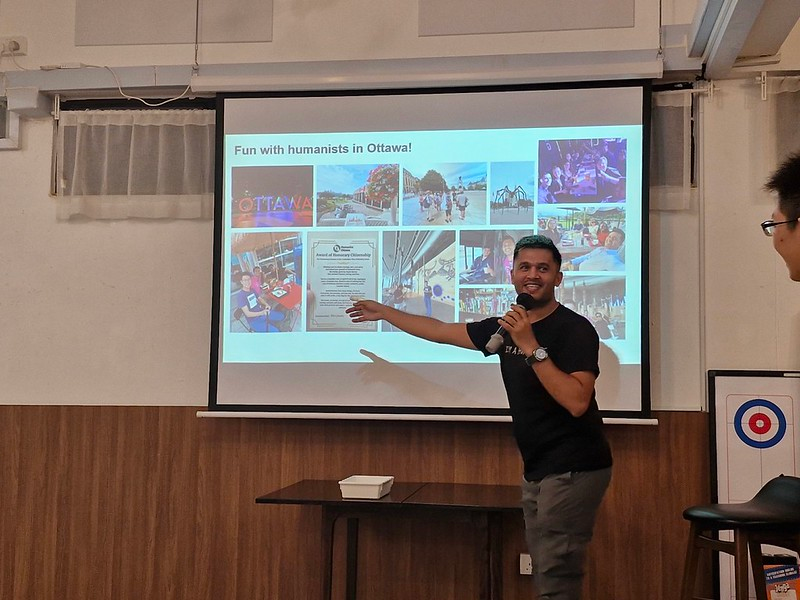
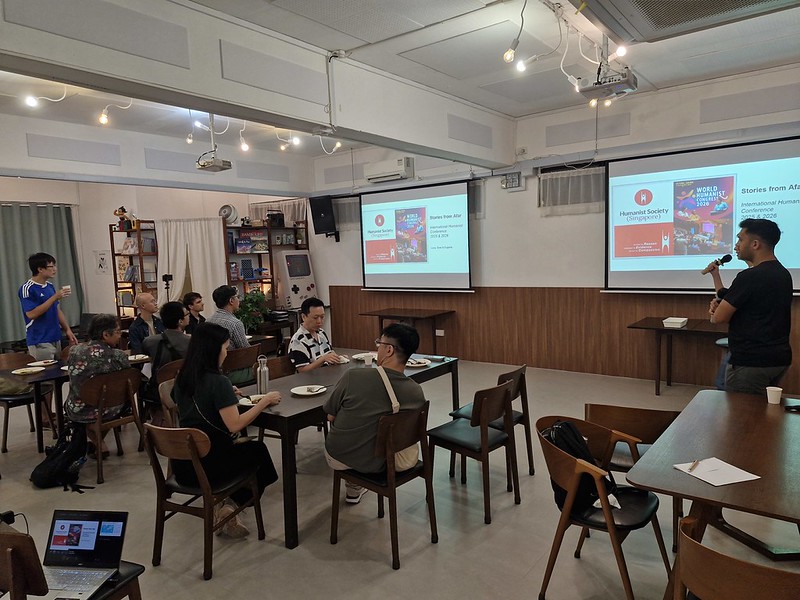
Moments from our anniversary:


***

HSS representatives Sree and Eugene shared highlights from the International Humanist Conference 2025 in Luxembourg City and the World Humanist Congress 2026 in Ottawa.

Their presentations explored how humanist organisations worldwide are promoting scientific literacy, defending human rights, strengthening secular communities and translating humanist values into practical action.

Promoting Scientific Literacy in Luxembourg

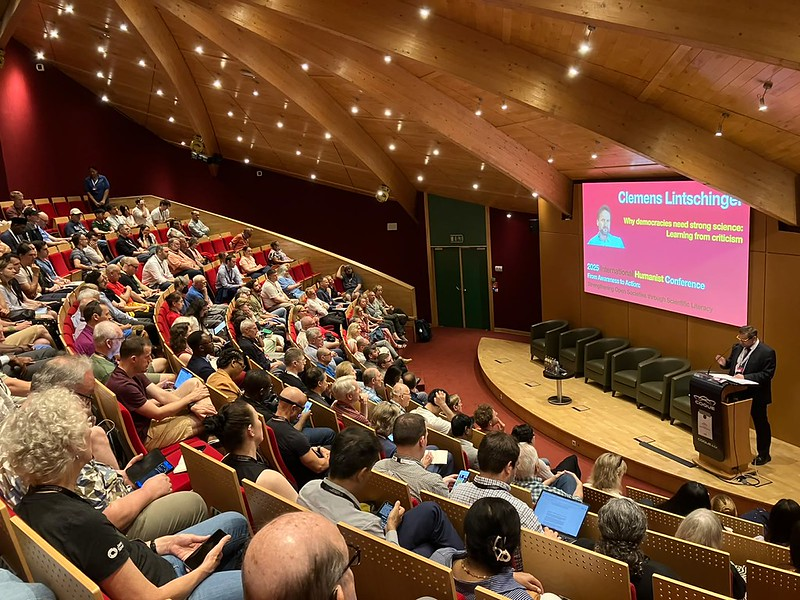
Held from 4 to 6 July 2025, the International Humanist Conference in Luxembourg brought together approximately 150 participants under the theme “From Awareness to Action: Strengthening Open Societies through Scientific Literacy”.

Two representatives – Sree and Eugene – attended this Conference.

At the Anniversary, they highlighted several innovative initiatives that made science more accessible to the public.

For example, the Romanian Secular Humanist Association developed science-themed calendars featuring significant discoveries and historical milestones. Rather than selling them, the organisation distributed the calendars to teachers to encourage curiosity and scientific learning among students.

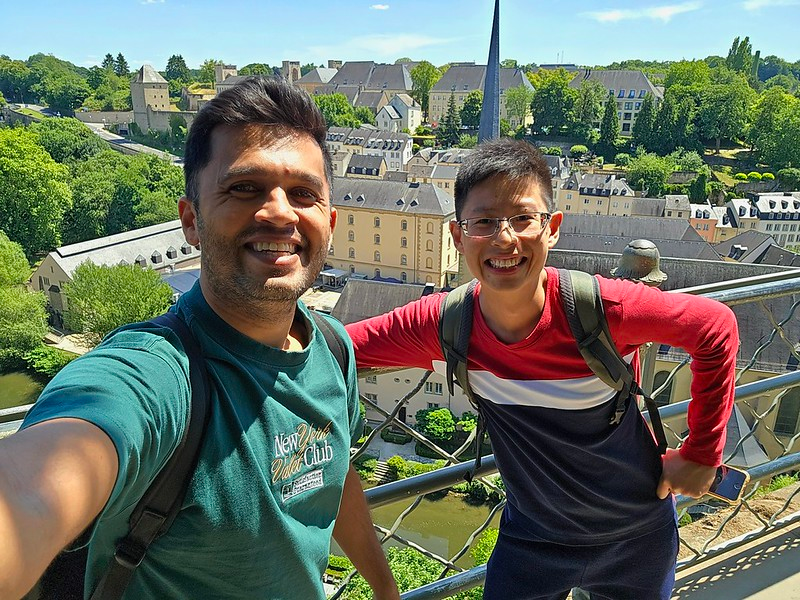
Photos below, moments from the trip to Luxembourg:


***

Meanwhile, Humanistas Guatemala introduced “Science in a Box”, providing hands-on experiments in electricity, mechanics, optics and biology to children in rural communities with limited access to science education.

Another initiative involved Luxembourg-based science podcaster Hanna Siemaszko, who helps scientists and researchers communicate complex scientific concepts through engaging audio content.

The representatives also reflected on meeting Mubarak Bala, a Nigerian humanist activist who was imprisoned for four and a half years. His experience underscored the importance of international solidarity in defending freedom of belief and expression.

Humanism as Resistance in Ottawa

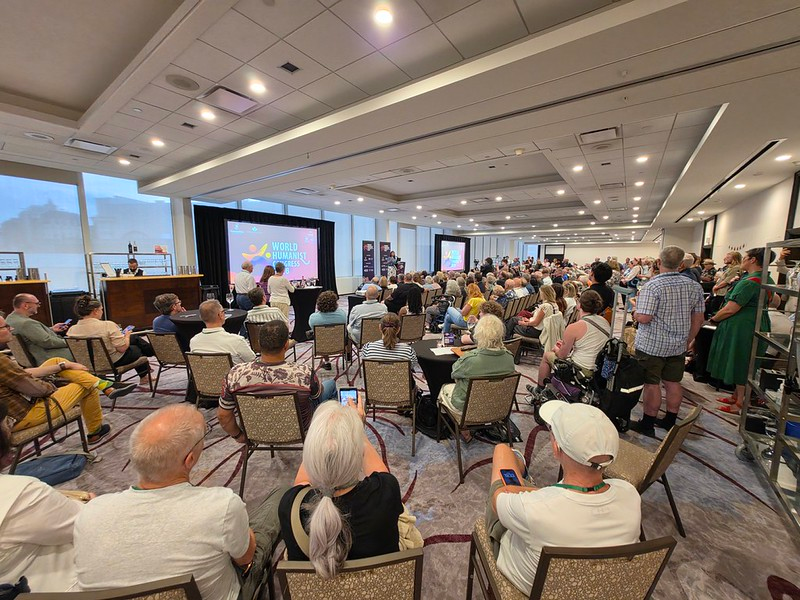
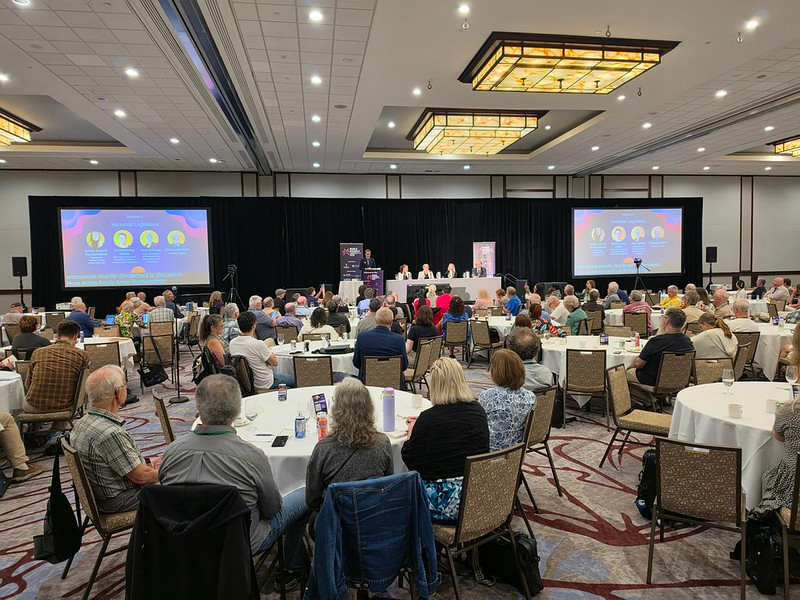
The World Humanist Congress, held from 7 to 9 August 2026 in Ottawa, attracted approximately 500 participants under the theme “Humanism as Resistance”. Three representatives – Lava, Eugene and Sree – attended this Congress.

Hosted by Humanist Canada, the Congress examined how humanists could respond to rising authoritarianism, religious nationalism and anti-science misinformation.

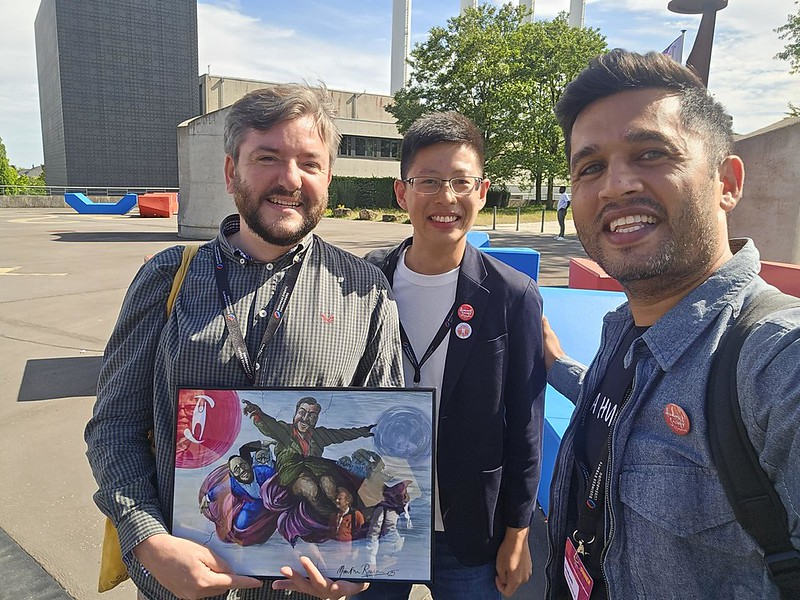
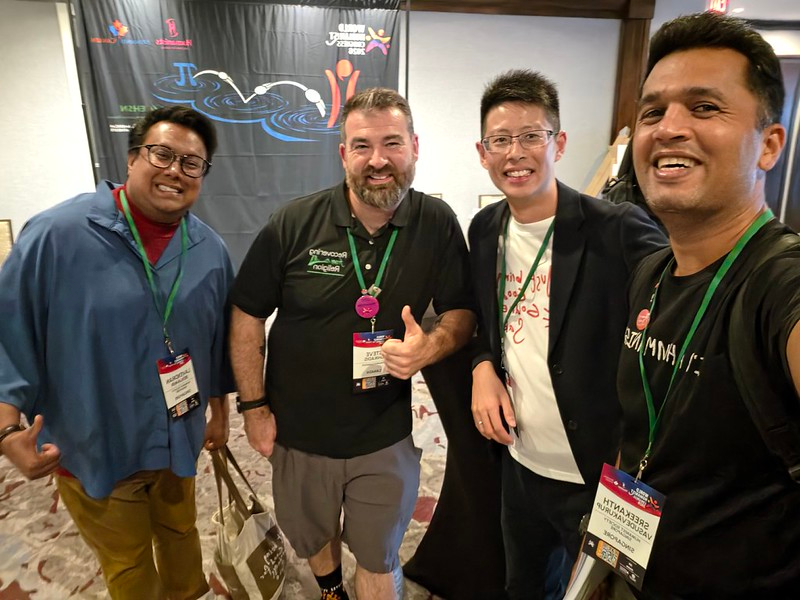
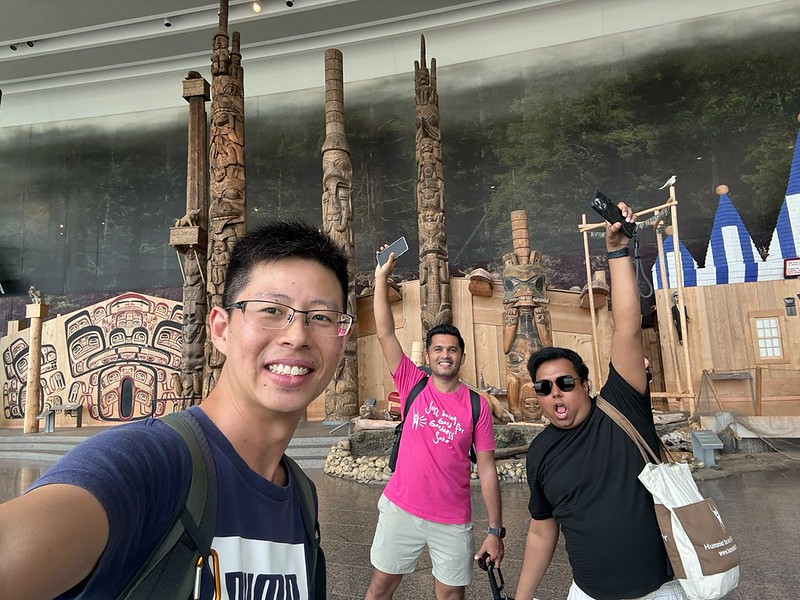
Photos below, moments from the trip to Ottawa:


***

One memorable session featured current and former parliamentarians from Iceland, Norway and the United Kingdom, who encouraged greater civic participation. Their central message was that meaningful change requires individuals to show up, get involved and persevere, even when progress appears slow.

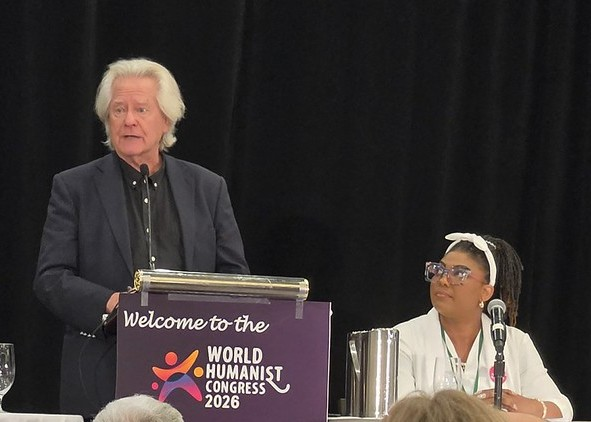
Philosopher A.C. Grayling (below) reinforced this message in his closing keynote, distinguishing between wishful thinking and rational hope. He argued that genuine progress depends on critical thinking, community engagement and concrete action rather than simply hoping for improvement.

***

The representatives also highlighted Presto Misto, a community space and café established by Czech humanists in Prague. The initiative demonstrated how welcoming physical spaces could foster meaningful connections among non-religious individuals, particularly young people.

A spontaneous street encounter with a Christian evangelist provided another memorable lesson. What began as a disagreement eventually became a respectful exchange, with participants acknowledging one another’s freedom of belief and non-belief.

Risk of dogmaticism?

Commenting on his experience at Ottawa, Lava expressed concerns that humanism risks becoming dogmatic when it shifts from being a philosophy and outlook on life into a rigid identity defined by adherence to prescribed values. Reflecting on his experience at the humanist conference, Lava drew parallels between the promotion of humanist values and religious teachings. “If you don’t adhere to the ‘humanist’ values, you’re probably not a humanist,” he observed.

He also cautioned against conflating ideas with moral values, where challenging an idea could be perceived as attacking the values associated with it. “Because it’s easier to defend values than to defend ideas,” he argued, such an approach risks shielding ideas from legitimate criticism.

Lava warned that this tendency could undermine humanism’s commitment to freedom of speech, dissent and intellectual openness, reducing these principles to “lip service for the bare minimum”. He expressed concern that humanism could develop the same dogmatic tendencies it criticises in religion.

***

Strengthening International Humanist Connections

Both conferences included General Assemblies of Humanists International, the global umbrella organisation representing more than 120 member organisations and associated groups.

Notable developments included the election of Maggie Ardiente as President in 2025, the adoption of the Luxembourg Declaration on AI and Human Values, and the Ottawa Declaration on “Humanism as Resistance” in 2026.

Reflecting on their experiences at the Anniversary, the HSS representatives emphasised the importance of grassroots initiatives, youth engagement, scientific literacy and active participation in public life. They also recognised that humanist communities face different challenges depending on their local circumstances.

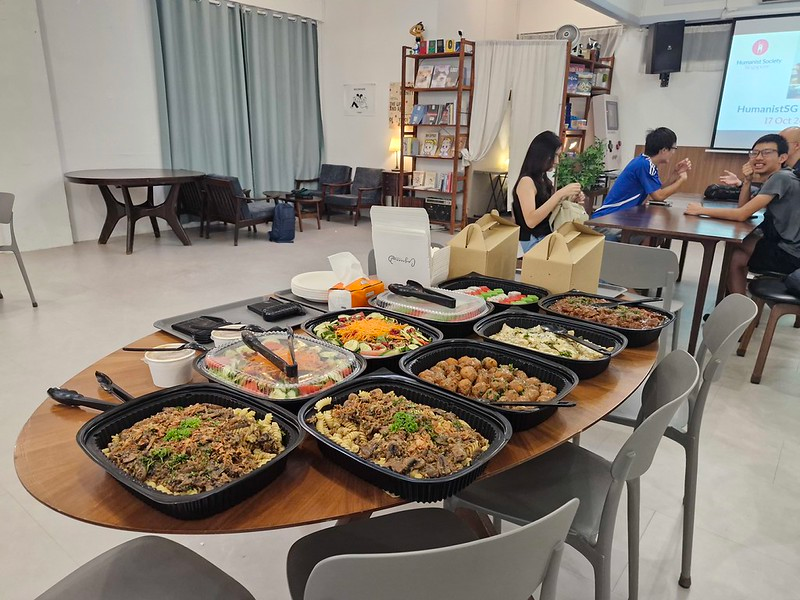
Other moments at the Anniversary:


***

As a longstanding member of Humanists International, HSS has participated in international gatherings for more than a decade and hosted regional conferences in Singapore in 2015, 2019, 2024.

The anniversary sharing highlighted how exchanges with humanists worldwide can inspire local initiatives and strengthen a shared commitment to reason, evidence and compassion.

The next World Humanist Congress is scheduled to take place in Lima, Peru, in 2027.

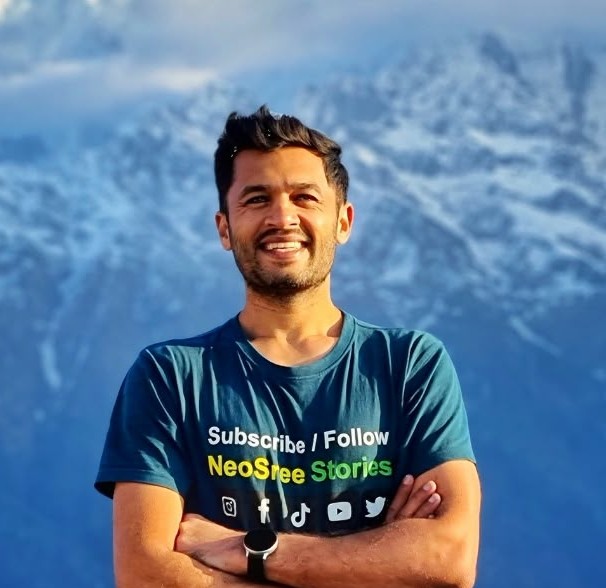
How Neo Sree Found the Humanist Movement

***

This is the personal journey of Neo Sree, one of the members of the Humanist Society (Singapore), at the 2026 Virtual Asian Humanist Conference organised by Humanists Malaysia with support from Humanists International. He was one of the featured speakers on Oct 3, the first day of the two-day conference.

Growing up in a small village in Kerala, India, Neo Sree was surrounded by religion.

Rituals, traditions and beliefs formed part of everyday life, reinforced by grandparents, relatives and the wider community. Like many children around him, he was largely expected to follow the practices of his elders without questioning them.

But at home, Sree encountered a different influence.

His father, whom Sree described as a “lone sceptic” in the community, was sceptical of much of the Hindu mythology and religious tradition around them. More importantly, when the young Sree began asking questions about God and the universe, his father did not pretend to have the answers.

Instead, he encouraged his son to find out for himself, telling him to “search for the answers, read books, and learn more about science.”

The search for answers

That freedom to question would eventually shape a journey spanning religion, science, mental health and, ultimately, the international humanist movement.

After moving to Singapore in his twenties to study and later work in technology, Sree continued searching for answers to the questions that had occupied him since childhood.

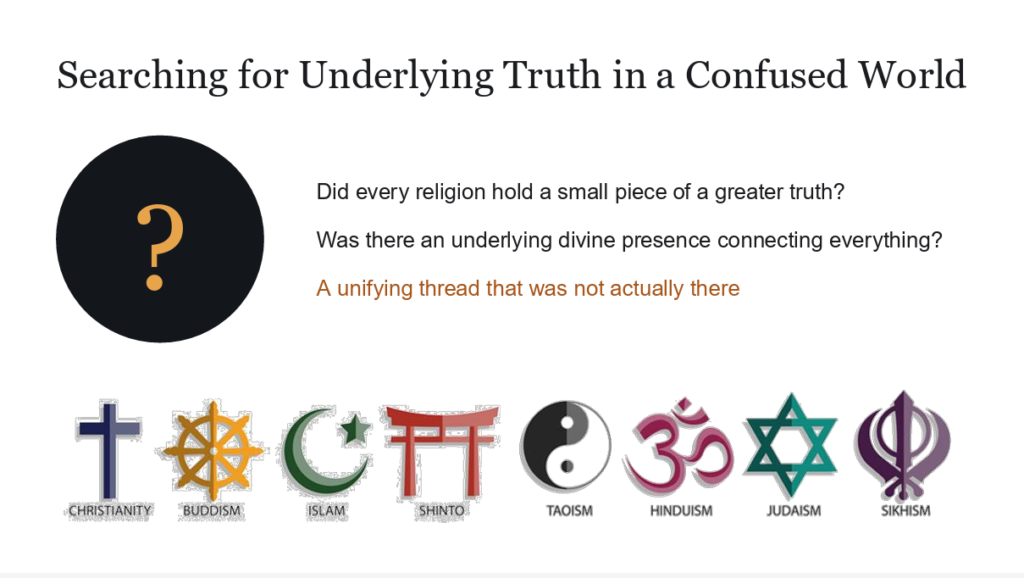
Although no longer particularly religious, he remained open to spirituality. He wondered whether the world’s religions might each contain fragments of a larger truth, perhaps pointing towards an underlying divine presence.

Without what he now describes as a firm grounding in critical thinking, Sree tried to reconcile contradictory religious ideas and find a common thread between them. “I tried to harmonize all these conflicting dogmas and search for some unifying thread, which was not actually there,” said Sree.

Below: One of the slides shared by Sree during his presentation

***

A crisis that changed his worldview

His worldview was dramatically shaken in 2019.

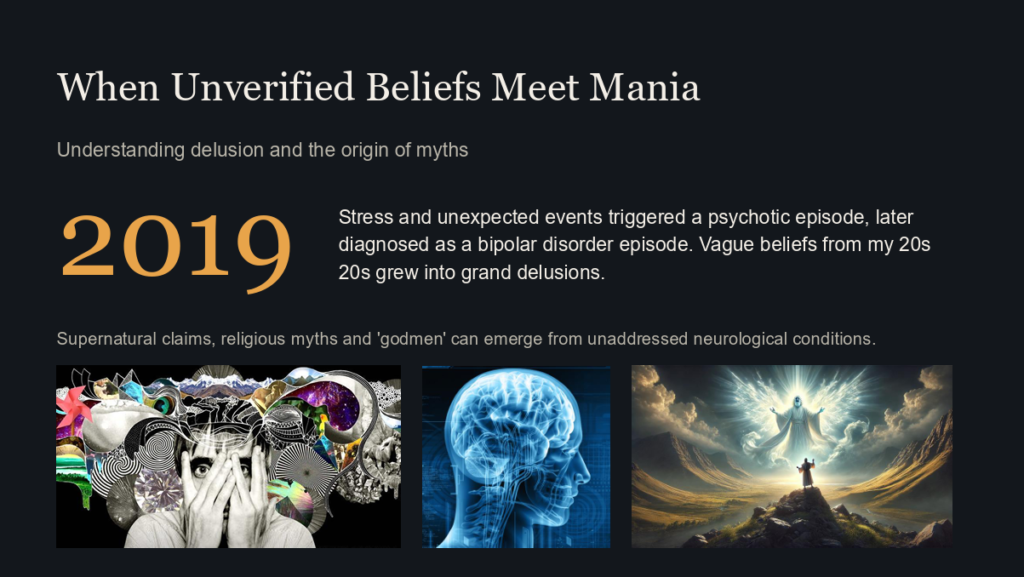
Following a series of stressful events, Sree experienced a psychotic episode and was subsequently diagnosed with bipolar disorder. During the episode, his earlier religious and supernatural ideas became incorporated into elaborate delusions.

He believed he had received a special revelation and, at different points, thought he was a prophet, a messenger of God or God in human form. He also believed he had been given a mission to unite the world’s religions and humanity.

***

To Sree, these experiences felt completely real at the time.

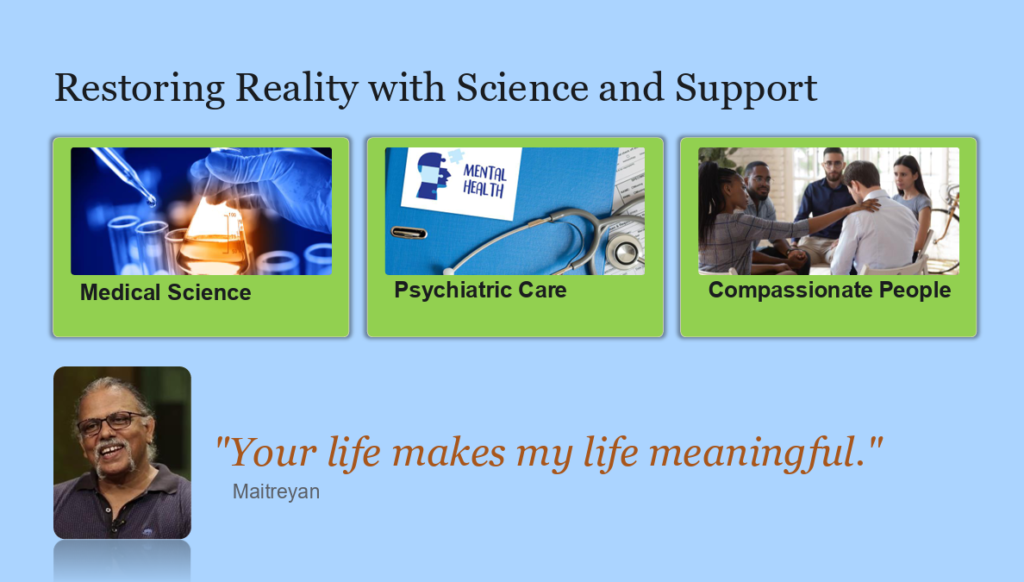
His path out of them came not through religious or mystical intervention, he said, but through psychiatric treatment, medical science and the support of people who helped him reconnect with reality.

Among the most important was Maitreya Maitreyan, a rationalist and activist from Kerala whom Sree contacted during his recovery.

Maitreyan listened to him over numerous conversations, challenged his ideas and encouraged him to continue evidence-based medical treatment. Sree later thanked him for spending so much time helping him through the difficult period.

***

Maitreyan’s response stayed with him: “Your life makes my life meaningful.”

For Sree, the simple sentence provided an answer to another question that had long troubled him: where could meaning come from without religion?

Meaning, he began to realise, could be found in human relationships and in what people did for one another.

Rebuilding through science and reason

As he rebuilt his worldview, Sree turned increasingly towards science and literature.

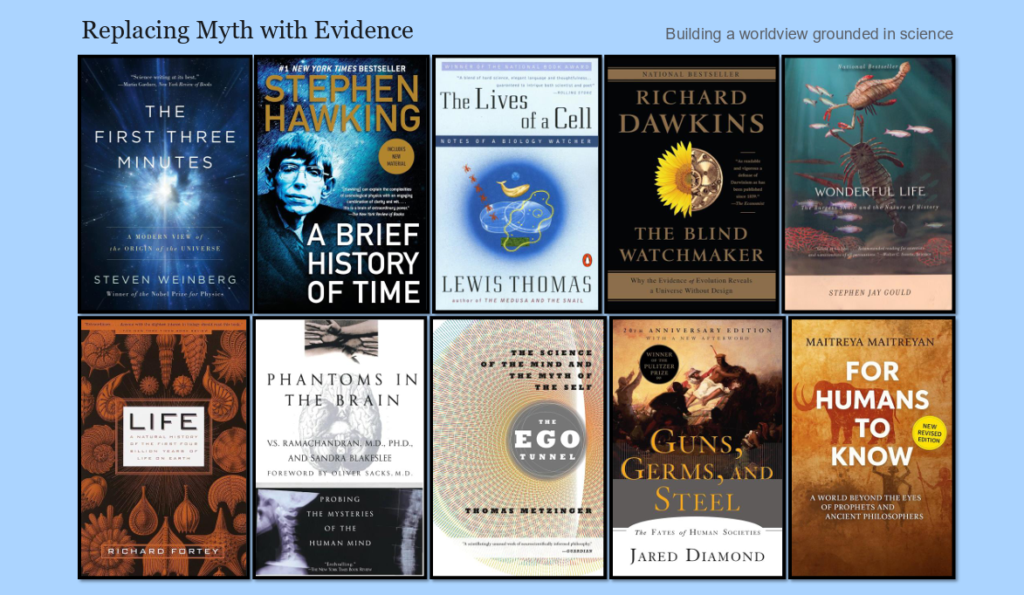
Books on cosmology, evolution and biology, including The First Three Minutes, A Brief History of Time, The Blind Watchmaker and Wonderful Life, offered naturalistic explanations for questions he had once approached through religion.

***

His experience with psychosis also sparked an interest in neuroscience. Books such as Phantoms in the Brain and The Ego Tunnel helped him explore how the brain constructs perception and our sense of self.

Together, he said, these works gave him a more coherent foundation for understanding the universe, life and the human mind.

Finding the humanist movement

His path towards organised humanism, however, had already begun quietly.

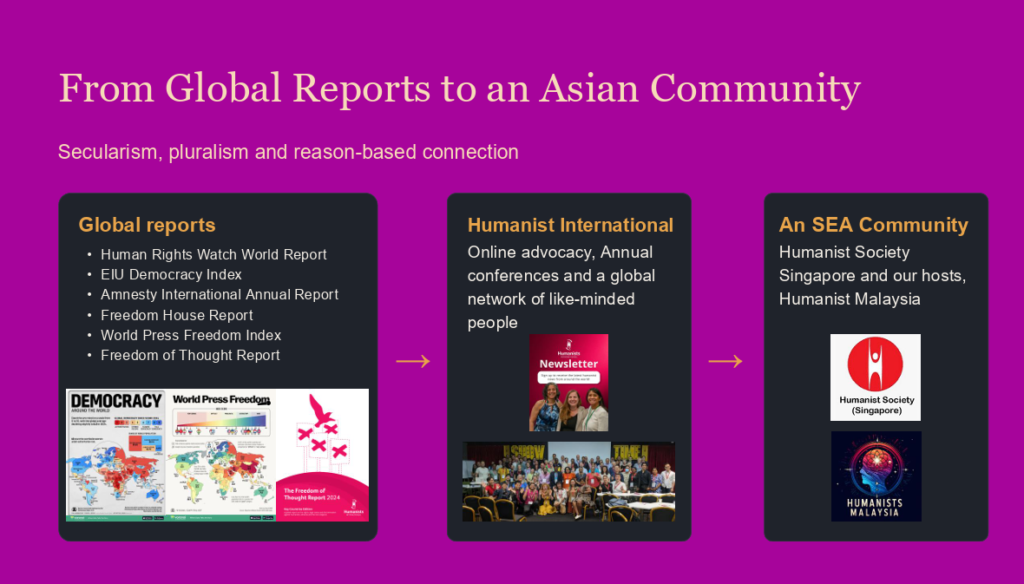
Since around 2017, Sree had been reading international reports on democracy, human rights and civil liberties. Among them was the Freedom of Thought Report, published by Humanists International.

He began following the organisation and became interested in its advocacy for freedom of thought and the rights of non-religious people.

That connection eventually led him to the Humanist Society (Singapore).

***

Sree began volunteering at its events and later attended the International Humanist Conference 2024 in Singapore. There, he encountered something that had been largely absent during his earlier journey: a community.

He met people from different countries who shared an emphasis on reason, critical thinking and human welfare without relying on supernatural beliefs. He also met members of the emerging Humanist Malaysia community, including A. Jay Surin, with whom he became friends.

Sree subsequently attended more international humanist gatherings, deepening his involvement in a movement he had first discovered through an online report.

***

Finding meaning and community without religion

Looking back, he sees a journey that began with the freedom his father gave him to question inherited beliefs and eventually led to a global community built around many of the same questions.

Speaking at the Asian Humanist Conference hosted by Humanist Malaysia, Sree said his experience had convinced him that abandoning religious belief did not require abandoning purpose or belonging.

“Leaving religion behind does not mean losing meaning and community. We do not need divine or supernatural beliefs to live a meaningful and fulfilling life,” he said.

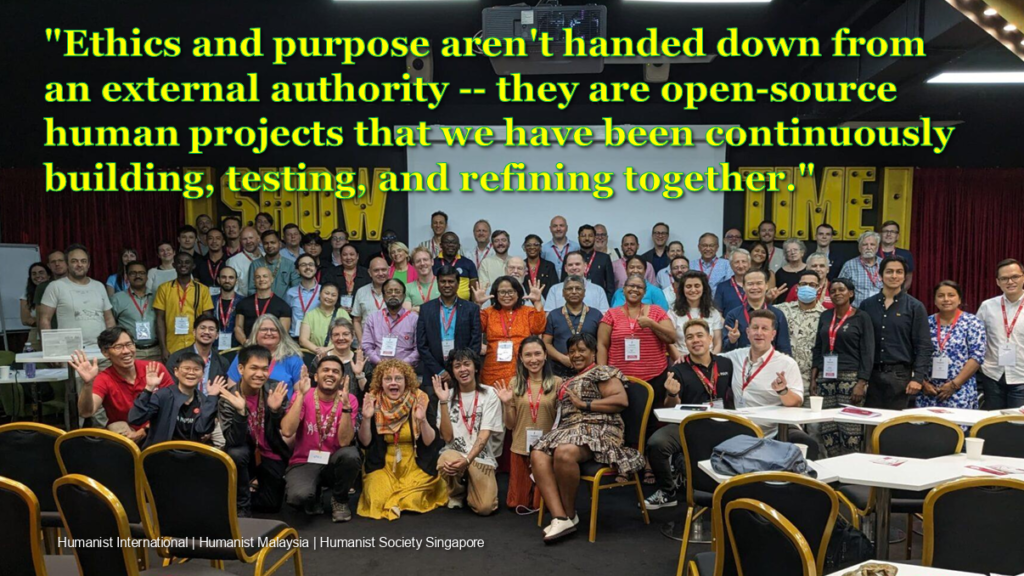
For Sree, ethics and purpose are instead things human beings create collectively — ideas that can be questioned, improved and passed on.

“They are open-source human projects,” he said, “that we have been continuously building, testing and refining together.”