Burnout from work stress is a common problem in our fast-paced city. How can individuals prevent burnout and what role can non-religious organisations play? At our eighth Secular Assembly of the year, held on 27 September, these topics were explored by our guest speaker Kit Koh, a career coach and mental health counsellor.
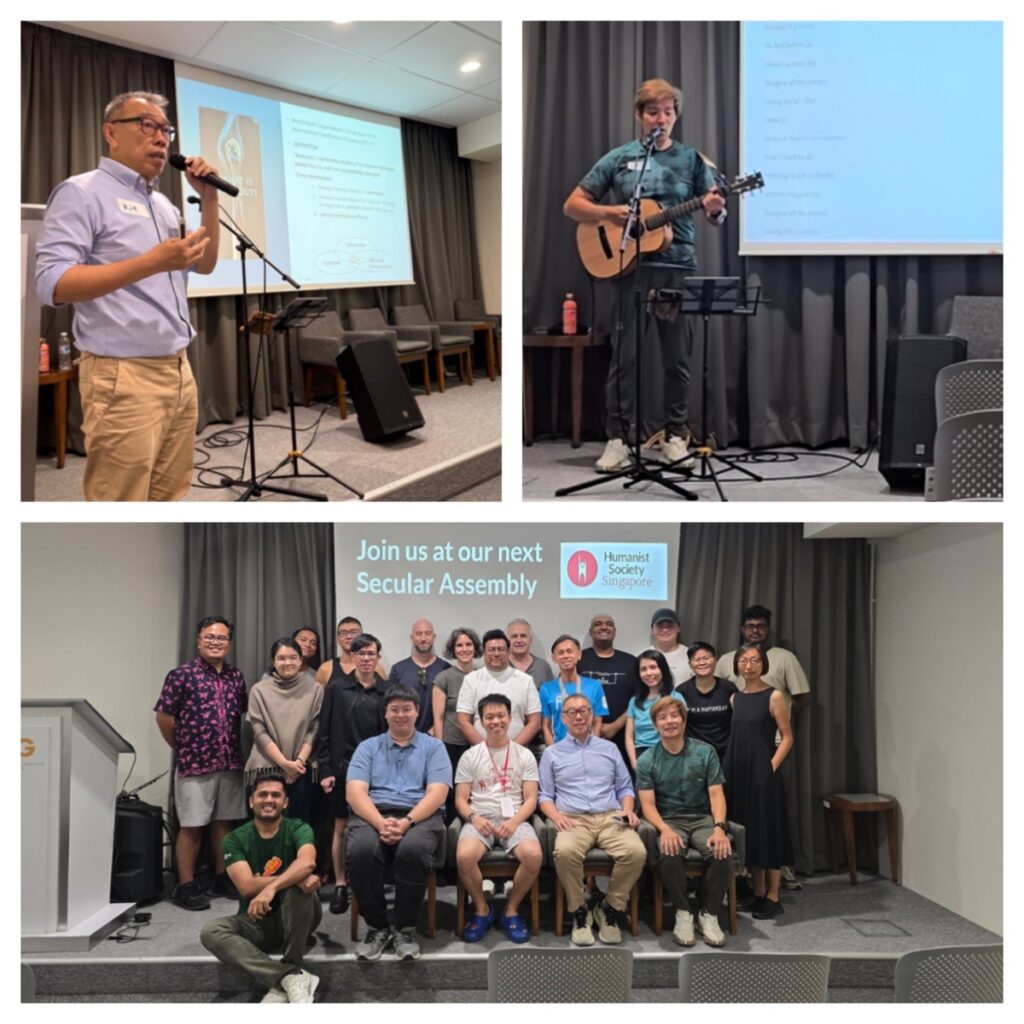
First, a definition of burnout. For this, Kit cited the World Health Organisation (WHO), which defines burnout as a condition “resulting from chronic workplace stress that has not been successfully managed”. It comprises three aspects: “feelings of energy depletion or exhaustion; increased mental distance from one’s job, or feelings of negativism or cynicism related to one’s job; and reduced professional efficacy”. When burnout sets in, Kit noted that it could lead to more problems such as depression, weakened immunity and strained relationships.
Regarding strategies an individual could use to prevent burnout, Kit shared that these include minimising sources of stress (e.g., by setting physical and digital boundaries), addressing deeper dysfunctional cognitive patterns, and engaging in activities that produce “happy hormones”. These hormones – dopamine, endorphins, oxytocin and serotonin – are known to be powerful contributors to positive emotions.
Oxytocin facilitates feelings of trust and connection, and is often produced during activities that involve interpersonal bonding. Thus, to promote oxytocin and the positive emotions associated with it, Kit suggested that a secular society like HSS could hold group activities that are “psychologically safe, emotionally positive [and] mentally restful” – such as group singalongs and events for appreciating people (e.g., celebrating good deeds). Not so coincidentally, these suggested activities are typically part of the Secular Assembly.
On the flip side, Kit also suggested what NOT to do: namely, if social bonding is the goal, we should avoid turning every space into one for critical discussion and debate – a frequent temptation for opinionated humanists!
Other highlights of the programme:
- Before the main Assembly, a group of attendees went on a guided tour of the Harmony in Diversity Gallery (HDG), kindly made possible by our HDG partners. Read more about the Gallery here.
- For the first time at the Secular Assembly, live singing AND music! James, an HSS volunteer, provided skilful vocals and guitar to lead us in singalongs of Imagine and other classic songs.
- A gratitude exercise led by Dan, Secular Assembly programme director, encouraged thankfulness and reflections on our interconnectedness.
Join us at the next HSS event, where we’ll continue to build the humanist community!